18-Inch Forged Monoblock Wheels for 2003 Ford Mustang SVT Cobra (SN-95) – Brushed Silver Five-Spoke Deep-Dish 5×114.3
- Model: GD2608027-1811
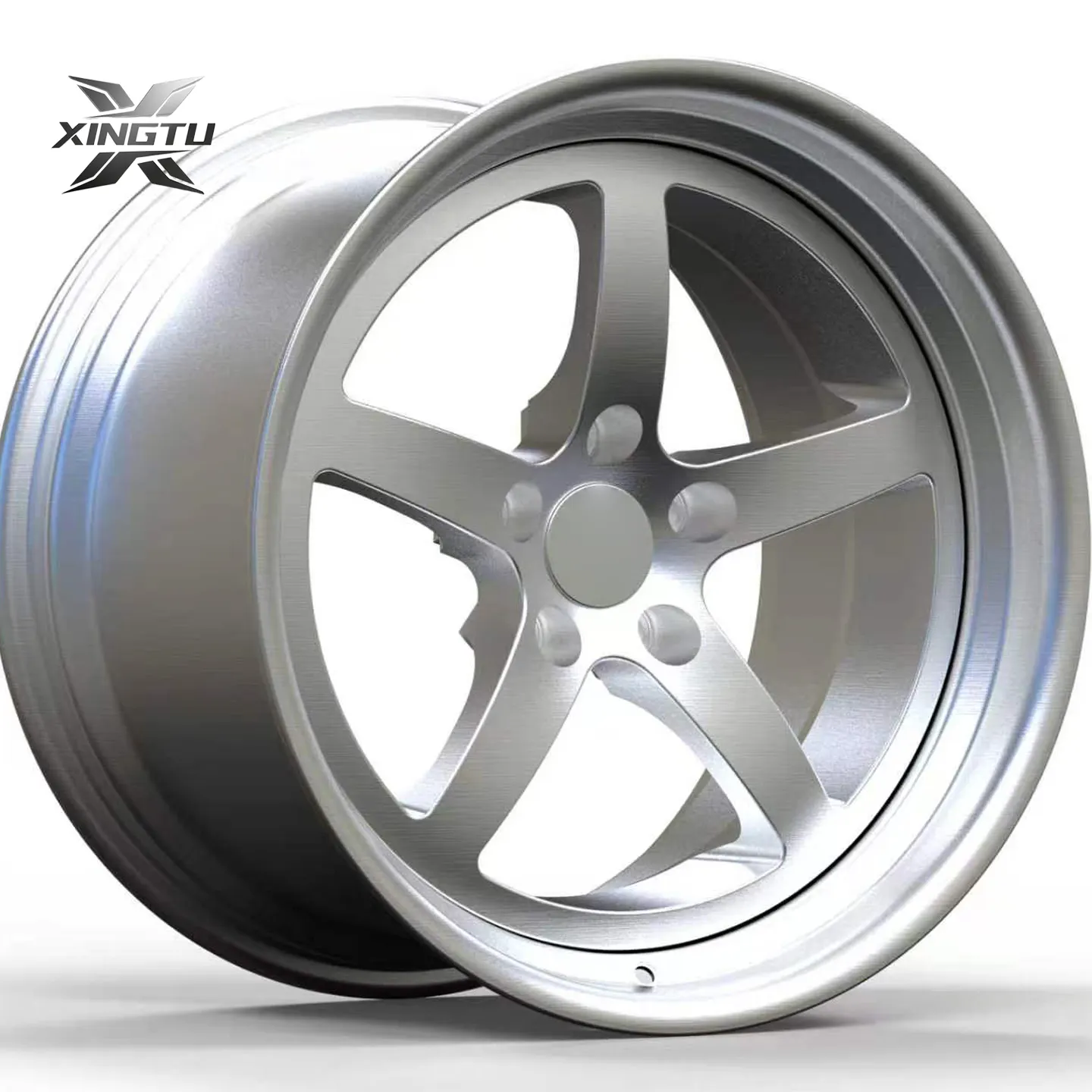
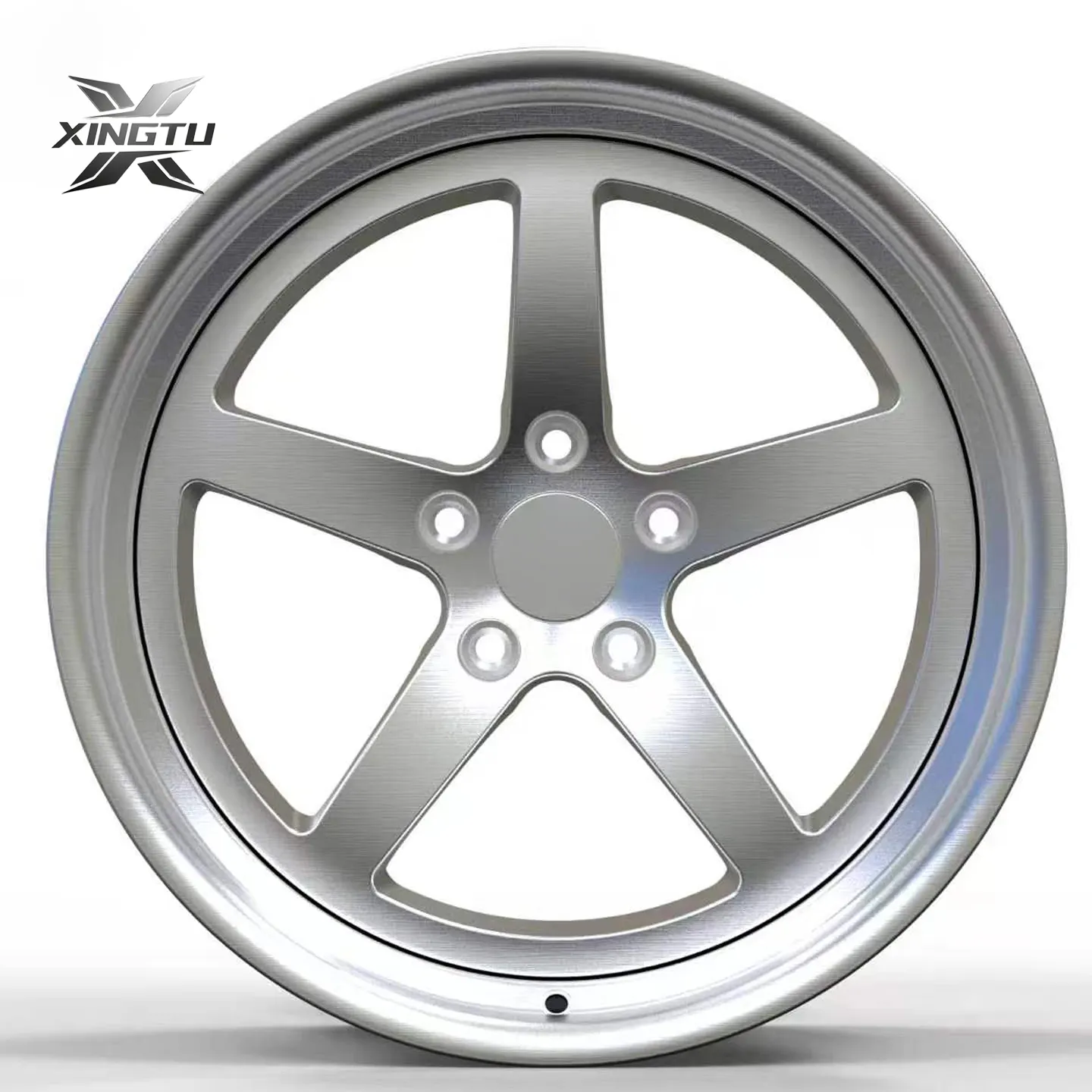
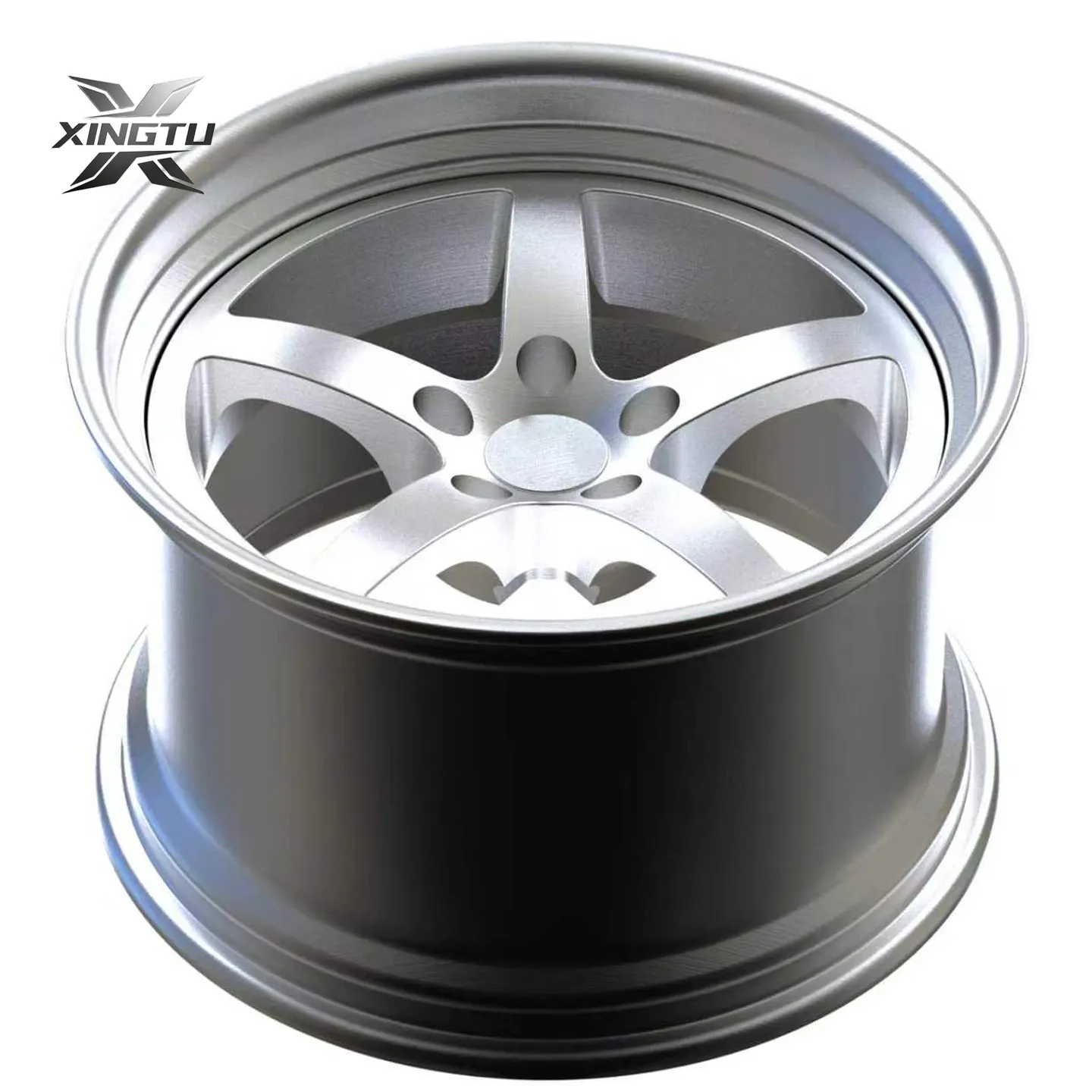
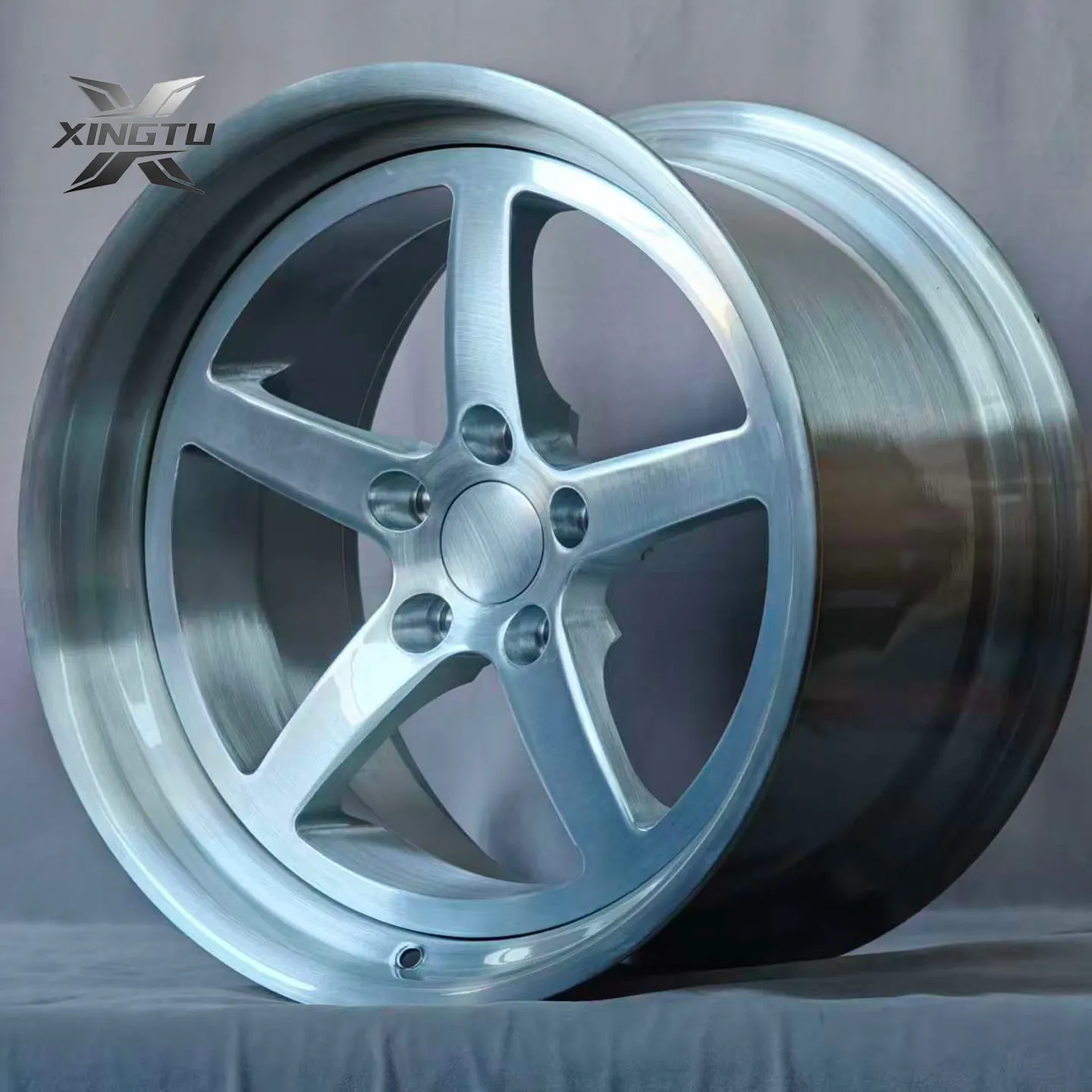
This 18-inch forged monoblock was shaped for a 2003 Ford Mustang SVT Cobra with the visual restraint of the New Edge era in mind. Five broad spokes taper away from the hub into a deep stepped lip, creating a strong face without turning the wheel into a modern multi-spoke design. The project uses ET18, a 5×114.3 bolt pattern, 70.5 mm center bore and a 15×32 60° taper seat. At 15.5 kg with an 850 kg load rating, it combines a substantial deep-dish profile with a single-piece forged structure. Directional brushing keeps the aluminum visible and makes the grain part of the design rather than covering it with solid color.



Specifications
| Item | Specification |
| Model No. |
GD2608027-1811 |
| Size |
18 inch (rim width not stated on the specification plate) |
| PCD |
5×114.3 (5×4.5") |
| Offset (ET) |
ET18 |
| Center Bore |
70.5 mm |
| Weight |
15.5 kg per wheel |
| Load Rating |
850 kg per wheel |
| Lug Seat |
15×32 60° taper |
| Finish |
Brushed Silver |
| Construction | Forged Monoblock |
| Fitment Basis | Check Data |
| Lead Time |
45 days (brushed finish) |
-
Descriptions

Deep-Dish Proportion Defines the New Edge Character
The main design decision was not simply to produce another five-spoke wheel. It was to recover the broad shoulders, restrained spoke count and visible lip associated with the 1999–2004 Mustang while using a modern forged structure.
The wheel is built to an 18-inch diameter at ET18, with 5×114.3 PCD, a 70.5 mm center bore and 15×32 60° taper-seat geometry. The recorded specification does not state rim width, so that dimension must be confirmed before the drawing is released. Width affects tire section, inner clearance, dish depth and finished weight.
ET18 also places the wheel farther outboard than the factory Cobra arrangement. On the 2003 SVT Cobra, the independent rear suspension and front brake package make physical measurement especially important. The front caliper-to-spoke gap, rear knuckle and toe-link area, inner liner and fender lip must all be checked on the car before the offset is approved.
Five Spokes, One Continuous Forging
The five-spoke face, hub pad, stepped lip and barrel are machined from one forged aluminum blank. There is no joint between the center and rim. Each spoke begins broad at the hub, then tapers toward the outer section to keep the load path short and visually direct.
This geometry supports an 850 kg rating at a finished wheel weight of 15.5 kg. The deep-dish effect comes from the relationship between the face position and the machined lip, not from a separate rim half. The wheel remains a true monoblock and has no beadlock structure.
Brushing Gives the Surface Its Direction
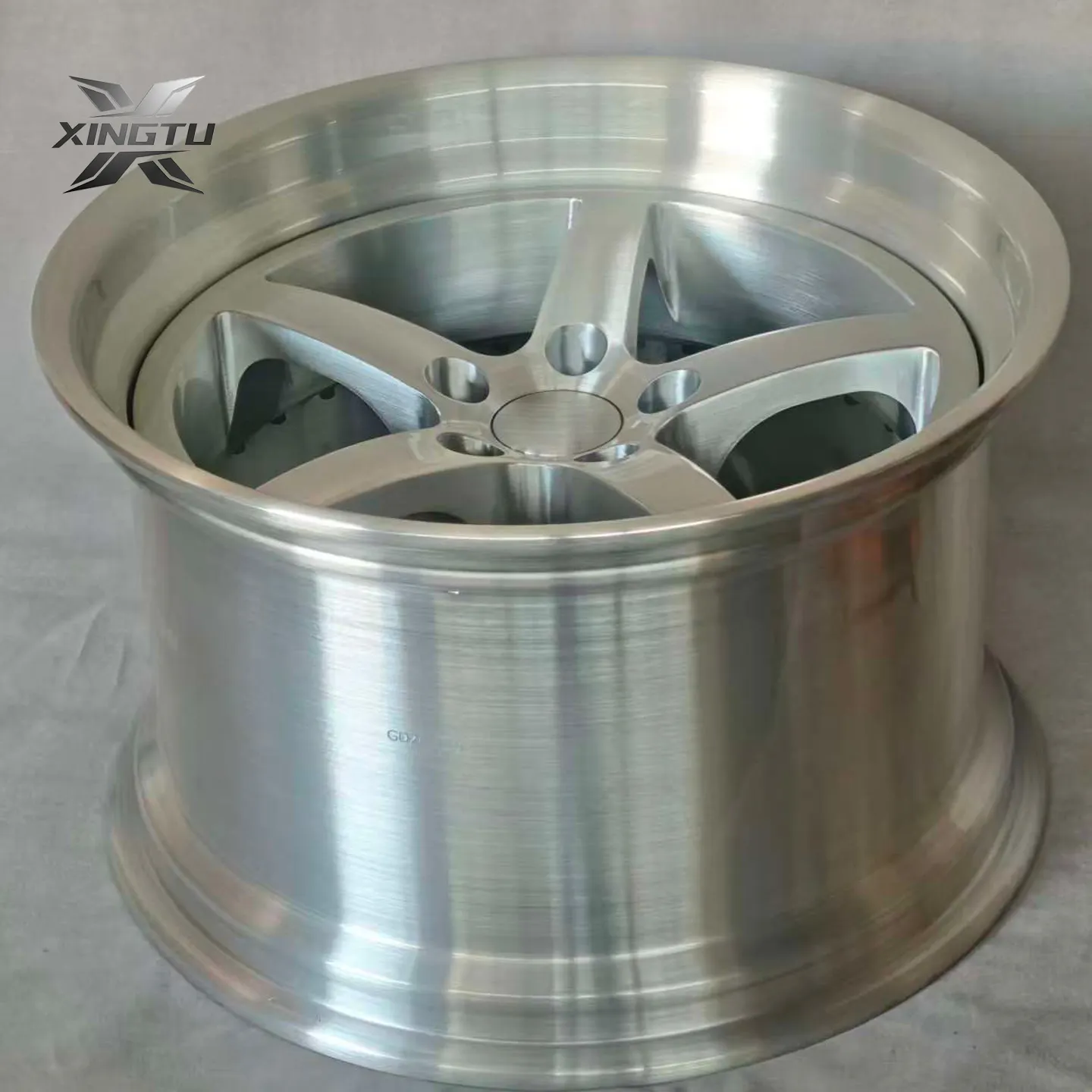
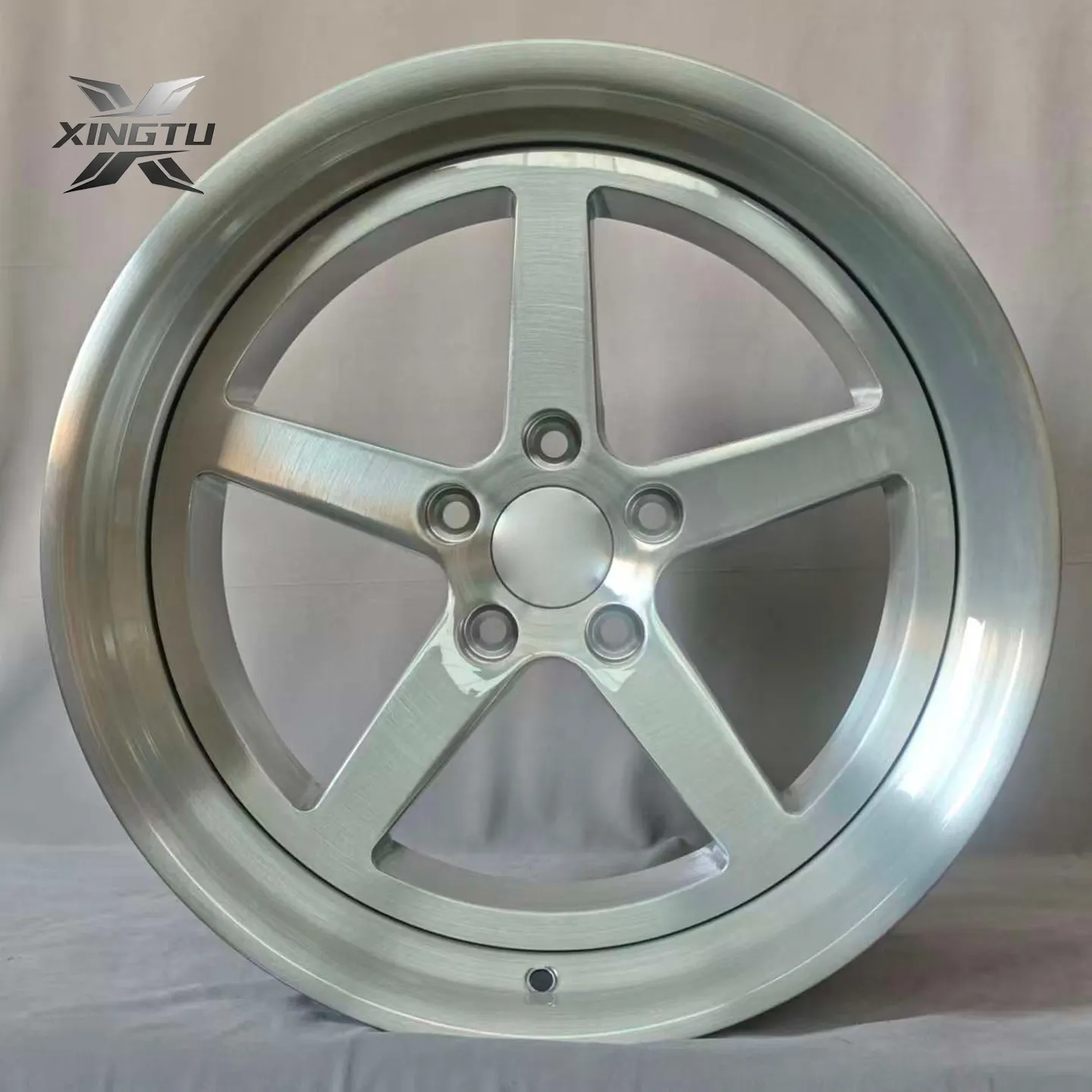
Brushed silver was selected because it shows the aluminum and reinforces the simple five-spoke shape. The process is more exacting than a solid painted finish: grain direction must remain consistent across the spokes, center flats and lip, while the boundaries at spoke edges, step radii and flange must stay crisp.
The face and barrel are brushed in controlled passes before clear coating. Color cannot hide waves, cross-grain marks or uneven transitions, so the metal preparation remains visible in the finished part. This surface work is the reason the recorded build uses a 45-day production schedule. The center disc stays plain for later cap installation.
From Design to Delivery
Quality Verified
- 18-inch diameter inspected
- ET18 offset checked
- 5×114.3 PCD and 70.5 mm center bore verified
- 15×32 60° taper-seat interface checked
- Wheel weight verified at 15.5 kg
- Load rating confirmed at 850 kg per wheel
- Five-spoke geometry, spoke transitions and edge radii inspected
- Stepped lip depth and outer flange profile checked
- Brush direction and grain consistency inspected across face, spokes and lip
- Clear-coat coverage and surface finish inspected
- Radial and lateral runout checked
- Every wheel dynamically balanced
Result
The completed wheel looks appropriate for the car because it does not chase a newer design language. Five substantial spokes establish the face, the center sits visibly inside the rim, and the stepped lip creates the depth expected from a New Edge Mustang build. Brushed silver changes with the viewing angle while keeping the material character of the aluminum visible.
At 18 inches, the wheel retains a balanced tire-to-wheel proportion. Its 15.5 kg finished weight and 850 kg rating sit behind a form that appears deliberately simple. The center disc remains unbranded so the customer can complete the car with the preferred cap.

Building a Period-Correct Wheel for a New Edge Mustang?
XINGTU develops forged monoblock, two-piece and three-piece wheels around the vehicle's hub dimensions, brake package, rear suspension layout, intended tire size and required load. Brushed, polished, painted and two-tone finishes are available without changing the underlying design direction.
-
Build & Fitment
Fitment and Installation Checks
The wheel uses an 18-inch diameter, ET18 offset, 5×114.3 PCD, 70.5 mm center bore and a 15×32 60° taper seat. Compatible conical-seat hardware is required.
ET18 positions the wheel farther outward than the factory Cobra arrangement. Vehicle-specific fitment checks should cover front brake clearance, the independent rear suspension knuckle and toe-link area, inner liners, fender lips and the selected tire section.
Monoblock Construction with a Deep-Dish Profile
The five-spoke center, hub pad, stepped lip and barrel are machined from a single forged aluminum blank. Broad tapered spokes create a short load path between the hub and rim while maintaining the wheel’s direct visual character. The stepped lip forms the deep-dish profile but is neither a separate rim component nor a beadlock ring. Each wheel weighs 15.5 kg and carries an 850 kg load rating.
Controlled Brushed Silver Finish
The brushing follows the length of the spokes and continues across the center and lip with controlled transitions. The face and barrel are processed separately before clear coating so the grain remains consistent across surfaces with different orientations. Spoke edges and profile transitions are protected from cross-brushing, while the clear coat is inspected for even coverage over the exposed metallic finish.
-
FAQs
1. Which lug hardware should be used with this wheel?
The wheel has a 15×32 60° taper seat and requires matching conical-seat hardware. Ball-seat nuts have a different contact profile and must not be used.
2. Is the deep lip a separate rim component?
No. The stepped lip, five-spoke face and barrel are machined from one forged blank. This is a monoblock wheel, not a two-piece assembly or beadlock design.
3. What gives the five-spoke face its New Edge character?
The low spoke count, broad shoulders and outward taper reflect the strong, uncluttered wheel designs associated with the New Edge era. The tapered profile retains that period-correct presence without making the forged face appear overly heavy.
4. Why does the brushed silver finish require more processing time?
The grain must remain directional across the spokes, center and lip while every surface transition stays clean. Cross-grain marks and uneven preparation remain visible beneath the clear coat, leaving little room for correction at the finishing stage.
5. How long does production take?
The recorded production schedule is 45 days. This covers forging and machining, directional brushing, clear coating, dimensional inspection and dynamic balancing. Shipping time is separate.
6. Does the wheel come with a branded center cap?
No third-party emblem is installed during production. The center disc remains plain so the customer can fit the intended cap after delivery.
Related Products