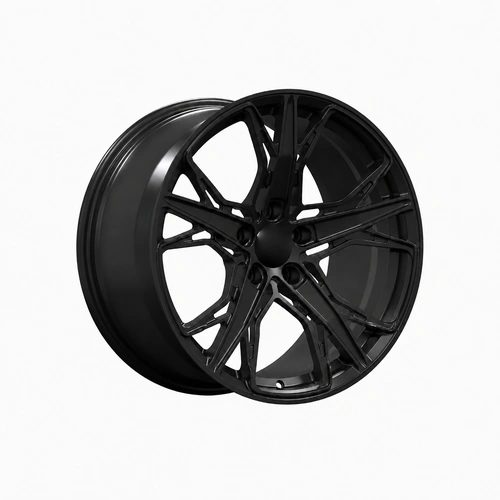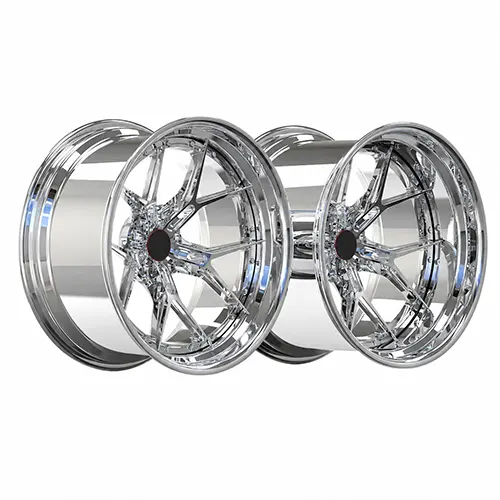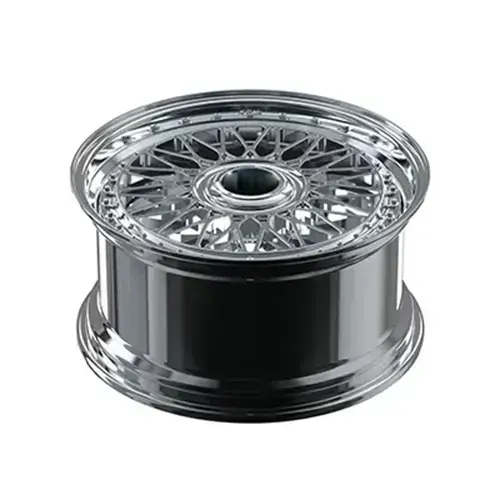
2012 Chrysler 300 SRT8 | Staggered 2-Piece Forged · Black Chrome Face + Red Barrel
- Model: L254818
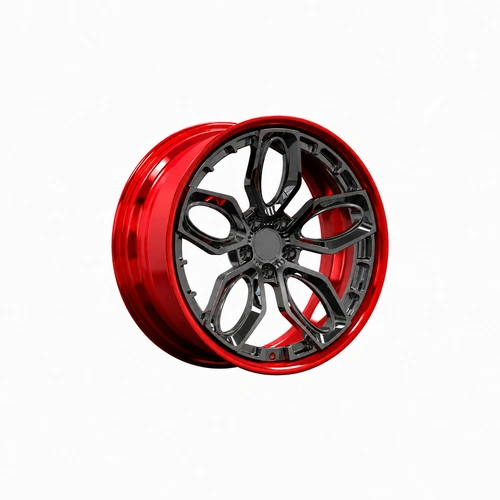
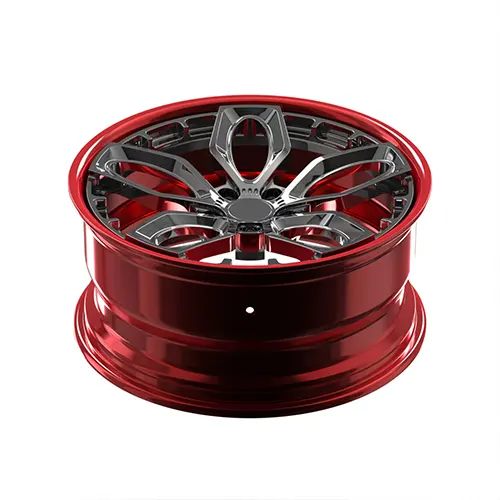
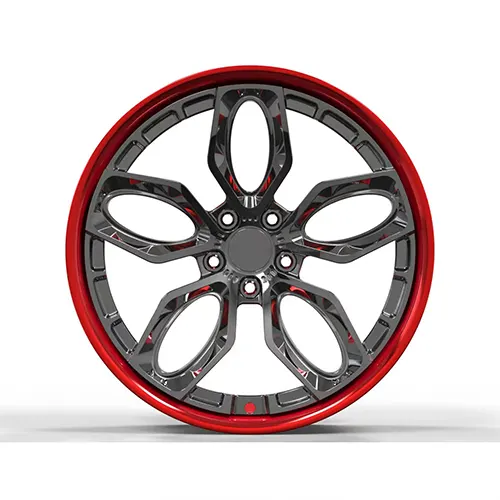
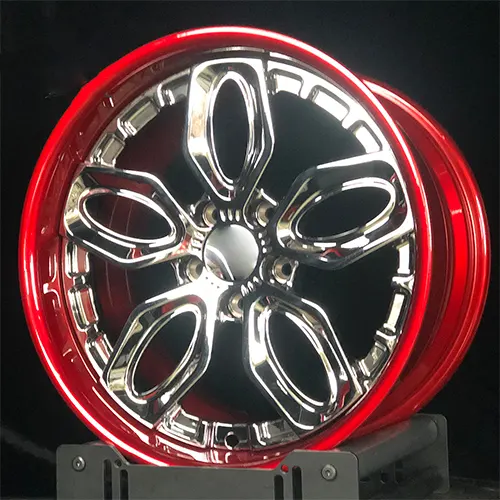
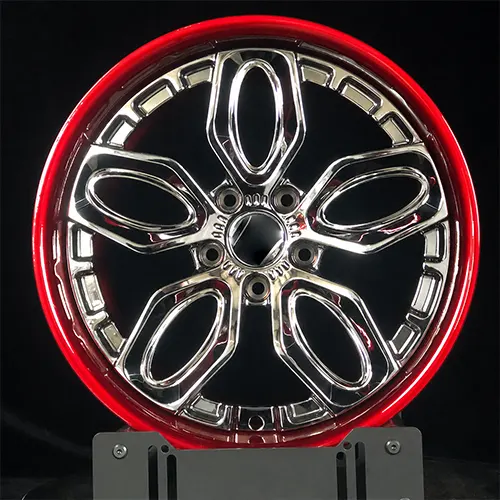
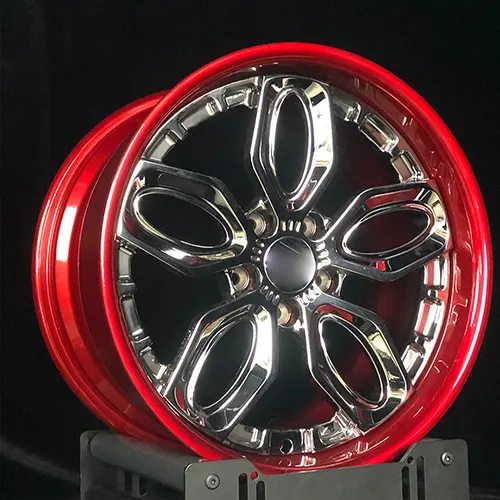
Black Chrome catches the eye first, but the character of this wheel comes from what sits behind it. A five-petal forged center is paired with a separate Candy Red barrel, creating a layered appearance that becomes more pronounced as the viewing angle changes. The 6061-T6 two-piece construction makes that finish separation part of the wheel architecture rather than a painted graphic. Front and rear use distinctly different 18×10 ET36 and 20×9 ET25 specifications, tied together by the same center design and 5×115 / CB71.6 mounting interface.



Specifications
| Item | Specification |
| Model No. | L254818 |
| Front Wheel Size | 18x10 |
| Rear Wheel Size | 20x9.0 |
| Bolt Pattern (PCD) | 5x115 |
| Front Offset (ET) | 36 |
| Rear Offset (ET) | 25 |
| Center Bore | 71.6 mm |
| Lug Seat | 15×32×60° Taper |
| Construction | 2‑Piece Forged, 6061‑T6 aluminum |
| Finish | Black Chrome Center + Candy Red Barrel |
-
Descriptions

Engineering Notes
Two-piece construction is fundamental to the way this wheel is presented. The forged center and barrel remain separate components, allowing the Black Chrome PVD face and Candy Red barrel to be finished independently before final assembly. Color separation therefore follows the physical structure of the wheel instead of relying on masking lines across a single monoblock surface.
Black Chrome brings a dark, reflective metallic quality to the five-petal center. Candy Red behaves very differently: its translucent character allows more depth through the barrel finish, so preparation beneath the coating remains visible. Reflective PVD and translucent candy finishes are both unforgiving of poor surface preparation, which makes consistency before final coating particularly important.
Mounting geometry follows the recorded 5×115 PCD and 71.6 mm center bore, with a 15×32×60° taper lug seat. The original fitment notes specify a hub-centric bore with no spacer rings required, keeping the wheel centered through its machined interface rather than adding another adaptation layer between wheel and hub.
The Finish Changes With the Viewing Angle
Straight on, the darker center controls the appearance. Black Chrome gives the five-petal face enough reflectivity to retain definition without becoming as bright as a conventional polished wheel.
Move away from the front view and the Candy Red barrel begins to take over more of the composition. Red appears through the spoke openings and around the inner wheel section, introducing a second surface behind the center rather than placing another color directly on top of it.
That difference matters commercially. The wheel does not look identical from every angle: the center remains relatively restrained from the front, while the barrel reveals much more color and depth from the side.
Two Materials, Two Separate Finish Zones
Using separate components also gives the finish treatment a practical advantage.
Black Chrome remains isolated to the forged center, while Candy Red belongs to the barrel. Each area can be prepared and finished according to its own surface requirements, and the two-piece architecture keeps future refinishing more manageable than a finish scheme spread across one continuous wheel body.
The visual effect is bold, but the construction behind it is genuine. Nothing needs to imitate assembly hardware or create a false multi-piece boundary.
From Design to Delivery
Quality Verified
Assembly accuracy carries additional importance when two forged sections must be joined, sealed and finished as one completed wheel. Reflective PVD and translucent Candy Red also make surface consistency easier to judge, so finish inspection remains part of the final QC process.
- CMM dimensional inspection on PCD, bore & offset
- Torque-spec assembly hardware, sealed & pressure-tested
- Two-stage PVD + candy finish, inspected for flawless coverage
- Dynamic balancing on every wheel
- Load-rated for the 300 SRT8's curb weight
Result
Black Chrome gives the finished wheel its structure; Candy Red gives it depth.
The five-petal center remains clearly defined from the front, while the barrel introduces a stronger red presence as more of the wheel section becomes visible. Because those surfaces belong to separate components, the contrast feels architectural rather than decorative.
Front and rear also avoid a conventional stagger formula. One axle is wider; the other uses the larger diameter. Combined with different offsets, the completed set has two genuinely axle-specific wheel packages rather than a rear wheel that is simply a wider copy of the front.
For the 300 SRT8, that combination is what gives the wheel its identity: a strong five-petal forged center, two distinctly different finish zones and fitment geometry that is specific enough to stand on its own without exaggerated performance claims.

Building a 300, Charger, or Challenger (5x115)?
Get a custom two-piece forged set in your exact finish
-
Build & Fitment
Most staggered descriptions focus on a wider rear wheel. These specifications follow a different arrangement.
Rear diameter increases from 18 to 20 inches, while width decreases from 10 to 9 inches. Offset also moves from ET36 to ET25. Front and rear should therefore be treated as two complete axle-specific packages rather than described simply as “staggered wheels.”
That distinction is important when this page is used as a product reference. The recorded specification should remain exactly as engineered instead of being rewritten into a more familiar front-narrow / rear-wide formula.
Offset Only Makes Sense Together With Width
ET36 and ET25 do not describe wheel position on their own.
The front ET36 belongs to a 10-inch-wide wheel; the rear ET25 belongs to a 9-inch-wide wheel. Width changes the location of both inner and outer wheel edges relative to the centerline, so comparing the offset numbers without their corresponding wheel widths gives an incomplete picture.
Keeping size and offset together makes the specification much easier for a serious buyer or tuning shop to evaluate.
Direct 5×115 / CB71.6 Mounting Interface
The recorded mounting specification combines:
5×115 PCD
71.6 mm center bore
15×32×60° taper lug seatExisting notes state that the 71.6 mm bore is machined hub-centric and does not require spacer rings. This keeps the centering interface straightforward and avoids treating the bolt pattern alone as proof of fitment.
Two-Piece Assembly Adds More Than Styling Freedom
Separate forged sections make the Black Chrome / Candy Red treatment possible, but finish flexibility is only one part of the construction.
Assembly hardware is torque-controlled, followed by sealing and pressure testing according to the existing QC notes. That is an important distinction from a monoblock wheel carrying a visually similar two-color treatment: here, the component split is real and has its own assembly requirements.
Another 5×115 Application Still Needs Its Own Dimensions
Sharing a bolt pattern does not make the complete wheel specification interchangeable.
A different 300, Charger or Challenger may require another width, offset or wheel diameter even when 5×115 remains unchanged. The safer route is to confirm the final dimensions with XINGTU before machining rather than carry over the same 18×10 / 20×9 geometry automatically.
-
FAQs
1. Why does this wheel use 18-inch front and 20-inch rear diameters?
The recorded specification is a split-diameter setup: 18×10 front and 20×9 rear. It does not follow the more common pattern of keeping diameter equal and simply increasing rear width.
2. What offsets are used?
Front wheels use ET36, while the rear wheels use ET25.
3. Is the rear wheel wider than the front?
No. The front is 10 inches wide and the rear is 9 inches wide. The rear gains diameter rather than width.
4. Is this a genuine two-piece forged wheel?
Yes. The specification lists 6061-T6 aluminum with two-piece forged construction.
5. How are the two finishes separated?
Black Chrome PVD is applied to the five-petal forged center, while Candy Red is used on the separate barrel.
6. What makes the Candy Red finish different from a solid red coating?
The original finish specification describes Candy Red as translucent, so the underlying surface preparation contributes to the final depth and consistency of the color.
7. What bolt pattern and center bore are used?
The mounting specification is 5×115 with a 71.6 mm center bore.
8. Are hub rings or spacer rings required?
The existing fitment notes state that the bore is hub-centric and no spacer rings are required for this specification.
9. What lug-seat geometry is specified?
The lug seat is 15×32×60° taper.
10. How is the two-piece assembly checked?
The existing QC process includes torque-spec assembly hardware, sealing and pressure testing before final balancing.
11. Can the Black Chrome center and Candy Red barrel be refinished separately?
Their separate two-piece construction makes the center and barrel distinct finish zones, which also supports future refinishing more naturally than a one-piece surface treatment.
12. Can these dimensions be copied to another 5×115 Chrysler or Dodge?
Not automatically. Bolt pattern is only one part of fitment; wheel diameter, width, offset, center bore and lug-seat geometry should all be checked for the intended vehicle.
More Forged Wheel Cases