26×9.0 / 26×10.0 Forged Wheels (Set of Four) with Matching Steering Wheel – Electroplated Finish 5×127
- Model: RC1729-1XXT
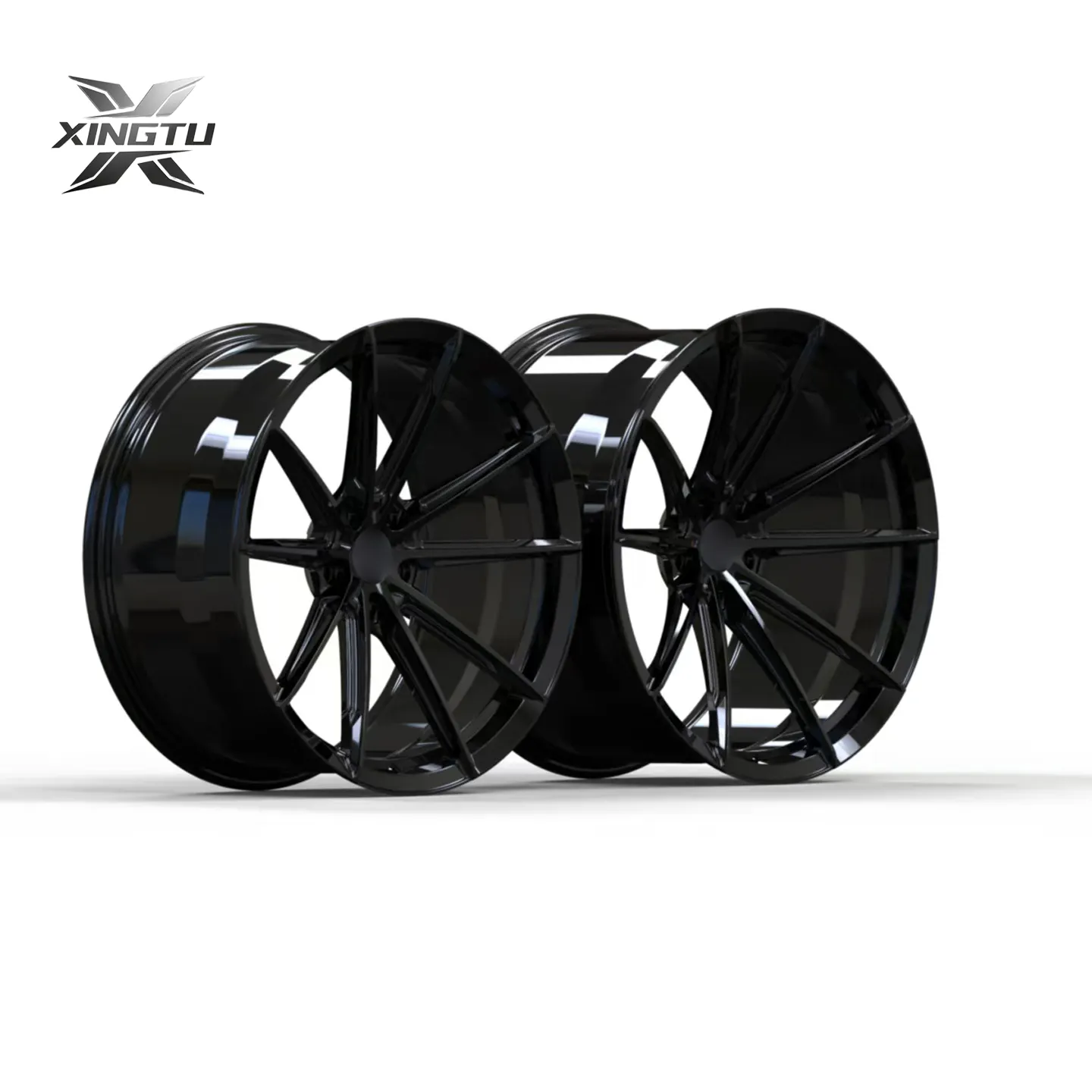
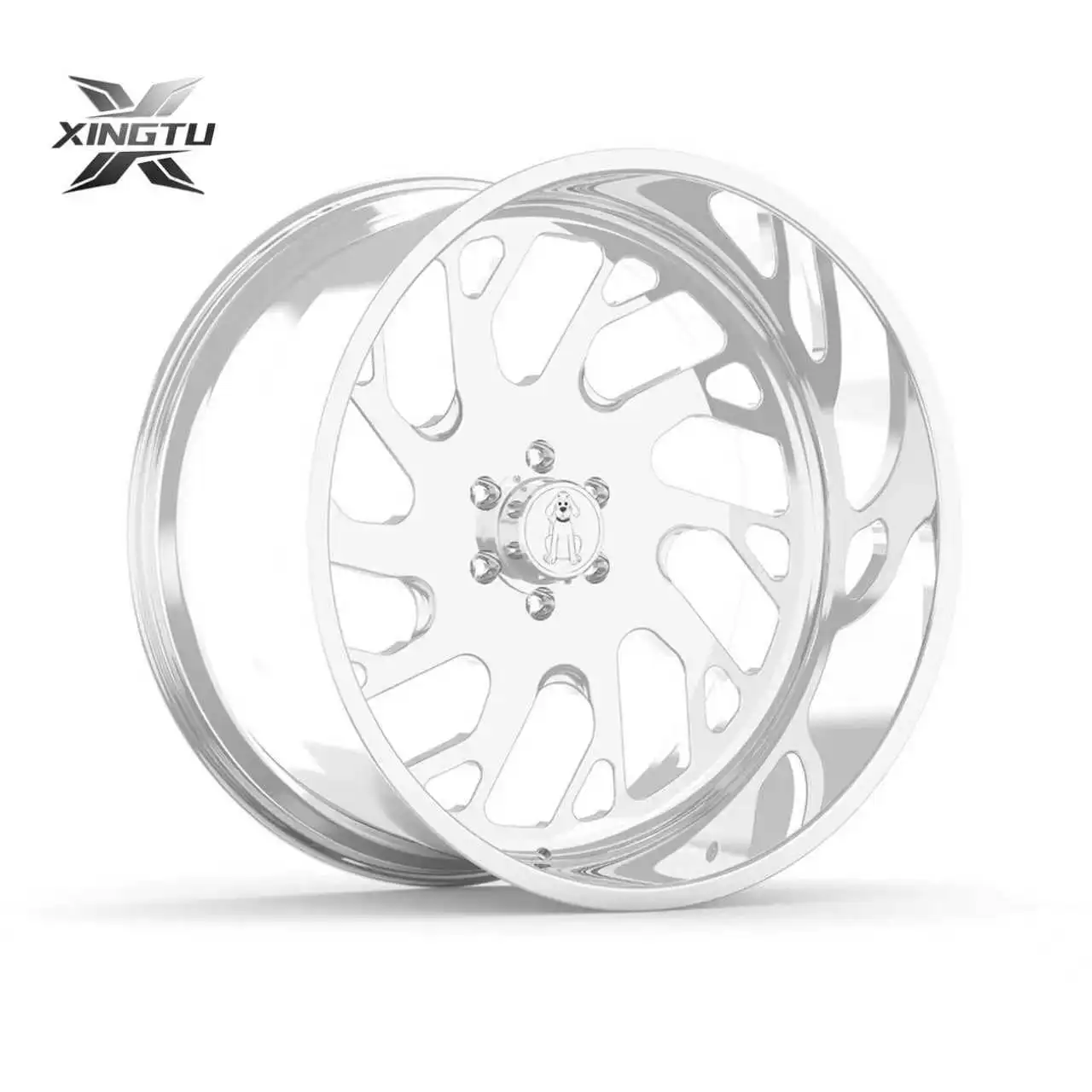
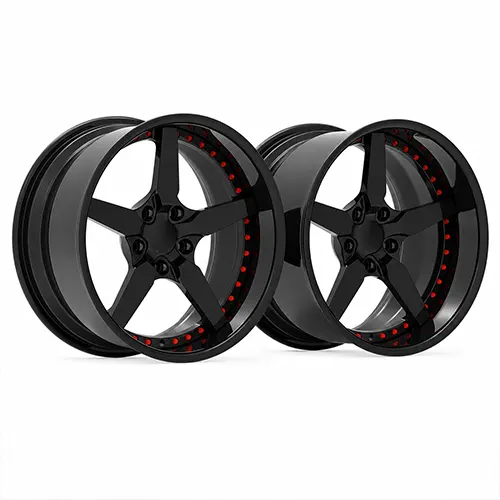
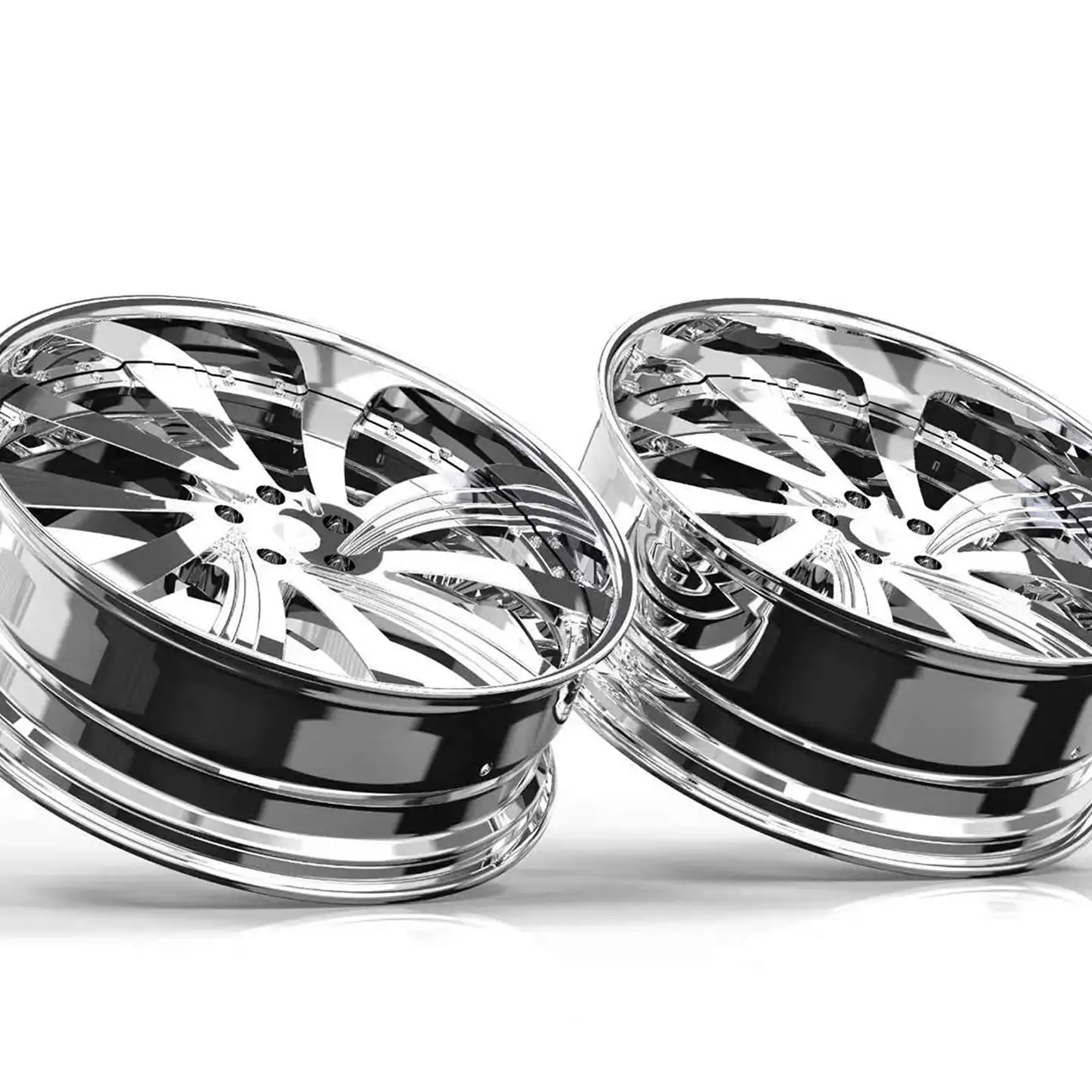
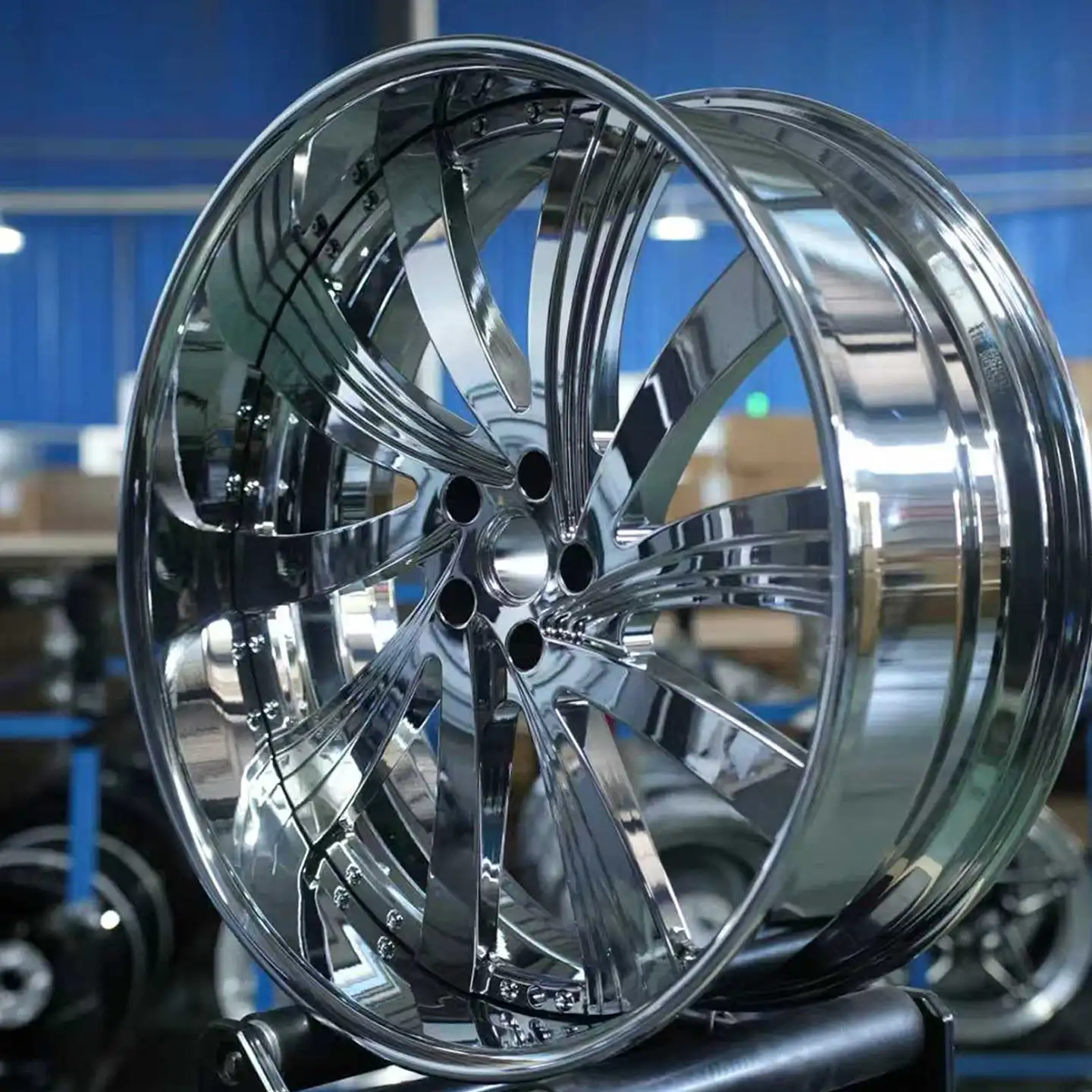
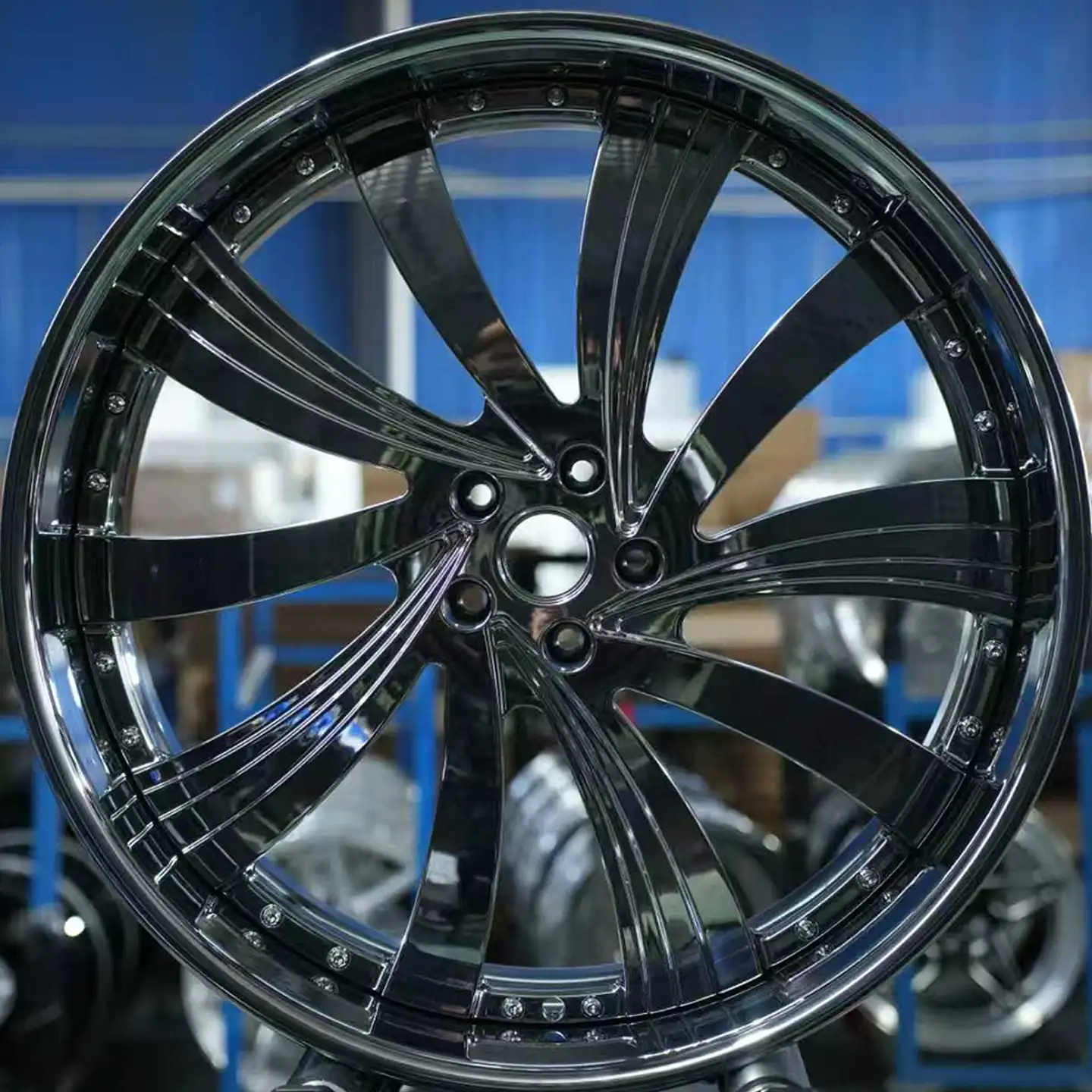
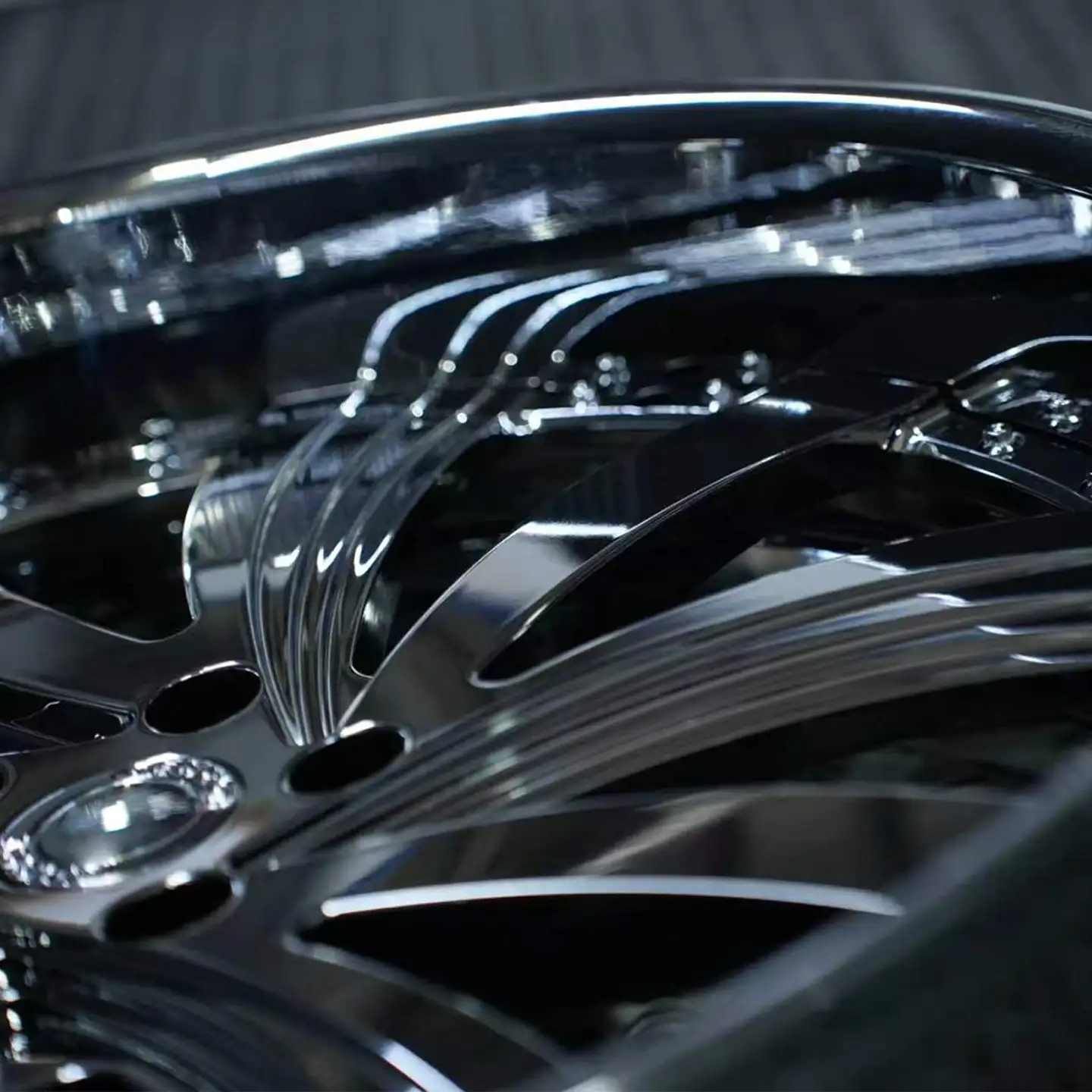
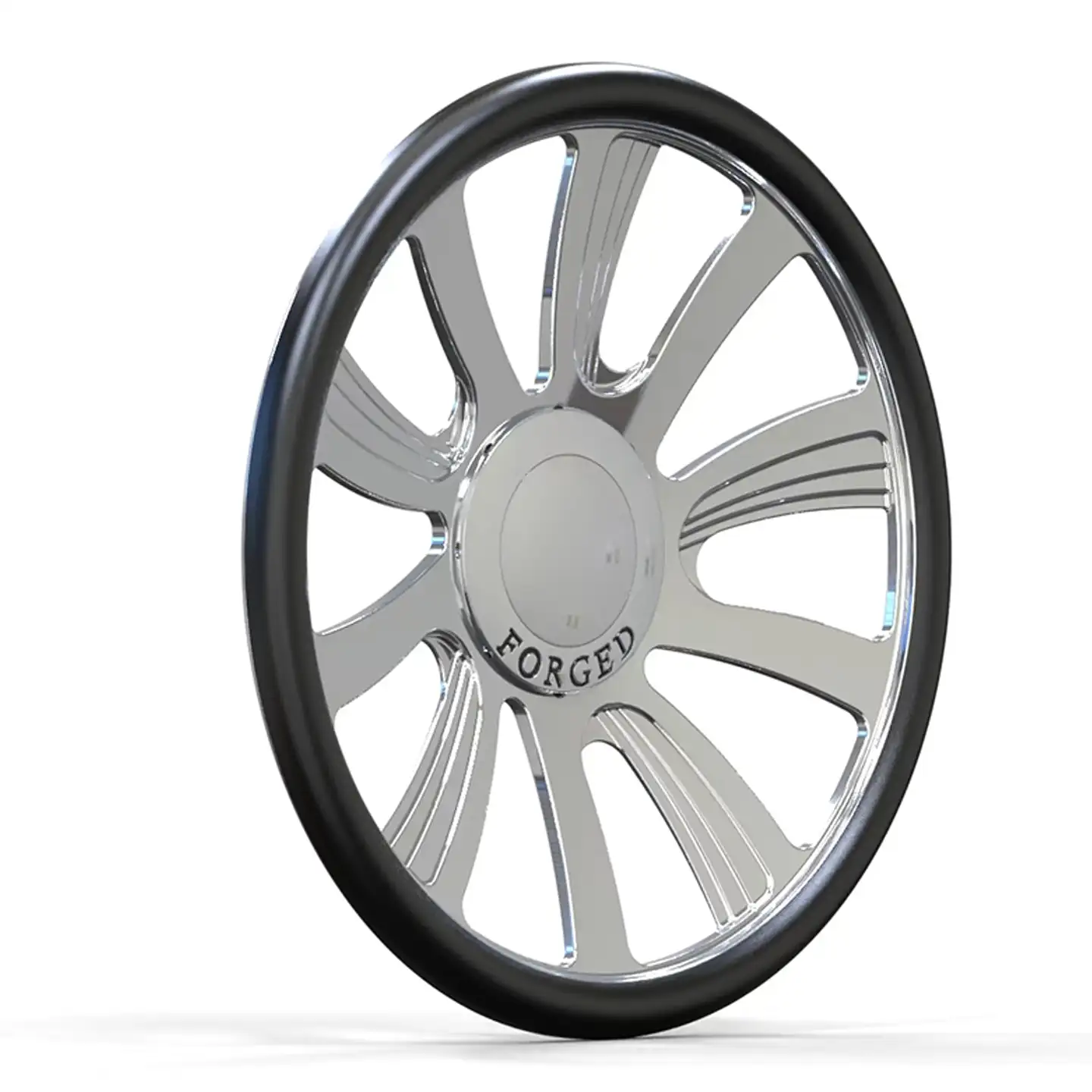
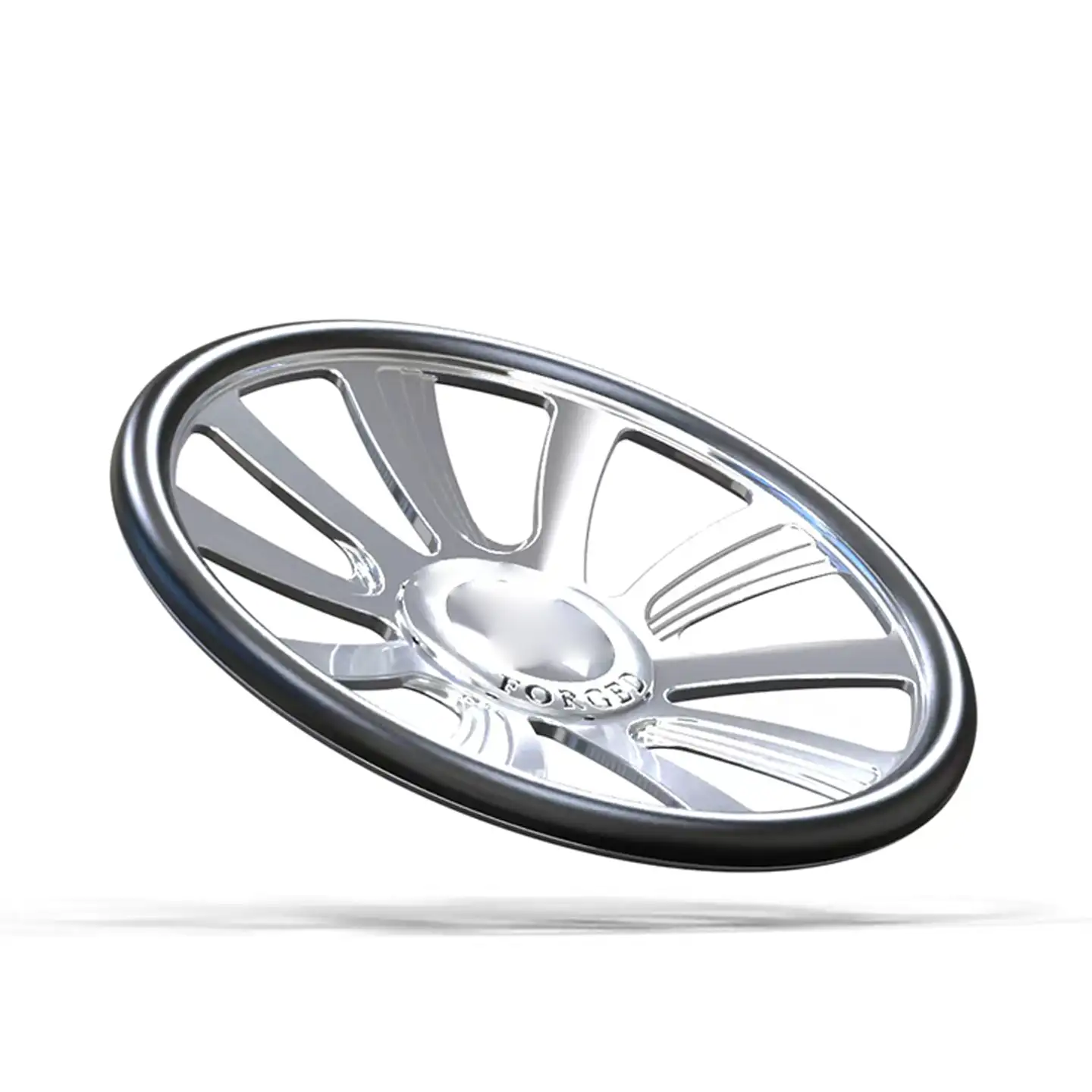
This is a matched set rather than four wheels sold loose: two front wheels at 26×9.0 on -20 rear spacing, two rear wheels at 26×10.0 on -26, plus one steering wheel built to the same spoke language. The bolt circle is 5×127 with a 78.1 mm center bore, and the wheels weigh 22.6 kg at the front size and 22.8 kg at the rear. The face is a ten-spoke fan — each spoke splitting into a fine triple line at the outer end — and the finish is electroplated throughout, so the lip, the spokes and the barrel read as one continuous mirror. The steering wheel carries the same ten-spoke fan and the same bright metal, with a black grip and the word FORGED at the hub, so the interior and the exterior present as one product.



Specifications
| Item | Specification |
| Model No. |
RC1729-1XXT |
| Size |
Front (×2): 26×9.0 Rear (×2): 26×10.0 |
| PCD |
5×127 (5×5") |
| Offset (ET) |
-20/-26 |
| Center Bore |
78.1 mm |
| Weight |
22.6 kg (26×9.0) / 22.8 kg (26×10.0) |
| Load Rating |
Not stated on the specification plate |
| Lug Seat |
Not stated on the specification plate |
| Finish |
Electroplated |
| Construction |
Not stated on the specification plate — outer flange carries a bolted lip joint |
|
Steering Wheel |
Matching ten-spoke design, bright metal with black grip |
| Lead Time |
50 days (26-inch multi-piece, electroplated, four-wheel set plus steering wheel) |
-
Descriptions

XINGTU's engineers want to highlight three details that define this set.
First, the stagger is what carries the car, not the diameter alone. All four wheels are 26 inch, but the set is not square: the front is 26×9.0 on -20 and the rear is 26×10.0 on -26. That inch of extra width at the back, combined with six millimetres more negative spacing, moves the rear outer face further out and deepens the dish exactly where the eye expects weight on a body this size — the rear quarter is the longest uninterrupted panel on the car, and a square set leaves it looking under-filled from the side. At 26 inches the wheel is almost half the body height, so the shape is read before the detail: ten thin spokes keep a window between each pair and let the brake and barrel show through, whereas a few broad blades would turn the face into a solid disc and lose the proportion. The triple line at each spoke tip is the part that survives distance — one fine groove disappears at three metres, three parallel cuts catch light at slightly different angles and keep the spoke legible.
Second, four wheels are one manufacturing event, not four. The two front and two rear are machined to the same drawing families, but the pair that matters is the left-right pair: they are mirror images in service, and any difference in polish or plating current shows up as a colour split across the car that no amount of matching on a bench will fix. So all four go through polishing on the same line, on the same jigs, in the same batch, and are plated as one rack rather than split across two runs. The weight figures tell the same story from the other side — 22.6 kg on the 9.0 and 22.8 kg on the 10.0 — which is close enough to confirm the rim sections are consistent between the two widths, and heavy enough to be honest about: a 26-inch barrel has to hold roundness over a much larger circumference than a 20-inch, the rim section cannot be thinned the way a smaller wheel can, and a bolted outer flange lets the lip be machined and finished as its own part before assembly instead of trying to polish a deep dish and a barrel in one reach.
Third, the set is finished as a set — and that now includes five parts. Electroplating is applied to all four wheels and the same bright metal appears on the steering wheel spokes. On a build with 26-inch wheels the interior is the only place the owner sits, and a matte or painted steering wheel against chrome wheels reads as two separate purchases. The plating also has to hold across very different geometries in the same rack: a 26-inch wheel is a large cathode with a deep dish that shadows current, so the dish and the flange need different current density from the flat face, while the steering wheel is a small, thin, high-curvature part where the risk runs the other way and edges burn. Building them in one finish family means five parts are jigged, polished and plated as one programme, and the colour match is checked across all five side by side rather than against a swatch.
From Design to Delivery
Quality Verified
- Set completeness confirmed: 2 × 26×9.0, 2 × 26×10.0, 1 matching steering wheel
- 26×9.0 and 26×10.0 dimensions inspected on all four
- Rear spacing verified as listed (-20 front / -26 rear) against customer data
- 5×127 PCD and 78.1 mm center bore verified on all four
- Wheel weights verified at 22.6 kg (26×9.0) and 22.8 kg (26×10.0)
- Ten-spoke fan geometry and triple-tip grooves inspected
- Deep dish profile and flange face checked
- Outer flanges and lips machined as separate parts to drawing; joint faces checked
- Steering wheel frame geometry matched to wheel spoke design
- All four wheels and the steering wheel polished on the same line, same batch
- Substrate inspected as a set before plating; defects reworked
- Electroplating brightness and coverage checked on face, dish, flange and barrel
- Edge build and burn marks checked on spoke tips, lip radius and steering wheel edges
- Colour match across all five parts checked side by side
- Lip joints assembled and torqued on all four; fasteners checked
- Runout checked on all four after assembly
- Dynamic balancing completed on all four wheels
- Final dimensional check against drawing RC1729-1XXT
Result
What makes the set work is that five parts agree with each other.
On the car, the stagger does the styling: the rear sits an inch wider and six millimetres further out than the front, the deep dish fills the long rear quarter, and the open ten-spoke fan keeps the 26-inch face from reading as a solid disc.
Inside, the steering wheel repeats the same fan and the same mirror, so the owner's hands are on the design they see when they walk up to the car. Because all five were polished and plated as one batch, the left and right of the car match each other, and the wheel-to-interior match is a measured result rather than a hope.

Building a big-diameter set and want the interior to match?
XINGTU machines forged wheels and matching steering wheel frames as one programme around your hub data, brake package and clearance, and finishes them electroplated, polished, brushed, painted or two-tone.
-
Build & Fitment
Staggered 26‑inch layout drives the visual proportion
26×9.0 ET‑20 front, 26×10.0 ET‑26 rear. The wider, more negatively offset rear fills the long rear quarter panel. The 10 thin spokes maintain openness to display brakes and barrel; triple grooves at spoke tips retain visibility from a distance.
All four wheels are processed as a single batch
Left‑right mirror pairs receive matching polish and plating in one run to avoid colour mismatch. Weights (22.6 kg for 9.0 in, 22.8 kg for 10.0 in) confirm consistent rim sections. The bolted outer flange simplifies machining and finishing of the deep dish.
Finish covers five coordinated components:
The four wheels plus steering wheel spokes share the same electroplated bright metal finish. Special current control compensates for the large deep‑dish wheels and the small high‑curvature steering part to guarantee uniform colour matching.
-
FAQs
1. Why not use an equal-width 26-inch set?
The staggered sizing and offsets fill the rear quarter and deliver the intended heavy-rear visual balance.
2. Why batch all four wheels together?
To eliminate side-to-side colour variation in polishing and plating.
3. Why thin spokes with triple tip lines?
To preserve openness and keep the spoke detail visible at distance.
4. Why include the steering wheel in the plating run?
So interior and exterior bright parts match as one cohesive build.
5. Is plating a simple one-setting process?
No; current density must be adjusted for different part geometries to avoid uneven finish or edge burning.
6. How Long Does Production Take for This Three-Piece Wheel Set?
The recorded production schedule is 50 days, covering component machining, assembly, brushed silver finishing, outer-lip polishing, sealing and final inspection. Shipping time and any additional design revisions are separate from the production schedule.
Related Products