19" 2-Piece Forged Wheels for 2008 Audi S5 | Full Chrome Multi-Spoke
- Model: RC1290-1XT
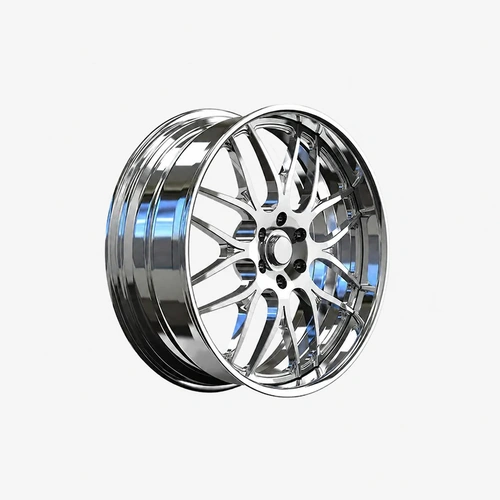
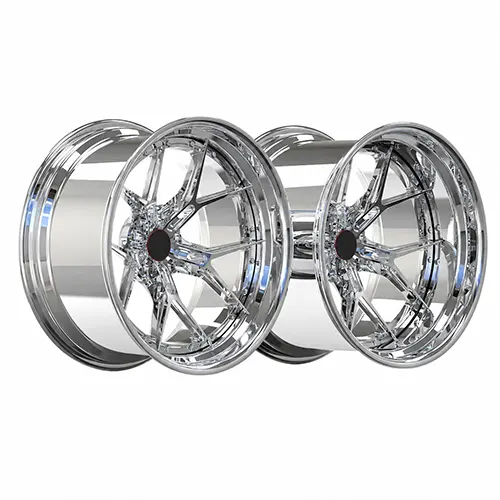
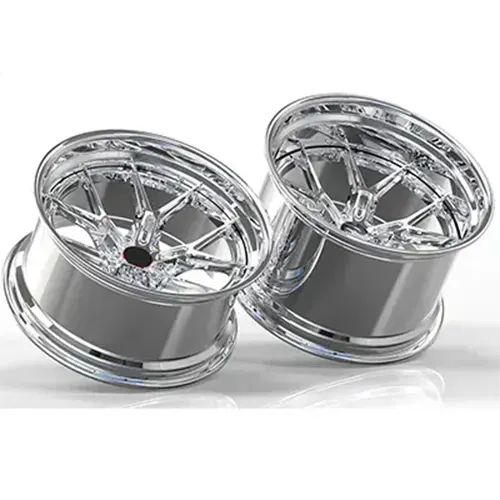
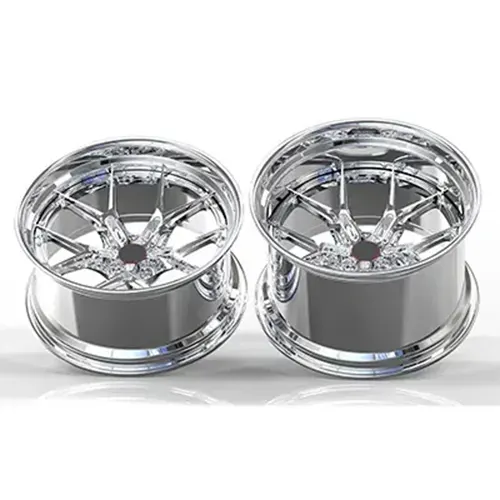
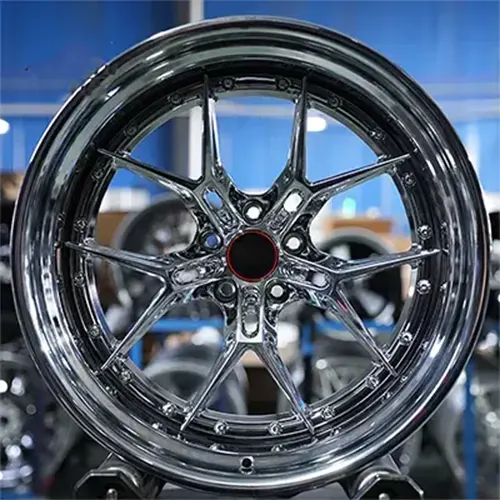
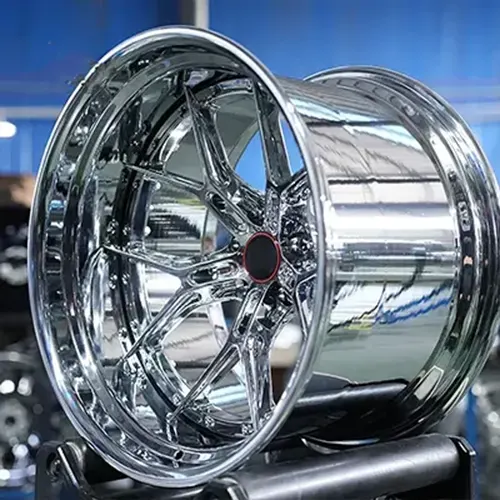
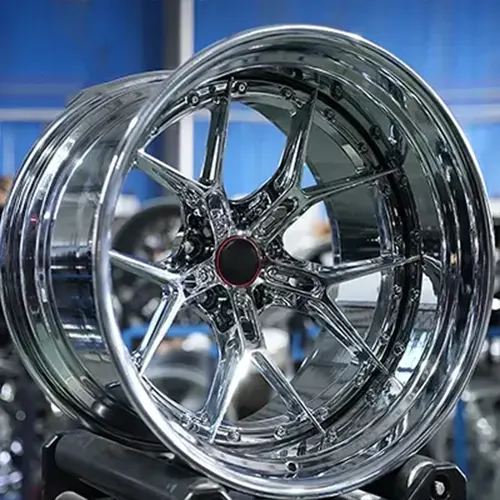
A 12-inch rear wheel and ET-55 offset give this Audi S5 setup genuine depth before any surface treatment is applied. The forged split multi-spoke center sits inside a true two-piece structure, allowing the front and rear wheels to carry noticeably different face positions while keeping one coherent design. Full Chrome then turns that geometry into the visual feature, reflecting across the spokes, rim and deep rear section rather than relying on contrasting colors to create impact.



Specifications
| Item | Specification |
| Model No. | RC1290-1XT |
| Front Size | 19x9.5 |
| Rear Size | 19x12 |
| Front Offset (ET) | -40 |
| Rear Offset (ET) | -55 |
| Bolt Pattern (PCD) | 5x112 |
| Center Bore | 66.5 mm |
| Front Weight | 11.2 kg |
| Rear Weight | 11.9 kg |
| Load Rating | 750 kg |
| Construction | 2‑Piece Forged |
| Finish | Full Chrome |
-
Descriptions

Engineering Notes
The rear specification is what gives this wheel its unmistakable proportions. Width increases from 19×9.5 at the front to 19×12 at the rear, while offset moves from ET-40 to ET-55. Those two changes work together to create a much deeper rear wheel section rather than simply making the back wheel slightly wider.
Two-piece construction gives that geometry room to work. The split multi-spoke center is CNC-machined from a forged blank and joined to the rim section with torque-controlled hardware, allowing the center position and barrel depth to respond to the different front and rear dimensions.
Finished weight is listed at 11.2 kg for the front and 11.9 kg for the rear, with a 750 kg load rating. The mounting specification uses 5×112 PCD and a 66.5 mm center bore, which the existing page identifies as machined for a precise hub-centric fit.
The Rear Wheel Carries the Architecture
The 19×12 rear is not simply a larger version of the front.
Its 2.5-inch increase in width and more negative offset place the forged center within a substantially deeper wheel section. That creates the pronounced rear concavity visible in the finished set without needing to fake depth through spoke styling alone.
From directly in front, both wheels retain the same split multi-spoke identity. Move around the car and the rear becomes visibly more dimensional, with far more rim section appearing behind and around the forged center.
That difference gives the set a strong visual hierarchy while keeping the design itself consistent.
Full Chrome Puts the Surface Work on Display
Chrome is effective here because the wheel already has enough physical shape to support it.
The existing Engineering Notes specify that the spokes and lip are brought to a mirror standard before plating. That preparation is critical: highly reflective chrome makes surface transitions, polishing quality and underlying irregularities easier to see rather than easier to conceal.
On the multi-spoke center, reflections break repeatedly across narrow forged surfaces. On the rear wheel, the same finish follows the concave face and deeper outer section, making the actual wheel depth considerably more apparent.
Full Chrome therefore does more than provide a bright finish. It makes the accuracy of the surface preparation part of what the customer sees.
From Design to Delivery
Quality Verified
Reflective chrome and genuine two-piece construction create separate quality requirements. The assembled wheel needs dimensional accuracy and controlled rim-bolt torque, while the plated surfaces need consistent adhesion and coverage across both open spoke areas and deeper sections.
- Quality Verified 100% CMM dimensional inspection
- Dynamic balancing
- Structural load testing (750kg rated)
- Chrome adhesion & coverage QC
- Torqued-to-spec rim bolts
Result
The finished wheel has presence because the finish follows the geometry rather than trying to replace it.
The front remains comparatively compact at 19×9.5, while the 19×12 rear carries far more physical depth. The split multi-spoke center connects both axles visually, and Full Chrome makes the difference between them easier to see as light travels across the wheel.
Nothing about the rear depth needs to be simulated. It is already built into the width, offset and two-piece architecture.
That makes the final product more convincing than a chrome wheel designed purely for visual impact: the reflective finish is dramatic, but what it reveals underneath is genuine wheel geometry.

Want a show-stopping chrome or deep-concave fitment?
Get a 2-piece setup tuned to your exact width & offset
-
Build & Fitment
Rear Concavity Starts With the Wheel Envelope
The rear depth is the result of two specifications changing together.
A 12-inch width provides substantially more wheel section than the 9.5-inch front, while ET-55 places the mounting face differently within that section. The combination creates room for the forged center to sit deeper relative to the outer rim.
This is why concavity cannot be treated as an independent styling choice. The available depth is tied directly to width, offset and the space available around the vehicle.
Two-Piece Construction Controls Where the Face Sits
The front and rear share one spoke design but do not need to share one face position.
Separate forged center and rim sections make it possible to develop each wheel around its own width and offset while retaining the same visual language. On the rear, that flexibility is what allows the 12-inch section to express considerably more depth.
The rim bolts visible around the center are part of that genuine assembly, not simulated hardware.
ET-40 / ET-55 Are Highly Specific Numbers
Both offsets are strongly negative, and the original Engineering Notes describe the configuration as a widebody-style fitment.
That makes these dimensions valuable as a record of this particular S5 setup, but not as a universal recommendation for every Audi S5.
Body clearance, suspension configuration and the desired wheel position all affect how much width and negative offset can realistically be used.
5×112 and CB66.5 Define the Hub Side
The recorded mounting dimensions are 5×112 PCD and a 66.5 mm center bore.
The existing page states that the bore was machined to the required tolerance for hub-centric fitment. Keeping those dimensions visible gives buyers more useful information than simply describing the wheels as suitable for a 5×112 Audi.
Chrome Adds Its Own Production Requirement
This wheel has a fitment challenge and a finishing challenge.
Once the two-piece geometry is established, the forged surfaces still have to be prepared to a level suitable for mirror chrome plating. The existing QC process specifically includes chrome adhesion and coverage inspection, so finish quality is treated as part of production rather than as a cosmetic afterthought.
For another S5 configuration, the available wheel space can be verified before the final profile is machined, especially when wide sections or strongly negative offsets are being considered.
-
FAQs
1. What gives the rear wheel its deep concave appearance?
The 19×12 rear width, ET-55 offset and genuine two-piece construction work together to create the deeper wheel profile.
2. What size is used at the front?
The front wheel measures 19×9.5.
3. What size is used at the rear?
The rear wheel measures 19×12, making it 2.5 inches wider than the front.
4. What offsets are specified?
The front uses ET-40 and the rear uses ET-55.
5. Is this a genuine two-piece forged wheel?
Yes. The forged multi-spoke center is assembled with a separate rim section.
6. Are the visible rim bolts functional?
Yes. The page identifies them as torque-controlled assembly hardware, and rim-bolt torque is included in the Quality Verified section.
7. Why is Full Chrome demanding to produce?
The underlying spokes and lip have to be prepared to a mirror standard before plating because the reflective chrome surface makes preparation quality highly visible.
8. What are the finished wheel weights?
The front is listed at 11.2 kg and the rear at 11.9 kg.
9. What load rating is published?
Each wheel carries a 750 kg load rating.
10. What bolt pattern and center bore are used?
The specification records 5×112 PCD and a 66.5 mm center bore.
11. Does the page describe this as standard Audi S5 fitment?
No. The existing Engineering Notes describe the ET-40 / ET-55 setup as an aggressive widebody-style fitment.
12. Can the same deep-concave profile be used with different offsets?
Not automatically. Face depth depends on width, offset, two-piece geometry and available vehicle clearance, so changing one dimension can change the achievable profile.
More Forged Wheel Cases