19" 2-Piece Forged Mesh Wheels for 2004 Audi A8L | Full Polished Classic Mesh
- Model: L254552
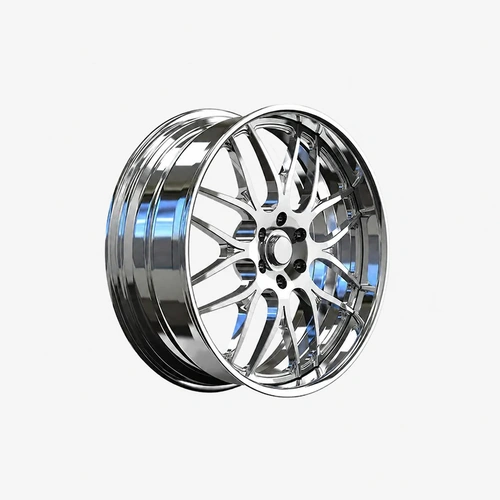
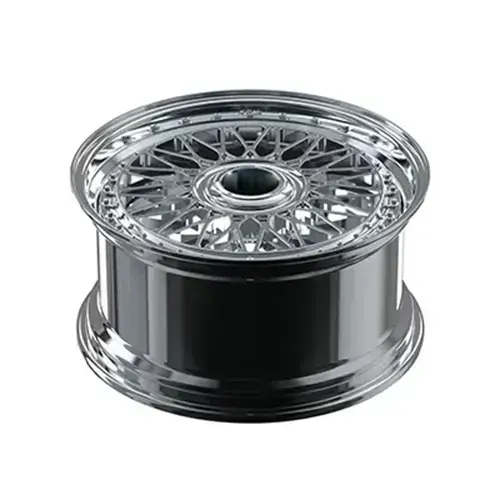
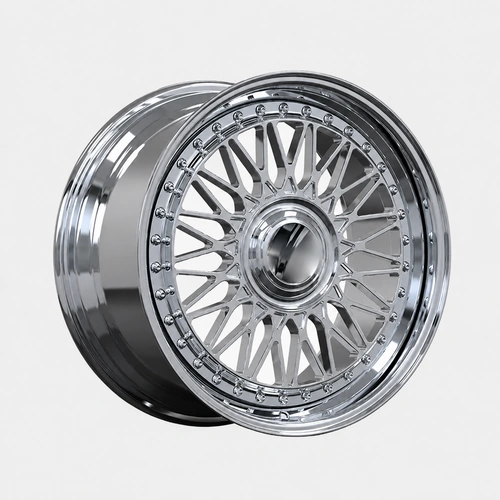
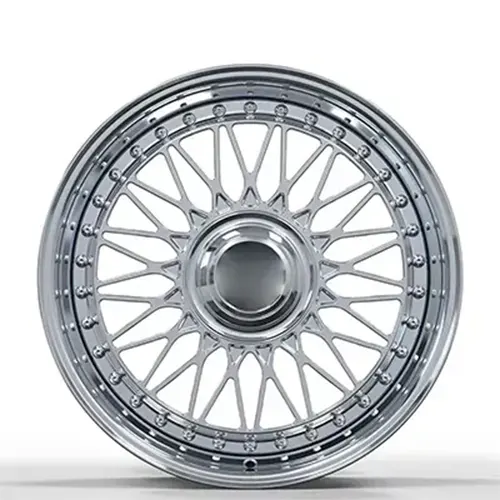
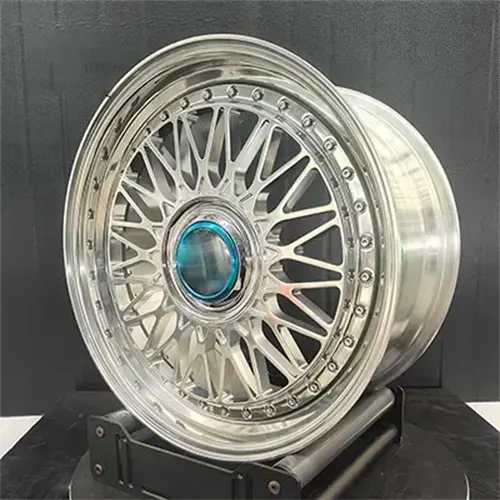
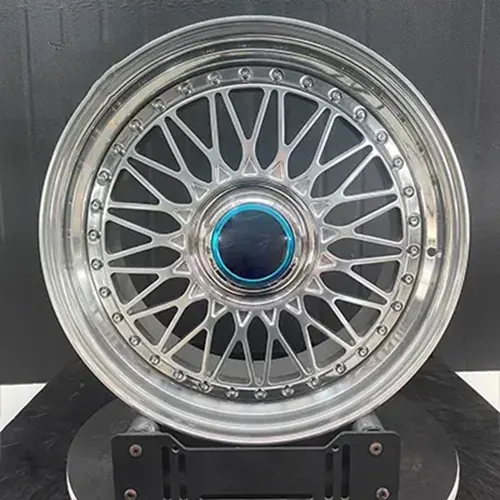
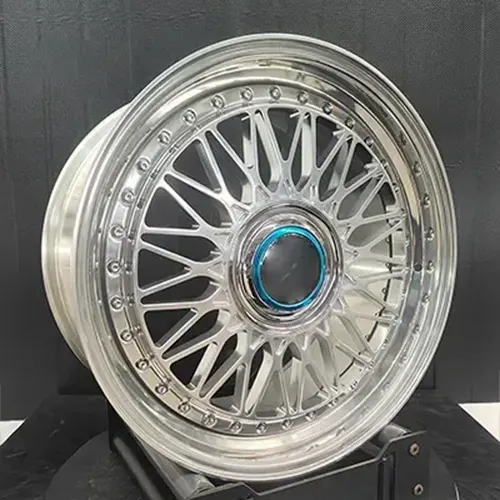
Fine mesh and full mirror polishing give this 19-inch wheel a level of detail that rewards closer inspection. The forged center is built around dozens of narrow interwoven spokes, then paired with polished rim hardware and an equally reflective outer section so the entire wheel reads as one continuous metallic composition. A 19×9.5 ET38 specification keeps the fitment restrained enough for the mesh itself—not an exaggerated lip—to remain the centerpiece.


Specifications
| Item | Specification |
| Model No. | L254552 |
| Wheel Size | 19x9.5 |
| PCD (Bolt Pattern) | 5x112 |
| Offset (ET) | 38 |
| Center Bore (CB) | 57.1 |
| Finish | Full Polished |
| Construction | 2-Piece Forged |
| Hardware | Polished rim bolts |
-
Descriptions

Engineering Notes
The engineering challenge is concentrated in the center. Dozens of thin interwoven spokes form one repeated pattern, so straightness and concentricity have to remain consistent across the entire face. A single misplaced section would disrupt the mesh far more visibly than it would on a simpler spoke design.
The forged center is CNC-machined before being joined to the polished outer barrel with torque-controlled rim bolts. Fitment is 19×9.5 ET38, with 5×112 PCD and a 57.1 mm center bore. Existing notes identify the bore as machined for hub-centric mounting and the offset as selected to position the wheel cleanly within the arch.
Full Polish Is a Test of the Surface Beneath It
Mirror finishing gives this wheel its elegance, but it also exposes the quality of the machining.
The existing page states that polishing is carried across the mesh, lip and bolts by hand. That means reflections move continuously from the intricate center into the outer hardware rather than stopping at a contrasting finish boundary.
Any inconsistency in the mesh or surface preparation becomes easier to notice under that treatment. This is why the dedicated concentricity check and hand-polish QC are meaningful product details rather than generic inspection language.
From Design to Delivery
Quality Verified
Mesh alignment and hand-finishing quality are the distinguishing inspection points here.
- Quality Verified 100% CMM dimensional inspection
- Dynamic balancing
- Concentricity check on mesh spokes
- Torqued-to-spec rim bolts
- Hand-polish finish QC
Result
The wheel feels detailed without feeling overworked.
A dense classic mesh gives the face visual richness, but ET38 and the 19×9.5 section keep the physical proportions controlled. Full polish then unifies center, lip and hardware into one bright surface instead of dividing the wheel into multiple colors.
Its appeal lies in precision and finish quality rather than extreme fitment.

Want a classic mesh forged to your exact fitment?
Get a 2-piece setup tuned to your car's PCD, offset & barrel depth
-
Build & Fitment
ET38 Keeps the Architecture Refined
This is not a deep negative-offset build.
The 19×9.5 ET38 specification gives the mesh enough wheel width to feel substantial without turning the outer rim into the dominant visual feature.
That distinction is important: two-piece construction is being used for a polished classic mesh wheel, not simply to chase maximum dish.
Hub-Centric Mounting
The page records 5×112 PCD and CB57.1, with the center bore machined to the required fitment tolerance.
Two-Piece Without an Exaggerated Lip
The forged mesh center and outer section remain genuine separate components, but the design uses that architecture with restraint.
It gives buyers the craftsmanship and component definition of a multi-piece wheel without requiring an extreme wheel position to make the product interesting.
-
FAQs
1. What makes the fine mesh center more demanding to produce?
The center contains many narrow interwoven spokes that form one continuous radial pattern. Each section has to remain straight and concentric; even a small inconsistency can become visible across the complete mesh. That is why the existing QC process includes a dedicated concentricity check.
2. Why does full polishing matter more on a mesh wheel?
A mirror finish highlights every spoke intersection and surface transition. The existing page states that the mesh, lip and rim bolts are polished by hand, so surface quality remains visible across almost the entire wheel rather than being hidden beneath a matte or opaque coating.
3. Does two-piece construction mean this Audi A8L wheel is intended to have an extreme deep lip?
No. This wheel uses a comparatively measured 19×9.5 ET38 specification. The two-piece architecture supports the forged mesh center and polished outer section without making maximum dish the main design objective.
4. Why is ET38 important to this design?
The existing Engineering Notes state that ET38 was selected to position the wheel cleanly within the arch. In this case, offset supports a refined wheel position rather than an aggressive negative-offset stance.
5. Are the polished rim bolts part of the actual assembly?
Yes. The wheel is assembled as a genuine two-piece forged construction using torque-controlled rim bolts. Their polished finish allows the hardware to visually blend with the surrounding mesh and lip instead of creating a separate color accent.
6. What mounting dimensions are used?
The wheel uses 5×112 PCD and a 57.1 mm center bore. The page describes the bore as machined for hub-centric mounting.
7. Why is no load rating quoted here?
The supplied page content does not publish a load-rating value. Rather than adding a figure from another wheel or assuming one, the product copy should stay with the engineering information actually shown on this page.
8. Who is this wheel design likely to appeal to?
The strongest appeal is to buyers who value detailed forged machining and finish quality more than extreme stance. The wheel’s character comes from fine mesh geometry, hand polishing and controlled fitment rather than a very deep barrel or oversized diameter.