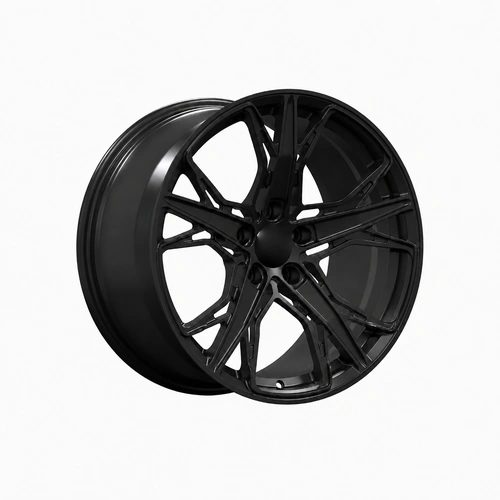
2011 Nissan GT-R (R35) | Staggered 20" Gloss Black Forged Monoblock
- Model: L253681
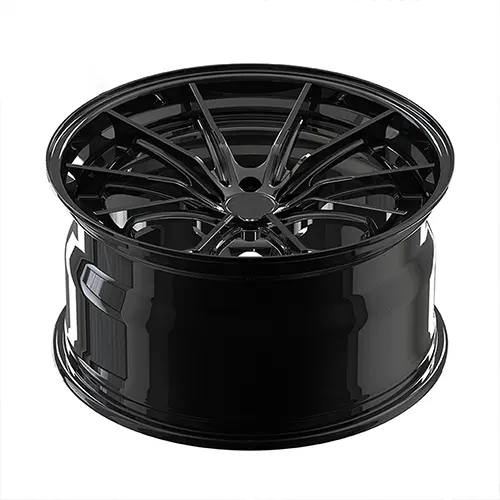
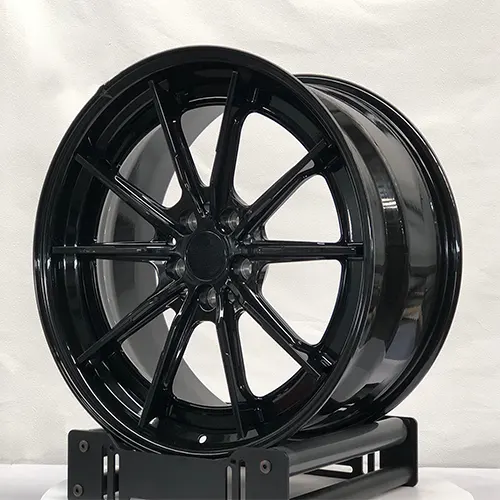
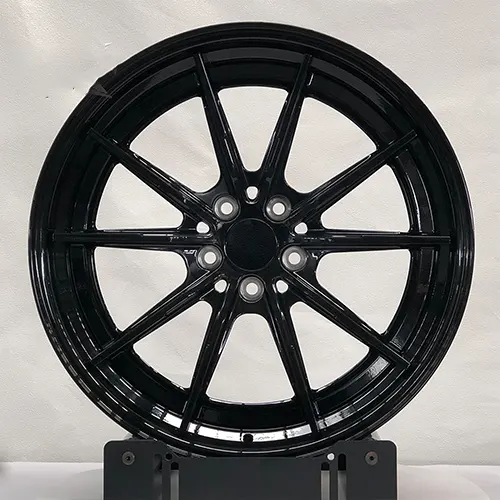
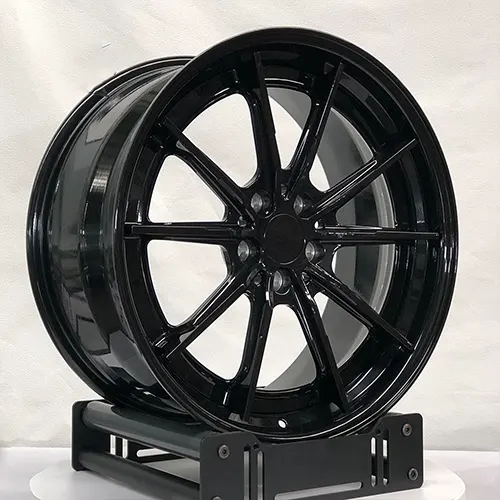
One diameter, two very different axle roles. The front uses a 20×9.5 ET45 specification, while the rear moves to 20×10.5 ET25, adding width and changing wheel position without increasing diameter. A forged 6061-T6 monoblock keeps the structure visually clean, and the split 10-spoke face leaves the brake package open behind the wheel. Gloss Black brings the entire form together, giving the R35 a darker, more concentrated appearance without relying on a contrasting lip or multi-piece hardware.



Specifications
| Item | Specification |
| Model No. | L253681 |
| Front Size | 20x9.5 |
| Rear Size | 20x10.5 |
| Bolt Pattern (PCD) | 5x114.3 |
| Front Offset (ET) | 45 |
| Rear Offset (ET) | 25 |
| Center Bore | 66.1 mm |
| Lug Seat | 15×32×60° Taper |
| Construction | Forged Monoblock, 6061‑T6 aluminum |
| Finish | Gloss Black |
-
Descriptions

Engineering Notes
Front and rear remain 20 inches in diameter, but their geometry is intentionally different. The 20×9.5 front uses ET45, while the rear combines a wider 20×10.5 section with ET25. Width therefore increases by one inch as offset changes by 20 mm, creating a much more pronounced difference between the two axle positions than the equal diameter suggests.
The original fitment notes associate the ET45 front with fender clearance at full steering lock, while the 20×10.5 ET25 rear is paired with 285-section tires. Brake packaging is also part of the specification, with clearance recorded for the large Brembo calipers behind the split-spoke face.
Mounting dimensions are 5×114.3 PCD with a 66.1 mm center bore and a 15×32×60° taper lug seat. Rather than treating bolt pattern as the complete fitment, these dimensions work together with width and offset to define how the wheel mounts and where it sits.
Monoblock Keeps the Design Focused
No separate rim section or exposed assembly hardware is needed to give the wheel presence.
The forged 6061-T6 monoblock carries the complete split 10-spoke form as one continuous structure. That keeps the face visually precise and allows the changing front-to-rear geometry to remain more important than decorative construction details.
The split-spoke layout also gives the wheel enough open area for the brake package to remain visible behind the face. On a GT-R, where the calipers occupy a significant part of that visual space, the wheel and brake hardware read as one complete package rather than competing for attention.
Gloss Black Relies on Shape, Not Color Blocking
Gloss Black is intentionally simple here.
There is no polished outer lip, contrasting barrel or colored trim ring to break up the wheel. Instead, reflections across the spoke surfaces reveal the split pattern and face depth while the overall silhouette remains dark and unified.
That makes the finish particularly suitable for the monoblock construction. The wheel does not need a second color to explain its architecture; the forged face and axle-specific proportions already provide enough definition.
From Design to Delivery
Quality Verified
Dimensional control carries particular weight here because front and rear differ substantially in offset while retaining the same diameter. PCD, bore and wheel position are checked before final balancing so the two axle specifications remain consistent with their intended fitment.
- CMM dimensional inspection on PCD, bore & offset
- Dynamic balancing on every wheel
- Load-rated for GT-R weight & torque
Result
The finished set does not need a larger rear diameter to create a stronger rear presence.
Equal 20-inch diameters keep the wheel design consistent around the car, while the wider 10.5-inch rear and lower ET25 position give the back a distinctly different proportion from the 9.5-inch ET45 front. From the side, the four wheels remain closely related; from a three-quarter angle, the rear geometry becomes much more apparent.
Gloss Black keeps that change understated rather than theatrical. The split 10-spoke face stays recognizable across both axles, Brembo clearance remains built into the wheel profile, and the forged monoblock avoids unnecessary visual complexity.
The appeal comes from how carefully the dimensions work together—not from making the wheel look more complicated than it needs to be.

Running an R35 GT-R?
Get a fitment-verified forged set built to your exact offset
-
Build & Fitment
The rear gains one inch of width while offset decreases by 20 mm. Those changes affect the wheel section and its position at the same time, giving the rear a substantially different relationship with the body than the front.
This is why ET45 and ET25 should never be discussed without their corresponding widths.
Front Geometry Prioritizes Available Clearance
The 20×9.5 ET45 front is the more inward-positioned half of the specification.
Existing fitment notes connect that geometry with maintaining fender clearance through full steering lock. The front wheel also has to accommodate the large Brembo caliper behind the face, so spoke shape and mounting position cannot be chosen from stance alone.
That combination gives the ET45 specification a practical role beyond appearance.
Rear Geometry Adds Width and Changes Position Together
Rear sizing moves to 20×10.5 ET25.
The original description pairs the wider rear with a 285-section tire, giving the additional wheel width a specific tire context. Because offset drops at the same time, the rear is not simply a one-inch-wider copy of the front.
Its complete wheel envelope changes.
That is the more useful way to understand the stagger: not “front versus rear offset,” but two axle-specific combinations of width, offset and tire packaging.
Mounting Interface: 5×114.3 / CB66.1
PCD is only one part of the mounting specification.
The recorded dimensions are:
- 5×114.3 PCD
- 66.1 mm center bore
- 15×32×60° taper lug seat
The 60° taper seat follows the aftermarket lug configuration described in the original fitment notes. Keeping PCD, bore and seat geometry together gives a much clearer technical reference than describing the wheel only as “5×114.3 compatible.”
Brembo Clearance Begins With the Wheel Face
Large-caliper clearance is not something that can be solved by width and offset alone.
The space behind the split 10-spoke face also has to accommodate the Brembo brake package. That makes spoke profile and mounting-pad position part of the fitment conversation, especially at the front where steering and brake clearances have to coexist.
The original page confirms Brembo clearance, so this is a genuine engineering value worth retaining rather than replacing with generic performance language.
Different R35 Configurations Still Need Verification
The 20×9.5 ET45 / 20×10.5 ET25 combination reflects the dimensions shown here. Changes to tires, suspension or brake hardware can alter the available space even on another R35.
When those variables change, the final fitment can be checked before machining instead of assuming the same offsets should be carried over unchanged.
-
FAQs
1. What are the front and rear wheel sizes?
The front wheels are 20×9.5, while the rear wheels are 20×10.5.
2. Why do both axles stay at 20 inches?
Keeping one diameter preserves a consistent wheel scale around the R35. Front-to-rear differentiation comes from width and offset instead.
3. What offsets are used?
The front uses ET45 and the rear uses ET25.
4. Why is the ET25 rear specification so different from the ET45 front?
The rear is also one inch wider. Width and offset change together, so the rear wheel occupies a different space relative to the mounting surface.
5. What rear tire width is referenced in the original fitment notes?
The existing description references a 285-section rear tire with the 20×10.5 ET25 wheel.
6. What bolt pattern and center bore are used?
The recorded mounting dimensions are 5×114.3 PCD and a 66.1 mm center bore.
7. What lug seat is specified?
The wheel uses a 15×32×60° taper lug seat.
8. Is this a two-piece wheel?
No. It is a forged monoblock made from 6061-T6 aluminum.
9. Does the wheel clear the Brembo brakes?
Yes. Brake clearance for the large Brembo calipers is recorded in the original page content.
10. Why use a split 10-spoke face?
The open split-spoke layout gives the 20-inch monoblock a lighter visual structure while leaving the brake package visible behind the wheel.
11. What finish is used?
The wheel is finished in Gloss Black across the monoblock structure.
12. Can ET45 front and ET25 rear be copied to another R35?
Not automatically. Tire size, suspension configuration and brake hardware should be checked before the final wheel dimensions are confirmed.
More Forged Wheel Cases