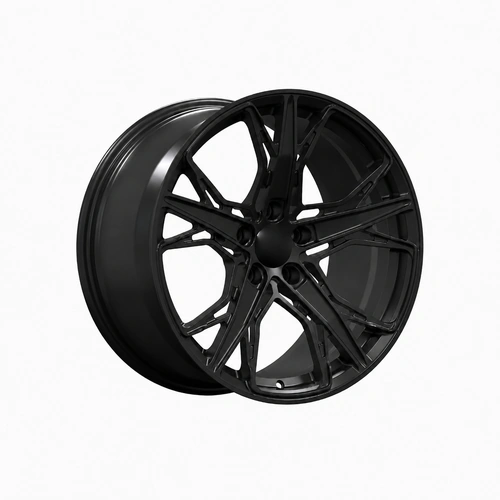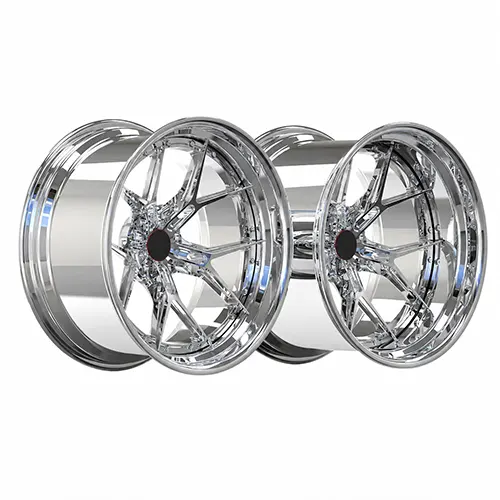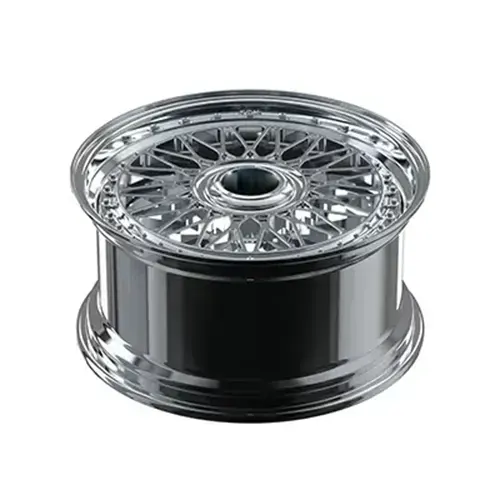
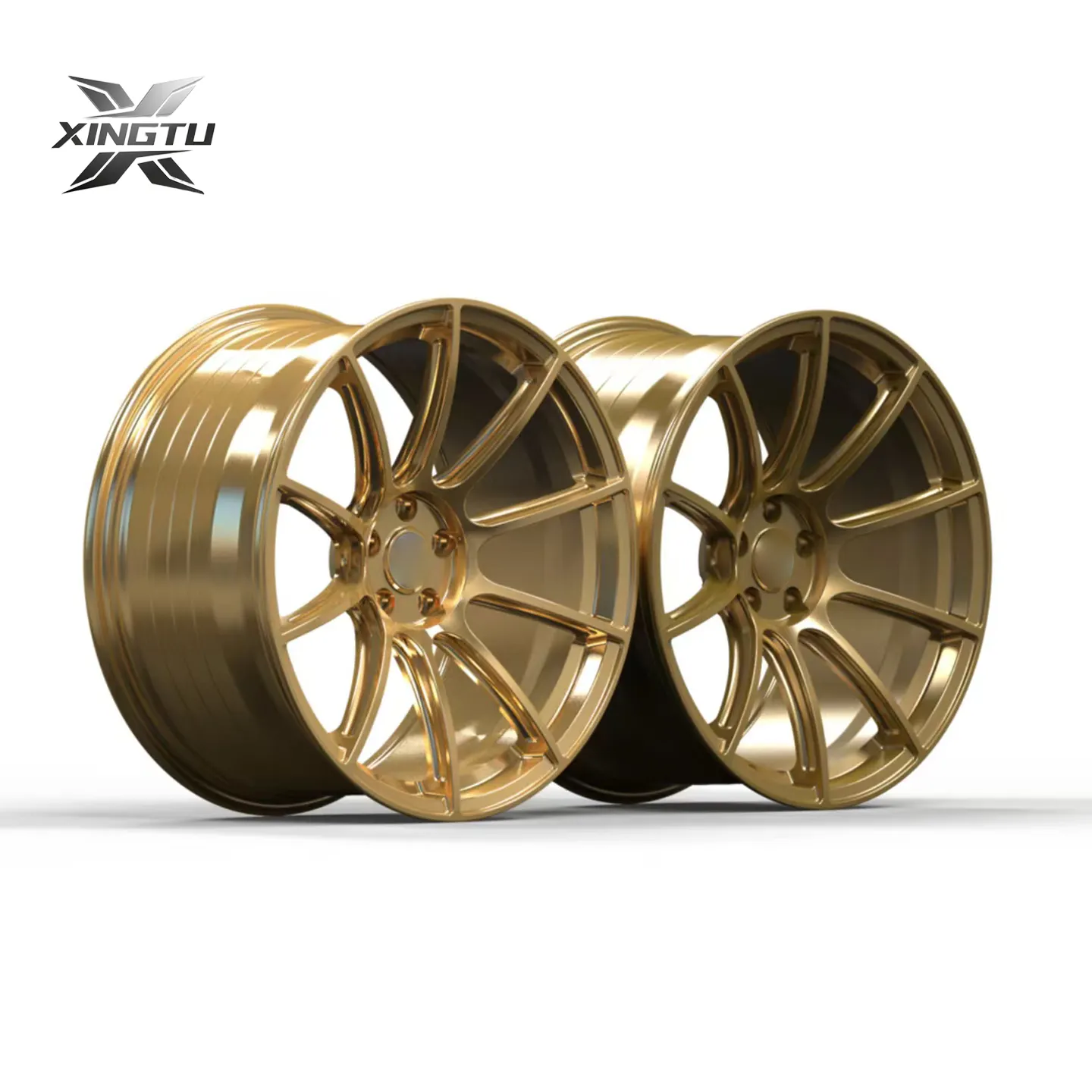
20×10 / 20×11 Forged Monoblock Wheels for 2022 BMW M5 (F90) – Brushed Gold Ten-Spoke, Knurled Bead Seat 5×112
- Model: 26-09-24-13 (JC030 / JC030)
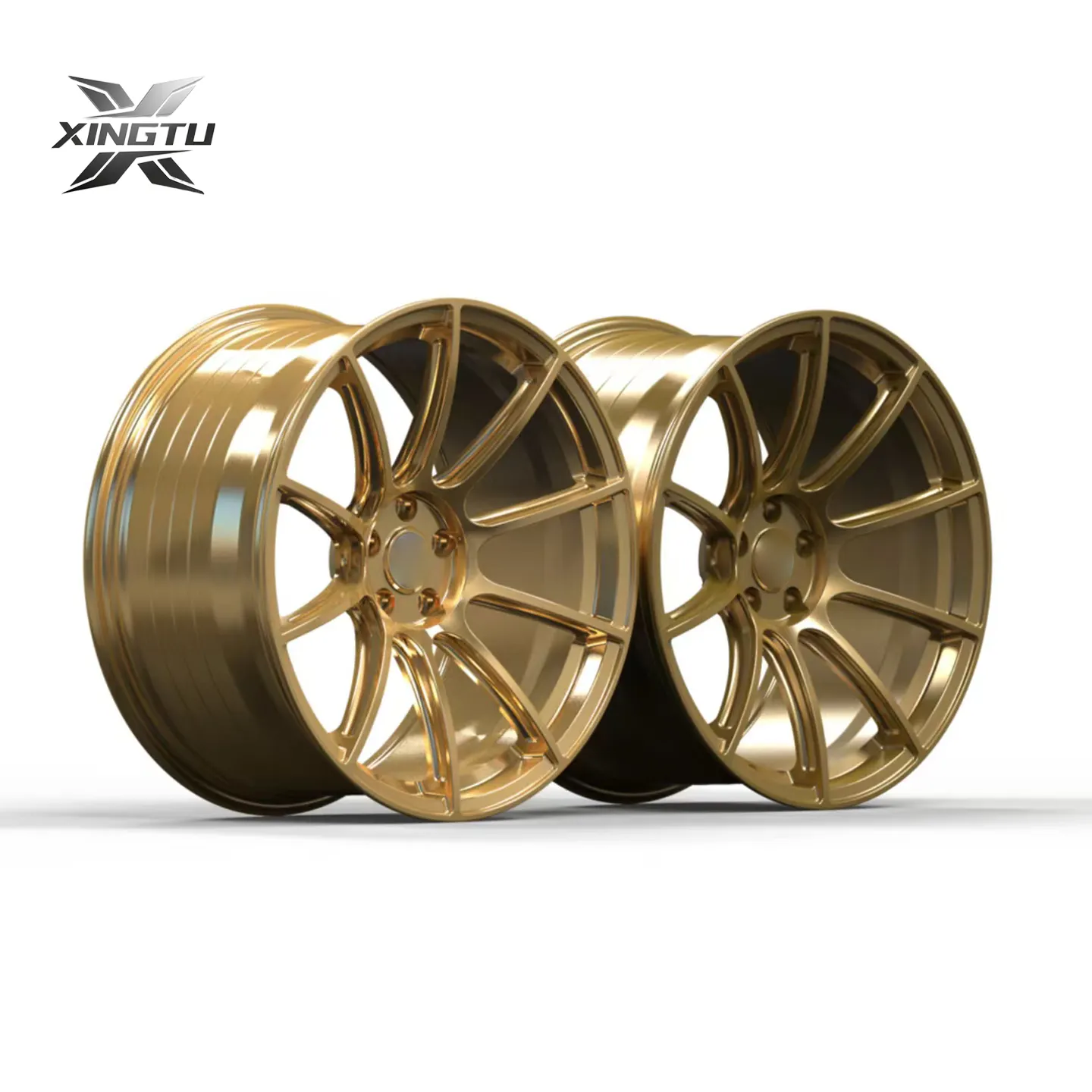
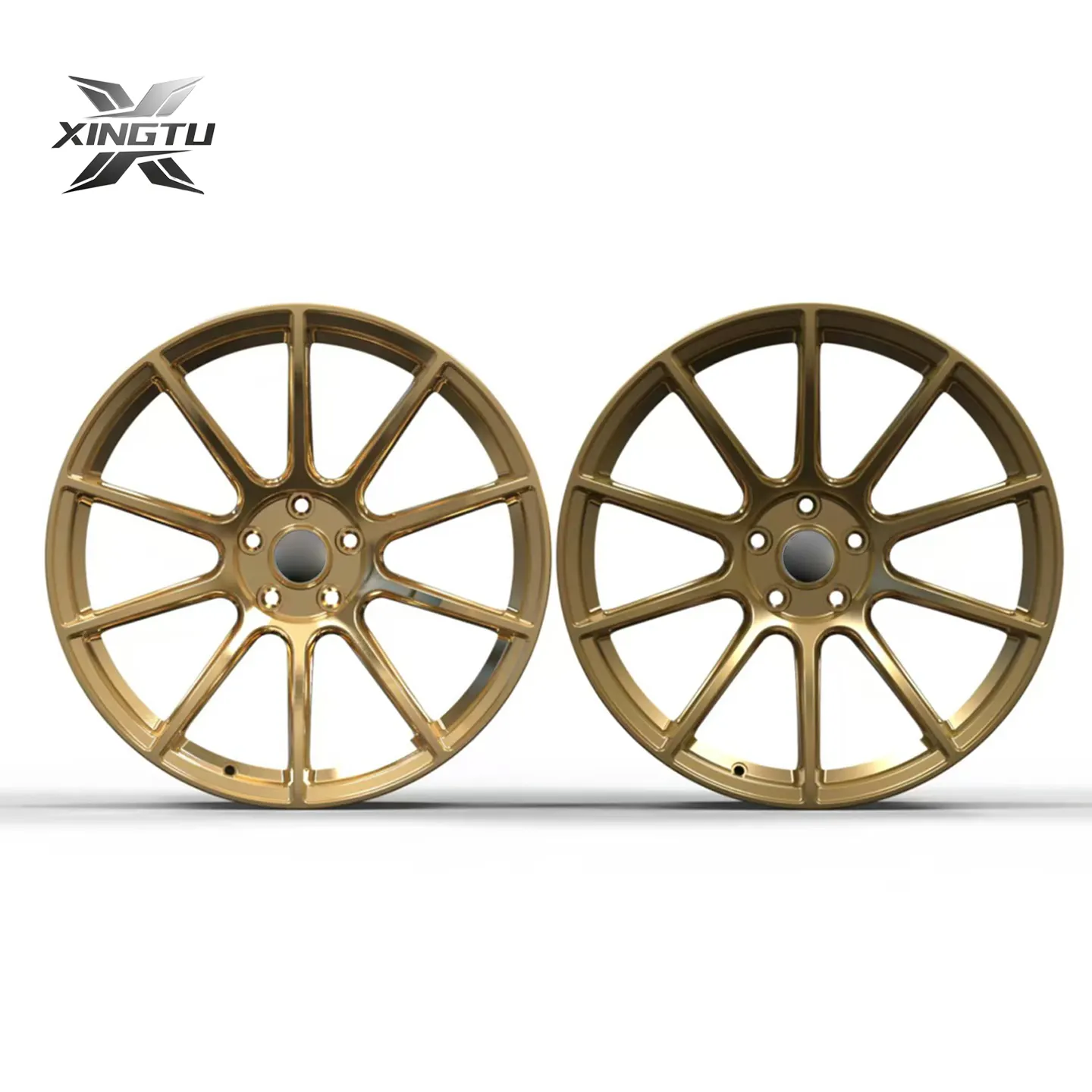
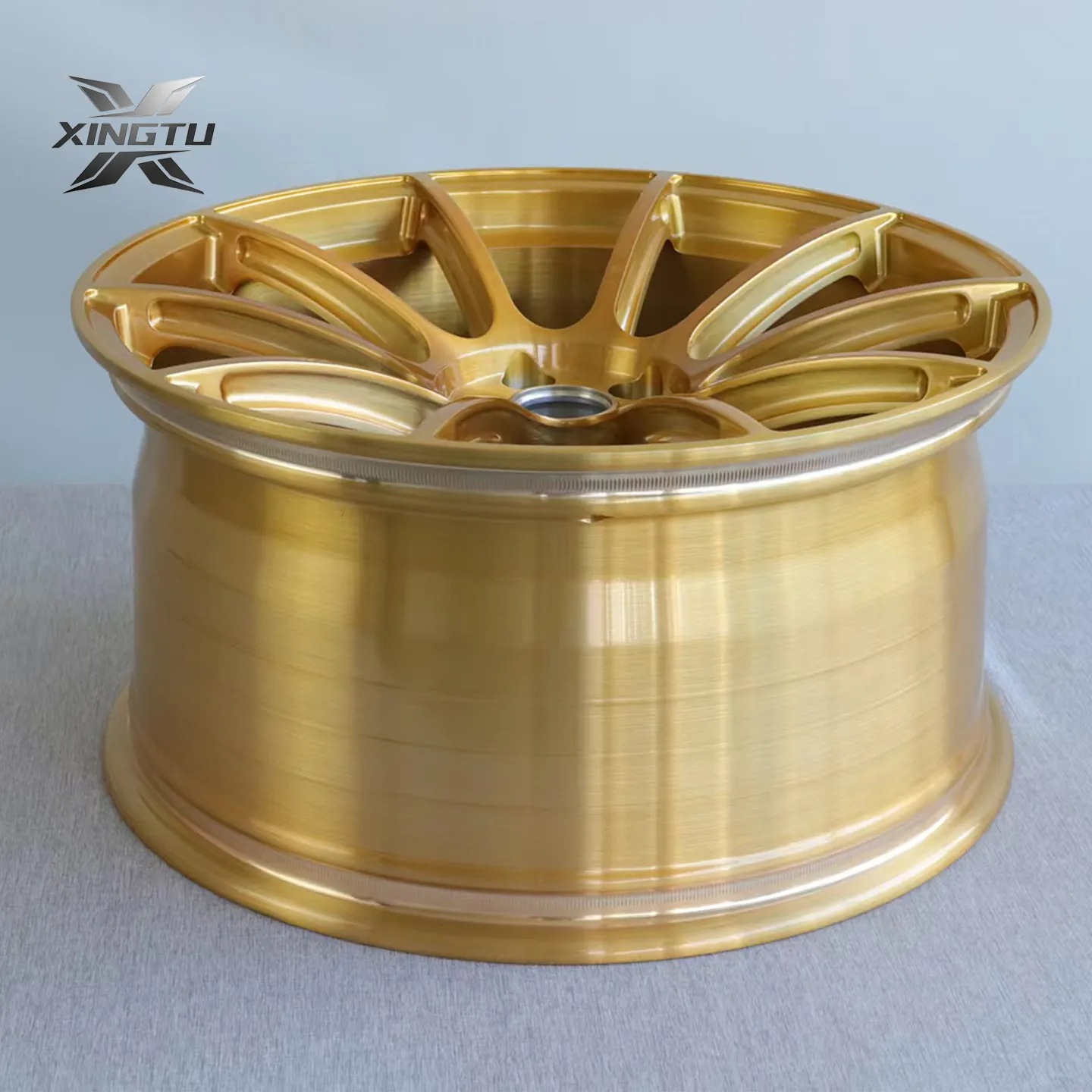
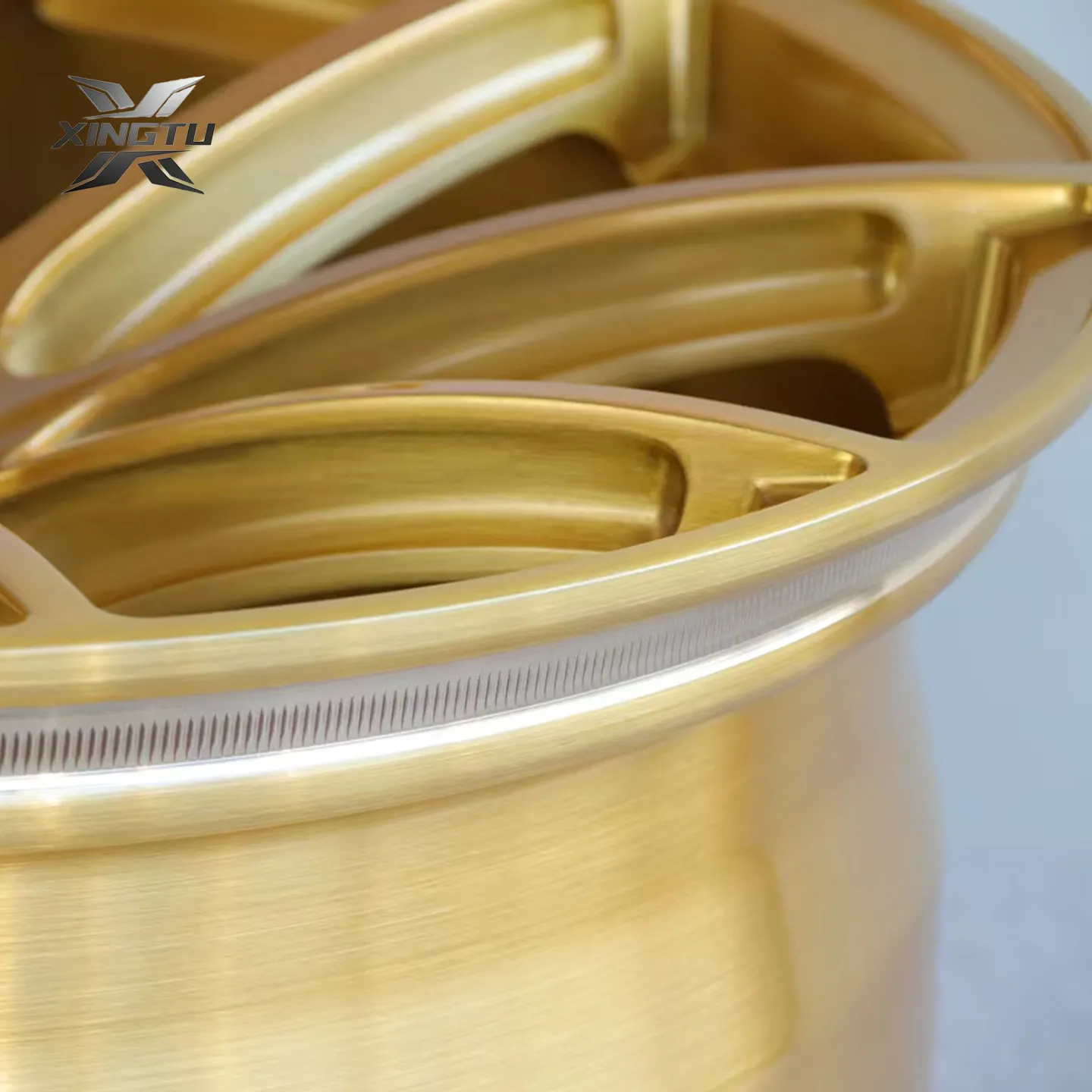
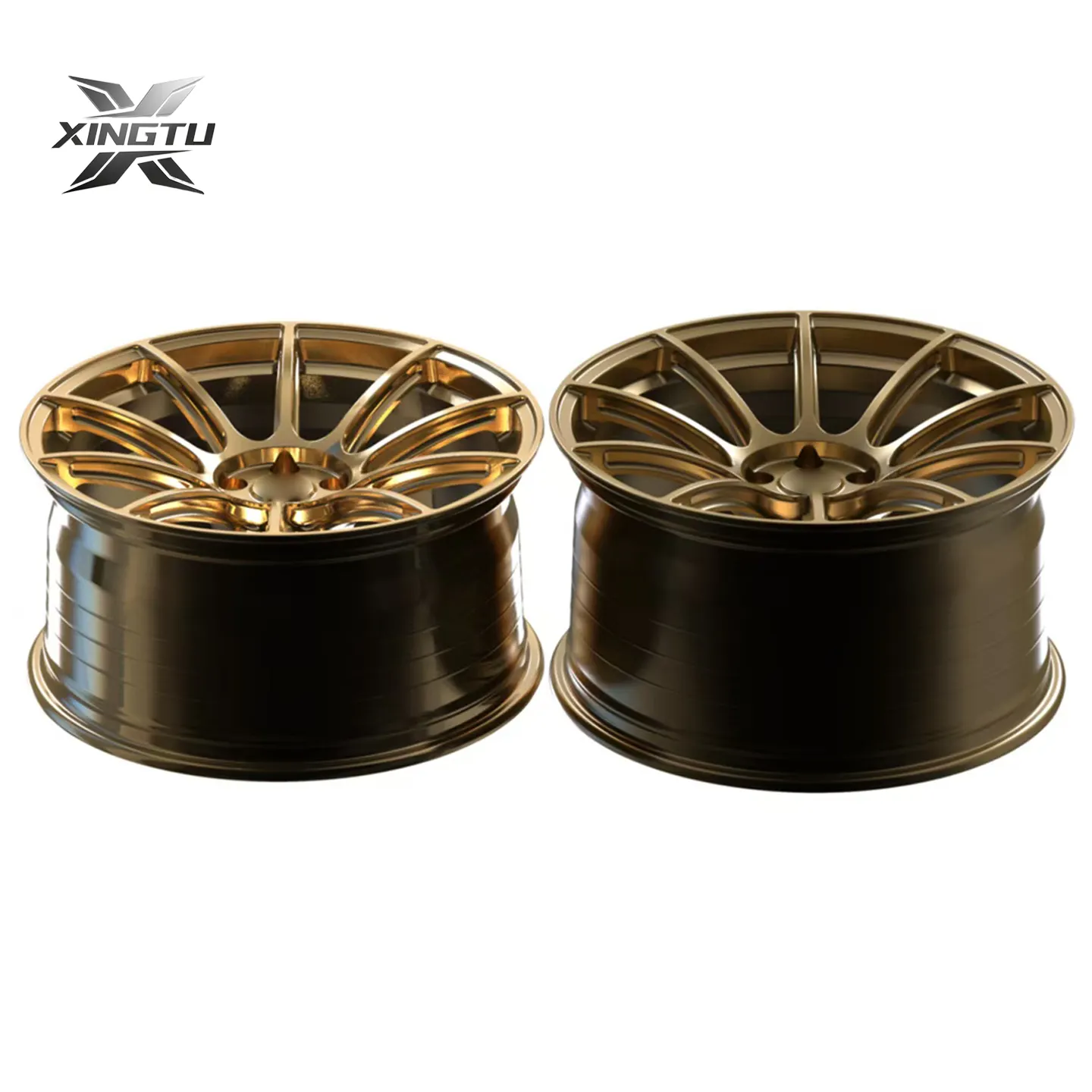
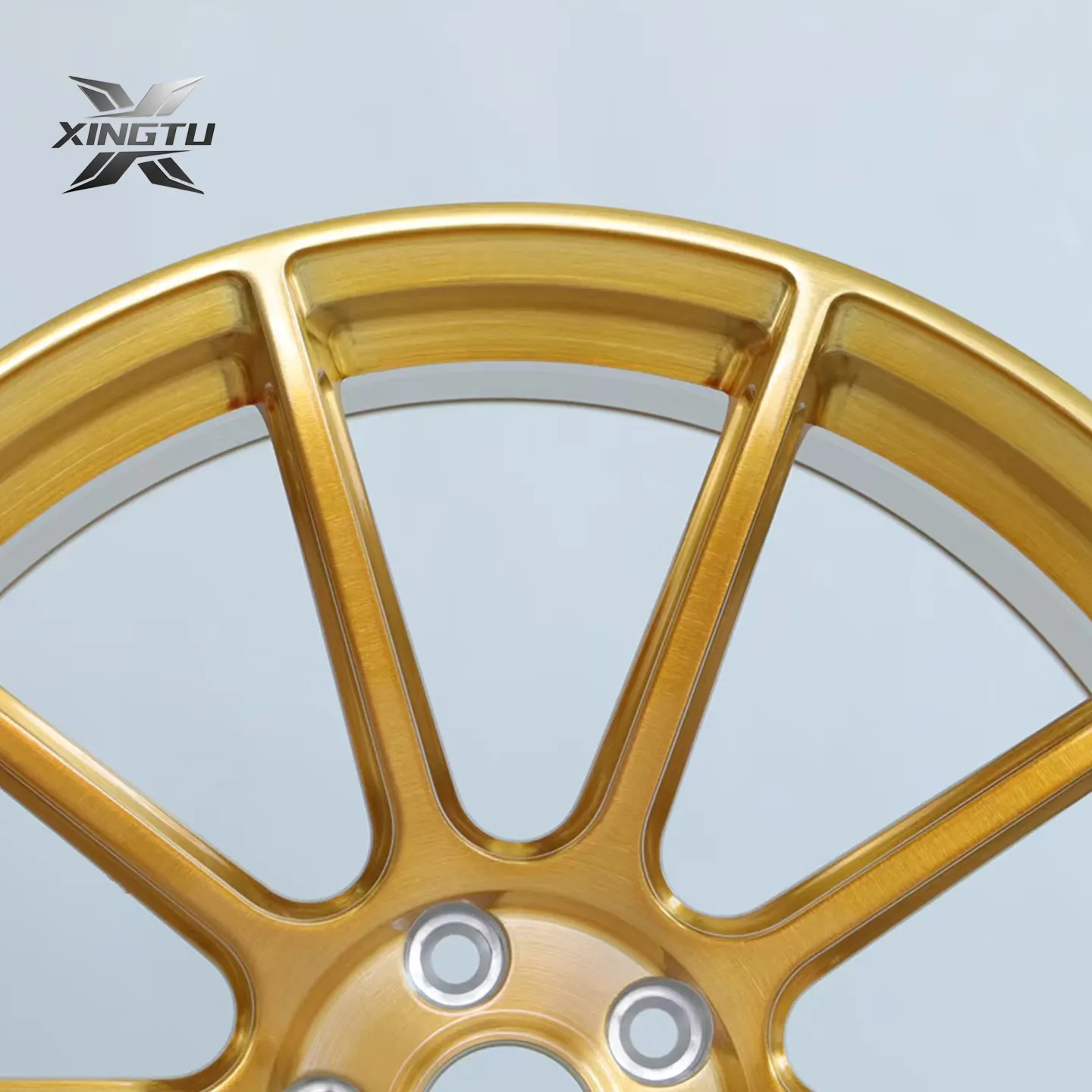
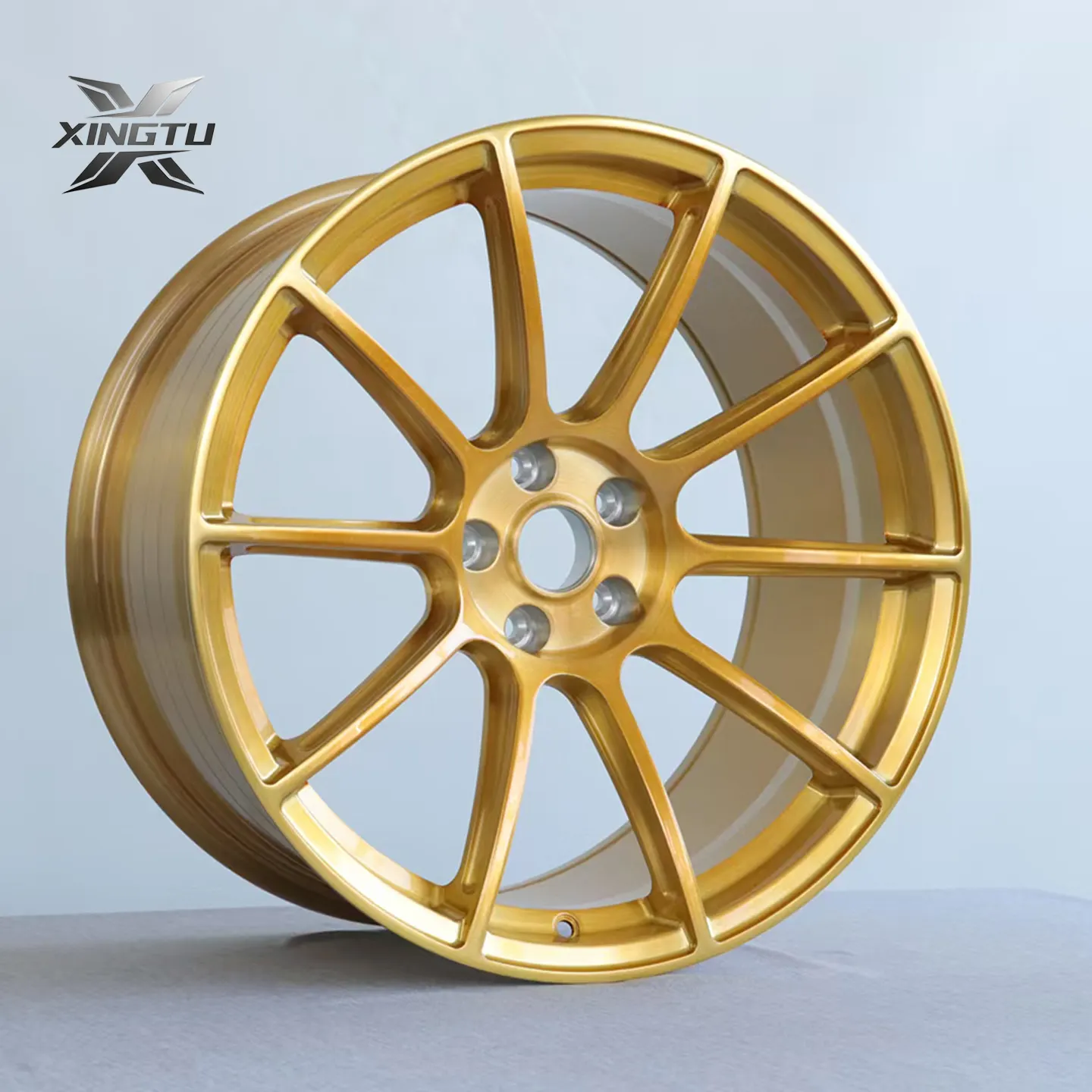
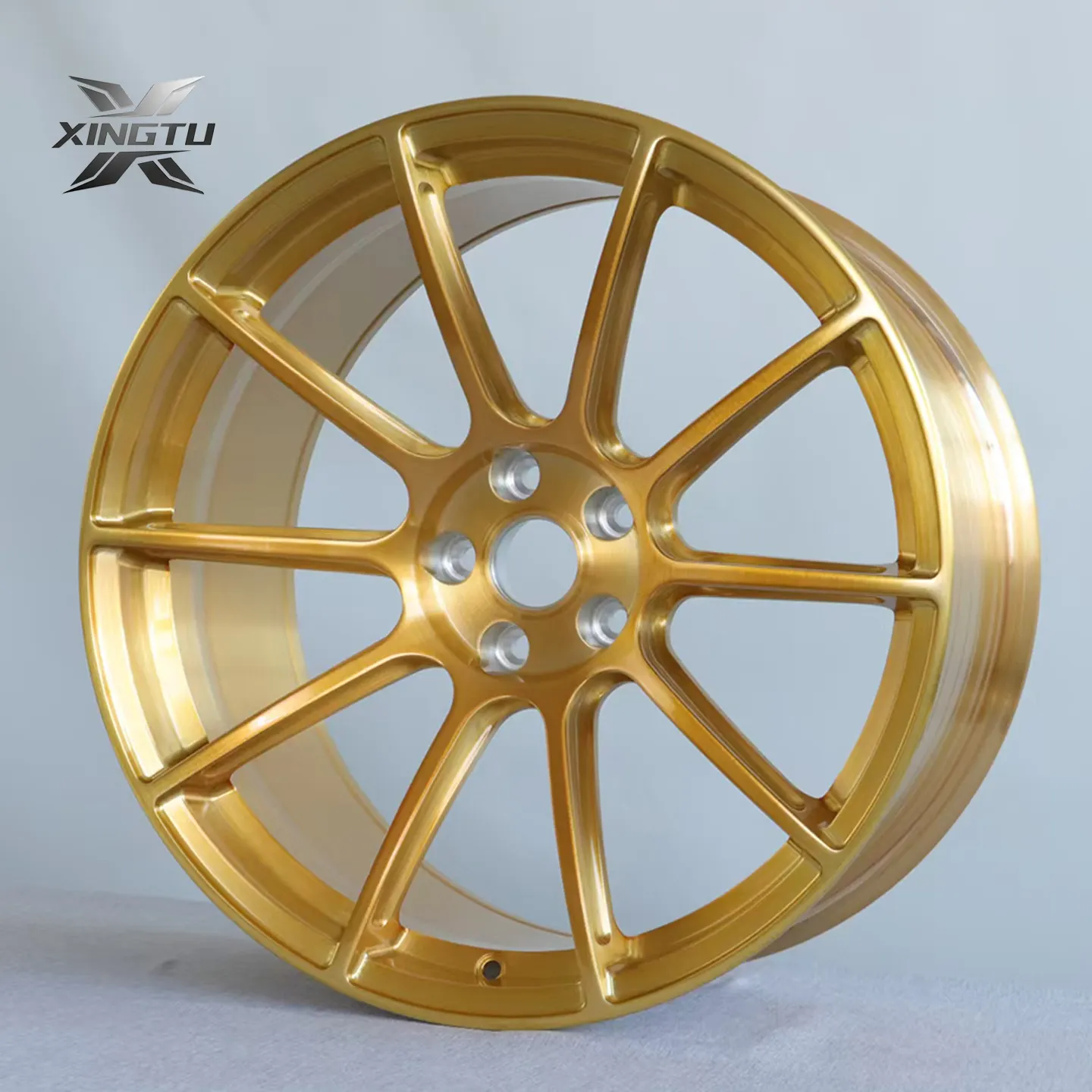
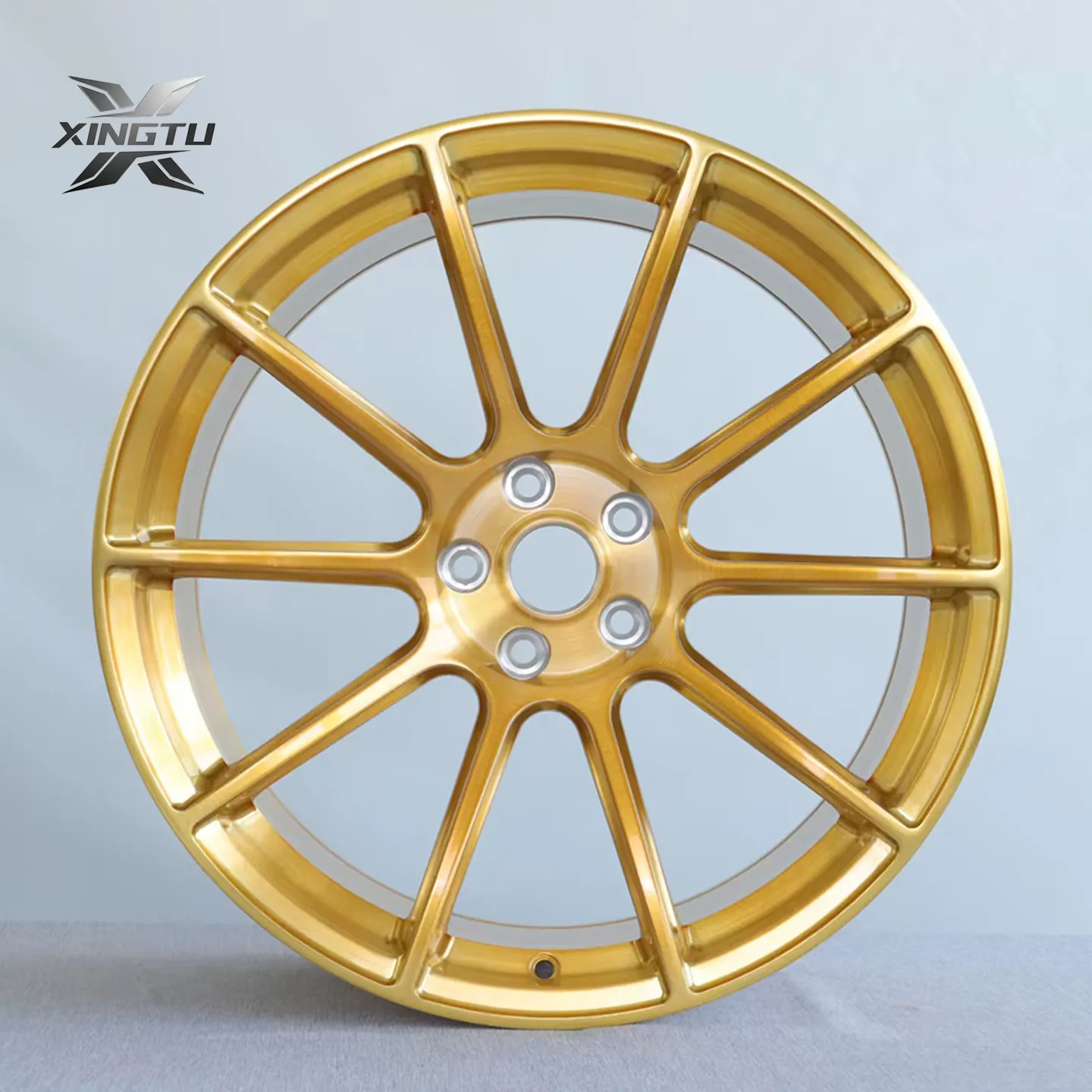
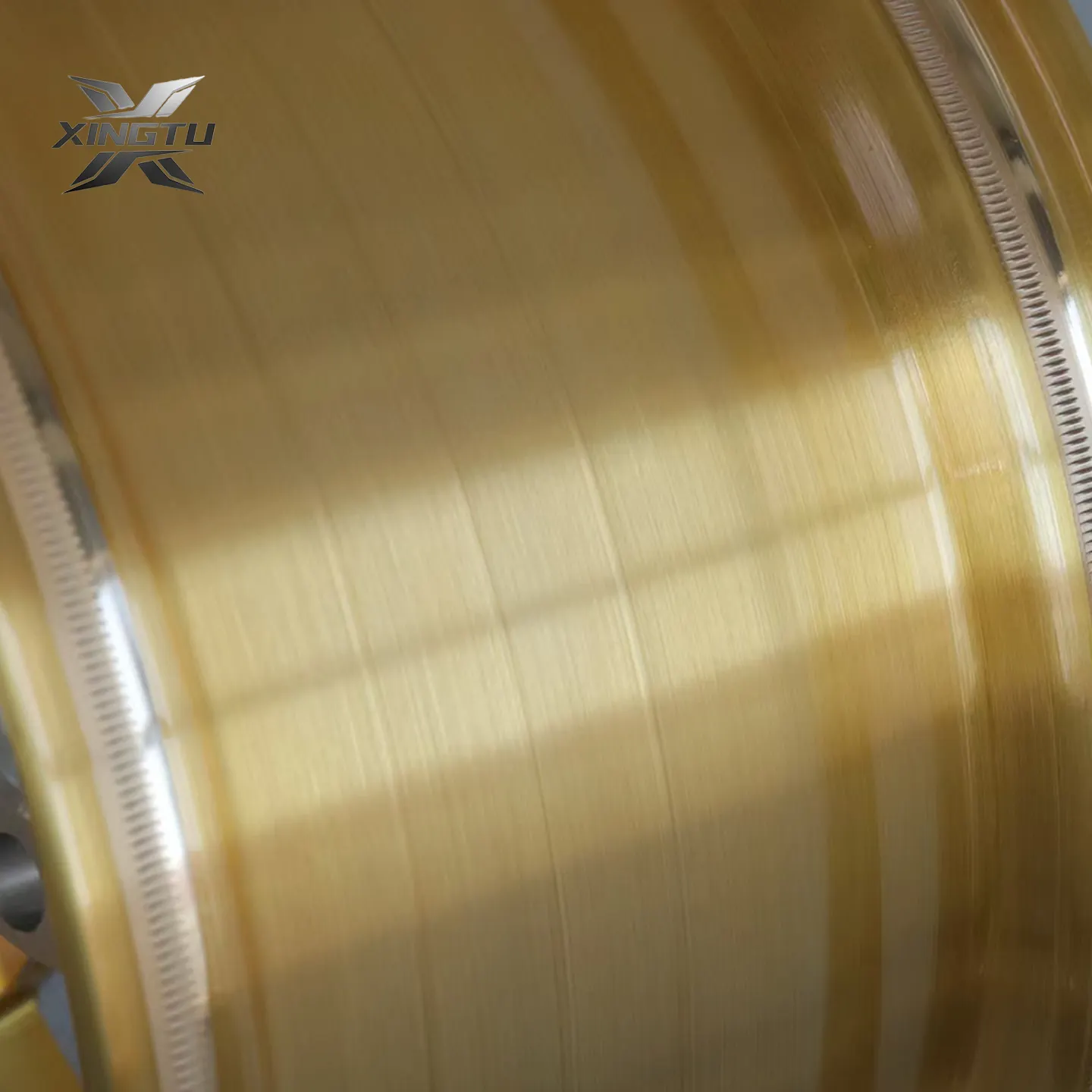
For this 2022 BMW M5 with M xDrive, the front is set at 20×10.0 ET22 and the rear at 20×11.0 ET28, weighing 11.2 kg and 11.7 kg respectively. Each wheel carries an 850 kg load rating. Five pairs of slim spokes create an open, lightweight face, while the brushed gold finish keeps the directional metal grain visible across the spokes and lip. A finely machined knurl inside the bead seat adds grip where the tire meets the rim, helping limit bead movement during hard acceleration without requiring a separate beadlock ring.



Specifications
| Item | Specification |
| Model No. |
26-09-24-13 (JC030 / JC030) |
| Size |
Front: 20×10.0 Rear: 20×11.0 · |
| PCD |
5×112 |
| Offset (ET) |
ET22/28 |
| Center Bore |
66.6 mm |
| Weight |
11.2/11.7 kg per wheel |
| Load Rating |
850 kg per wheel |
| Lug Seat |
15×32 60° taper |
| Finish |
Brushed Gold |
| Construction | Forged Monoblock |
| Fitment Basis | Check Data |
| Lead Time |
45 days (brushed + gold finish) |
-
Descriptions

Stock Diameter with Rebalanced Fitment
The set retains a 20-inch diameter while changing the width and position at each axle. The front measures 20×10.0 ET22 and the rear 20×11.0 ET28. Both use a 5×112 bolt pattern, 66.6 mm center bore and 15×32 60° taper seat.
Compared with the commonly referenced factory setup of 20×9.5 ET27 at the front and 20×11.5 ET40 at the rear, the new front outer edge sits approximately 11 mm farther outward while the inner edge remains close to its original position. The half-inch narrower rear moves outward by around 6 mm and provides roughly 18 mm of additional inner clearance. This gives the front a wider footprint while creating more space on the inside of the rear wheel.
Front and rear tire sizes are established before machining so their rolling circumferences remain within approximately one percent, as required for the M xDrive configuration. Brake caliper, suspension, inner-liner and fender clearance must also be checked on the vehicle.
The Most Functional Detail Sits Behind the Tire
The paired spokes, hub pad and barrel are cut from one forged blank. Each pair gains depth from the hub toward the rim, allowing the front wheel to finish at 11.2 kg and the rear at 11.7 kg while retaining an 850 kg rating.
The knurled bead seat addresses a different issue. Repeated high-torque launches can allow a tire bead to move slightly on a smooth seat, changing the relationship between the tire and the balance position and placing unwanted strain near the valve stem. A fine machined knurl gives the bead more surface to grip. It remains a conventional bead-seat treatment, not a structural ring or beadlock system.
Gold Reveals Both Grain and Process Control
Brushed gold works because the color does not erase the machining character underneath it. Grain direction remains visible along each spoke, around the stepped lip and across the barrel. If the brush depth or tint changes, the difference appears as a patch under daylight.
The bead-seat knurl is masked through brushing and coating so paint and clear coat do not soften the machined texture. Face, spoke sides and barrel are finished in separate passes, then checked under both daylight and shop lighting for tint consistency. This layered surface work accounts for the recorded 45-day production schedule. The center is left plain for the customer's chosen cap.
From Design to Delivery
Quality Verified
- Front 20×10.0 and rear 20×11.0 dimensions inspected
- ET22 front and ET28 rear offsets checked
- 5×112 PCD and 66.6 mm center bore verified
- 15×32 60° taper-seat interface checked
- Front weight verified at 11.2 kg and rear weight at 11.7 kg
- Load rating confirmed at 850 kg per wheel
- Paired-spoke geometry, root radii and outer junctions inspected
- Stepped lip and flange profile checked
- Knurled band width, pitch and depth measured within the bead contact area
- Knurl checked after coating for paint or clear-coat bridging
- Brush direction and grain consistency inspected across face, windows and lip
- Gold tint compared under daylight and shop lighting
- Clear-coat thickness and surface condition checked
- Radial and lateral runout checked
- Every wheel dynamically balanced
Result
The completed set retains the F90 M5's 20-inch scale but gives it a lighter, more open face. Five pairs of slim spokes create the structure, the stepped lip supplies depth, and the brushed gold changes tone as the car or viewing angle moves.
More importantly, the design decisions are not limited to appearance. The altered front and rear widths redistribute clearance, the monoblock construction holds finished weight to 11.2 kg and 11.7 kg, and the concealed knurled bead seat adds grip where the tire meets the wheel. It is a detail the viewer will rarely see, but one the driver can appreciate after repeated hard launches.

Replacing the Factory 20s Without Moving Up a Diameter?
XINGTU develops forged monoblock, two-piece and three-piece wheels around hub data, brake clearance, xDrive tire requirements and target load. Brushed, polished, painted and two-tone finishes can be combined with functional details such as bead-seat knurling for high-torque applications.
-
Build & Fitment
Axle-Specific Proportions for the F90 M5
The front wheel measures 20×10.0 ET22, while the rear measures 20×11.0 ET28. Both use a 5×112 bolt pattern, 66.6 mm center bore and 15×32 60° taper seats. Matching conical-seat hardware is required; ball-seat nuts must not be used.
Compared with the commonly referenced factory dimensions, the front outer edge sits approximately 11 mm farther outward while the inner position remains close to stock. The rear wheel is half an inch narrower, moves the outer edge by around 6 mm and provides roughly 18 mm of additional inner clearance. Brake, suspension, inner-liner and fender clearance should be checked on the vehicle.
Tire Pairing for M xDrive
Front and rear tire rolling circumferences should remain within approximately one percent because the vehicle uses M xDrive. Tire sizes must be established before production so the staggered wheel dimensions and tire pairing can be reviewed together.
One-Piece Forging with Bead-Seat Grip
The paired-spoke face, hub pad and barrel are machined from a single forged aluminum blank. The front wheel weighs 11.2 kg and the rear weighs 11.7 kg, with each wheel carrying an 850 kg load rating.
A fine knurled band is machined into the bead contact area to help resist tire movement under high torque. This texture is part of the bead seat itself and does not form a beadlock system.
Brushed Gold with a Clean Functional Knurl
Directional grain remains visible beneath the gold tint across the spokes, lip and barrel. The knurled bead seat is masked during brushing and coating to keep its machined texture free from finish buildup. Grain direction, gold tint and clear-coat quality are inspected under different lighting conditions.
-
FAQs
1. What is the benefit of retaining the 20-inch diameter?
Keeping the factory diameter maintains the original wheel-to-tire proportion. The revised width and offset change the stance, front footprint and inner clearance without increasing wheel diameter purely for visual effect.
2. How should the front and rear tires be paired for M xDrive?
Front and rear rolling circumferences should remain within approximately one percent. Tire sizing must therefore be reviewed together with the staggered wheel dimensions to maintain the close circumference match required by M xDrive.
3. How does the knurled bead seat manage high torque?
The fine machined texture increases friction where the tire bead contacts the rim. This helps limit bead movement during hard acceleration, reducing the risk of a shifted balance position or strain near the valve stem.
4. Does the knurled band function as a beadlock?
No. The knurl does not use a separate ring to clamp the tire. It is machined directly into the bead seat, allowing the wheel to remain a conventional forged monoblock.
5. How much additional inner clearance does the rear wheel provide?
The 20×11.0 ET28 rear wheel is half an inch narrower than the commonly referenced 20×11.5 ET40 factory specification. It provides roughly 18 mm more inner clearance while moving the outer edge outward by about 6 mm.
6. What accounts for the 45-day production schedule?
The finish requires directional brushing, gold tint, clear coating and careful masking of the knurled bead seat. Grain direction and color must remain consistent, while the functional texture must stay free from coating buildup.
7. What are the finished weights and load rating?
The front wheel weighs 11.2 kg, and the wider rear wheel weighs 11.7 kg. Each wheel carries an 850 kg load rating.
8. Is a branded center cap fitted at the factory?
No third-party emblem is applied during production. The center remains a plain disc for the customer’s selected cap.
Related Products