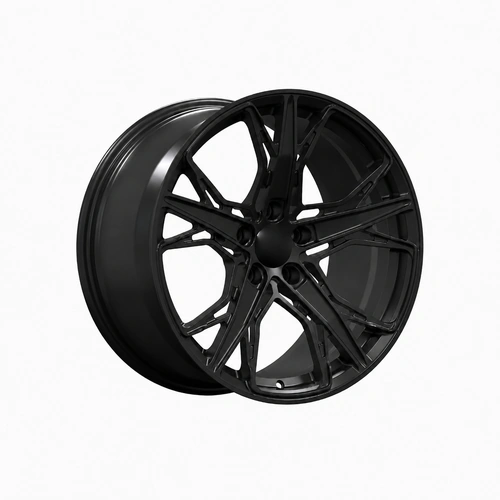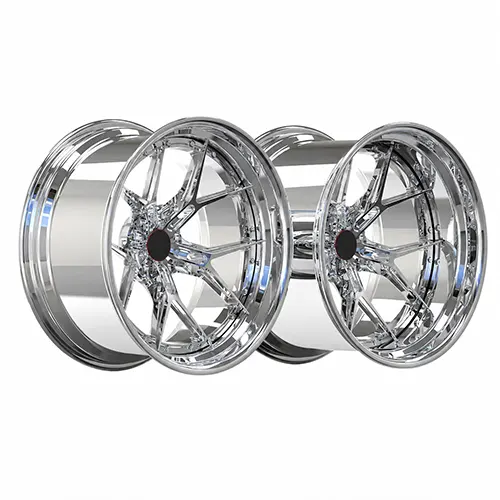
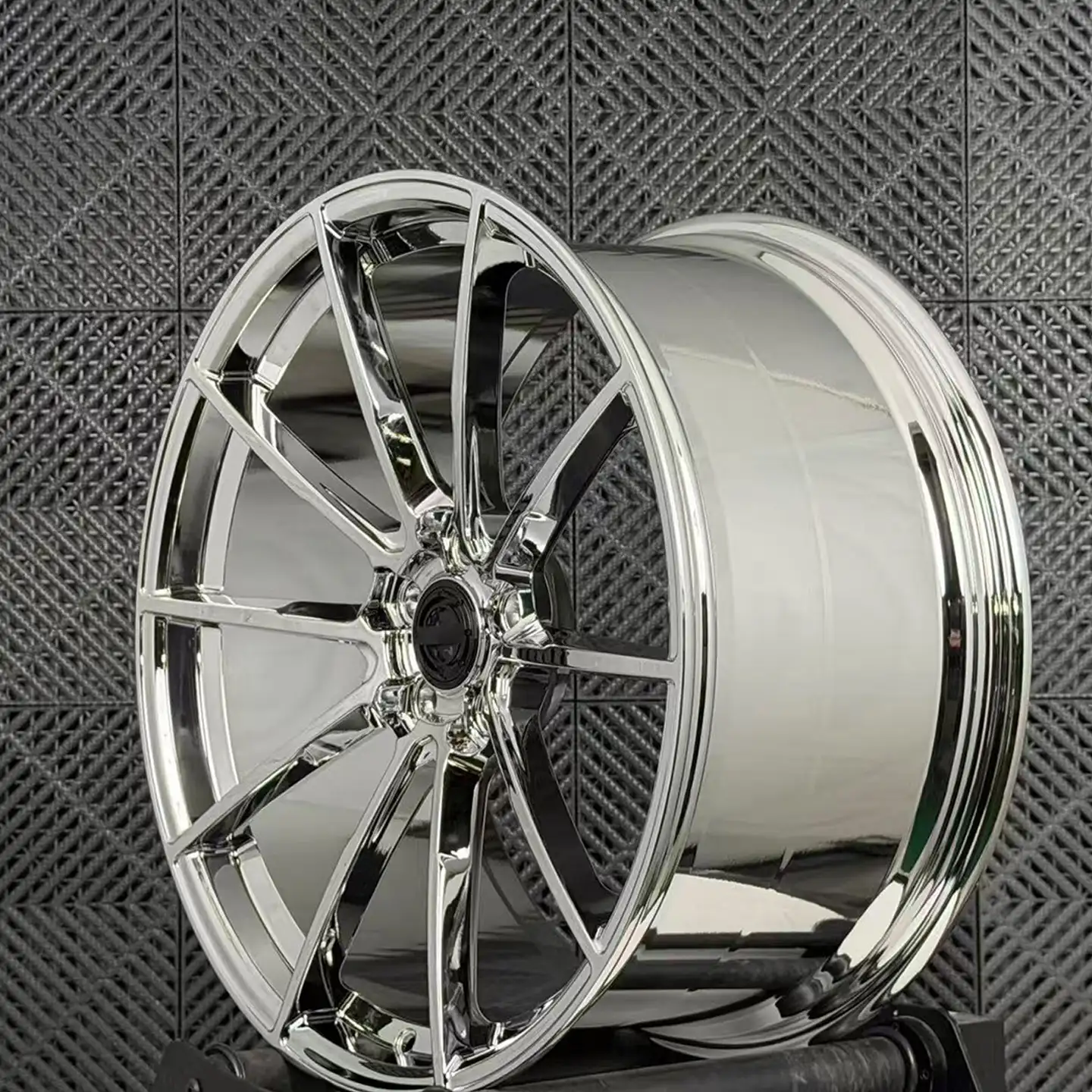
21×9.5 / 21×10 Forged Monoblock Wheels for 2020 Mercedes-AMG E63 S (W213) – Electroplated White Ten-Spoke 5×112
- Model: L266707 (blank: JC135 / JC130)
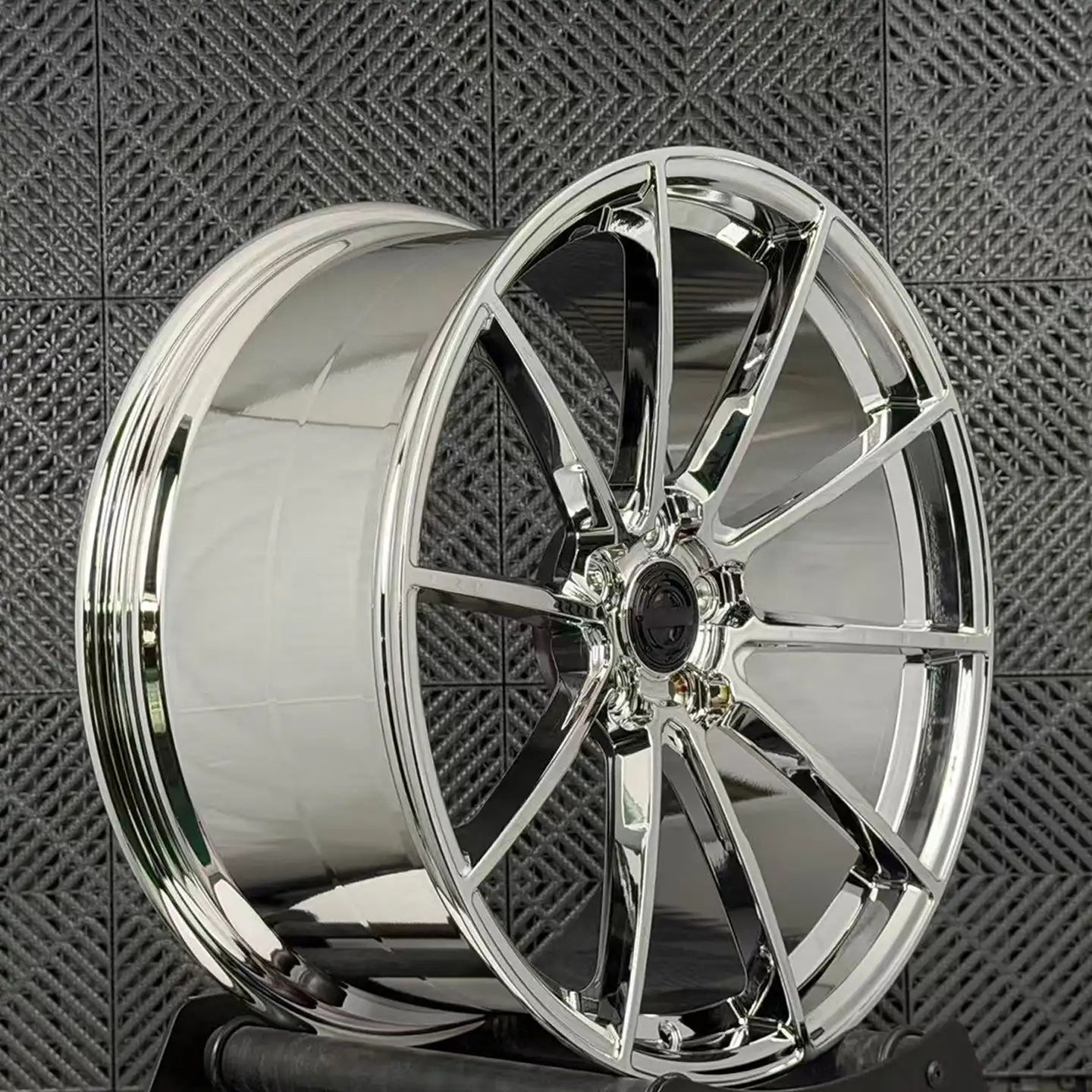
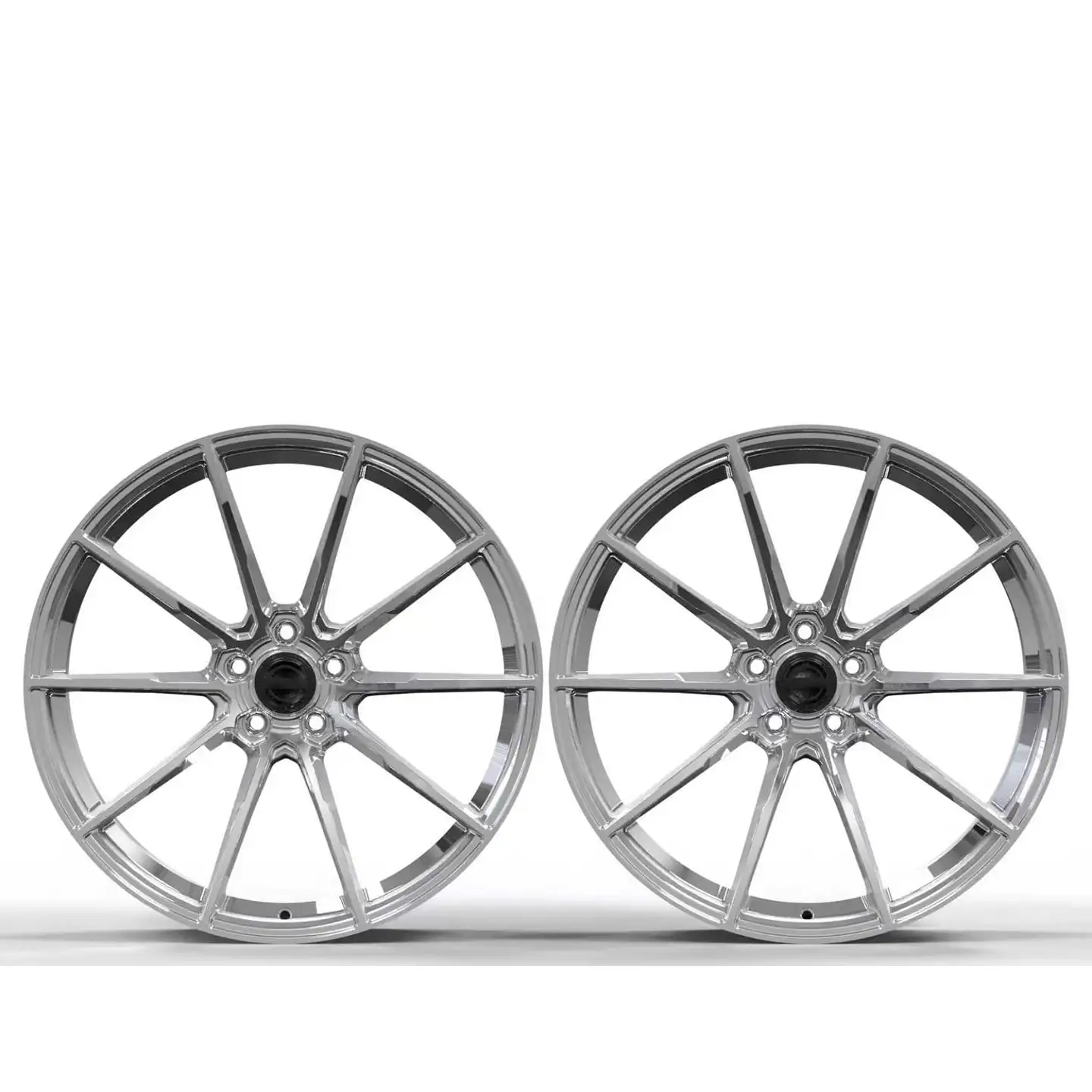
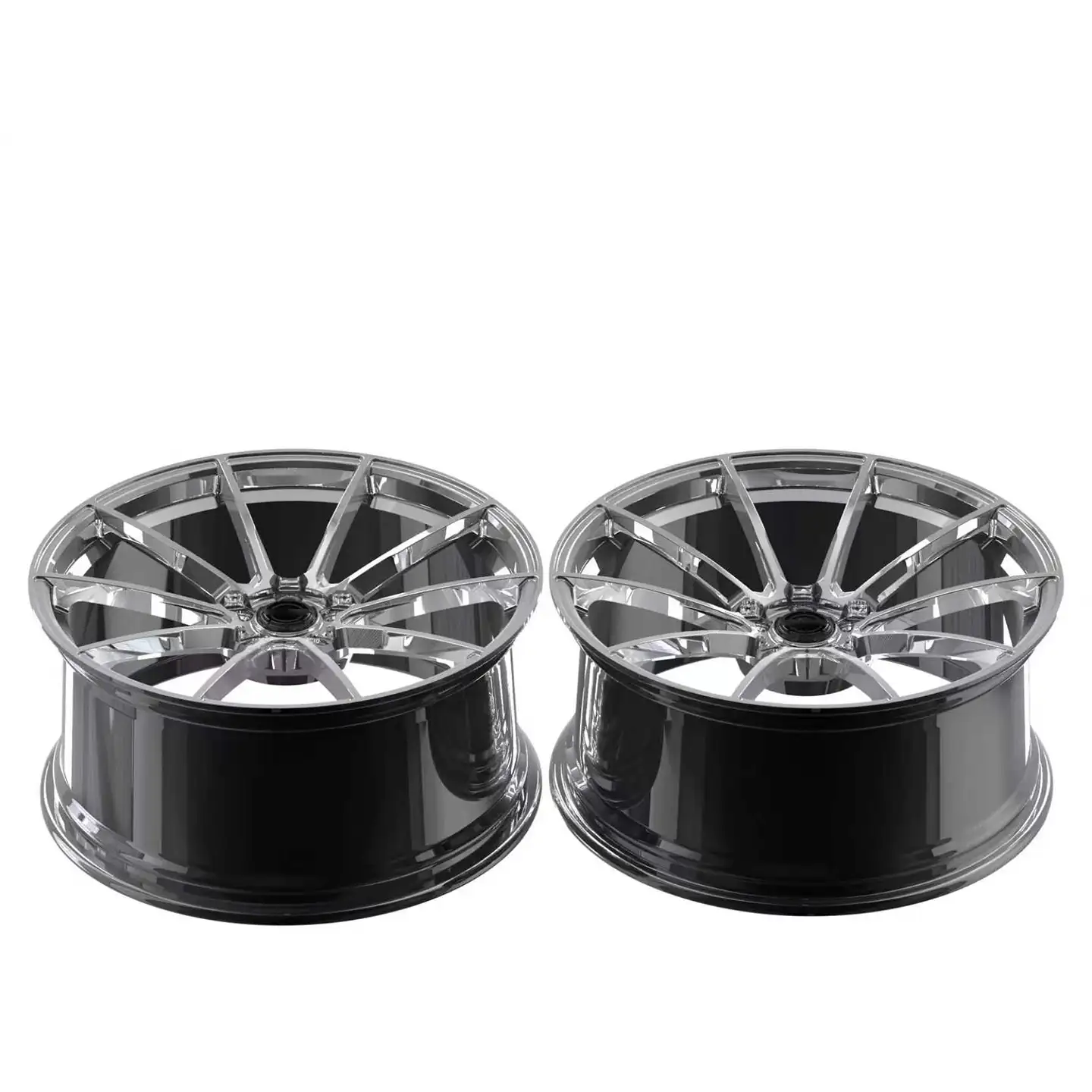
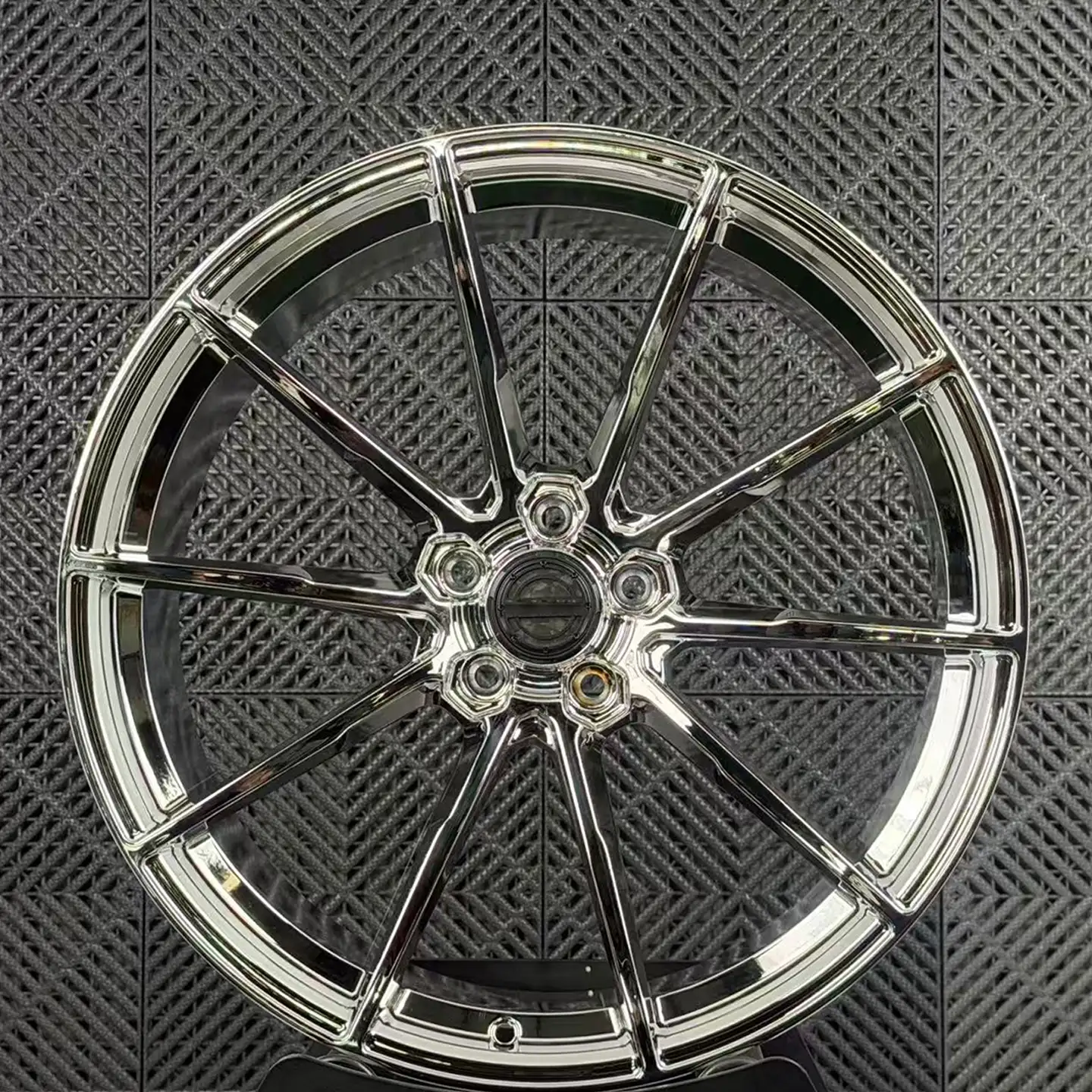
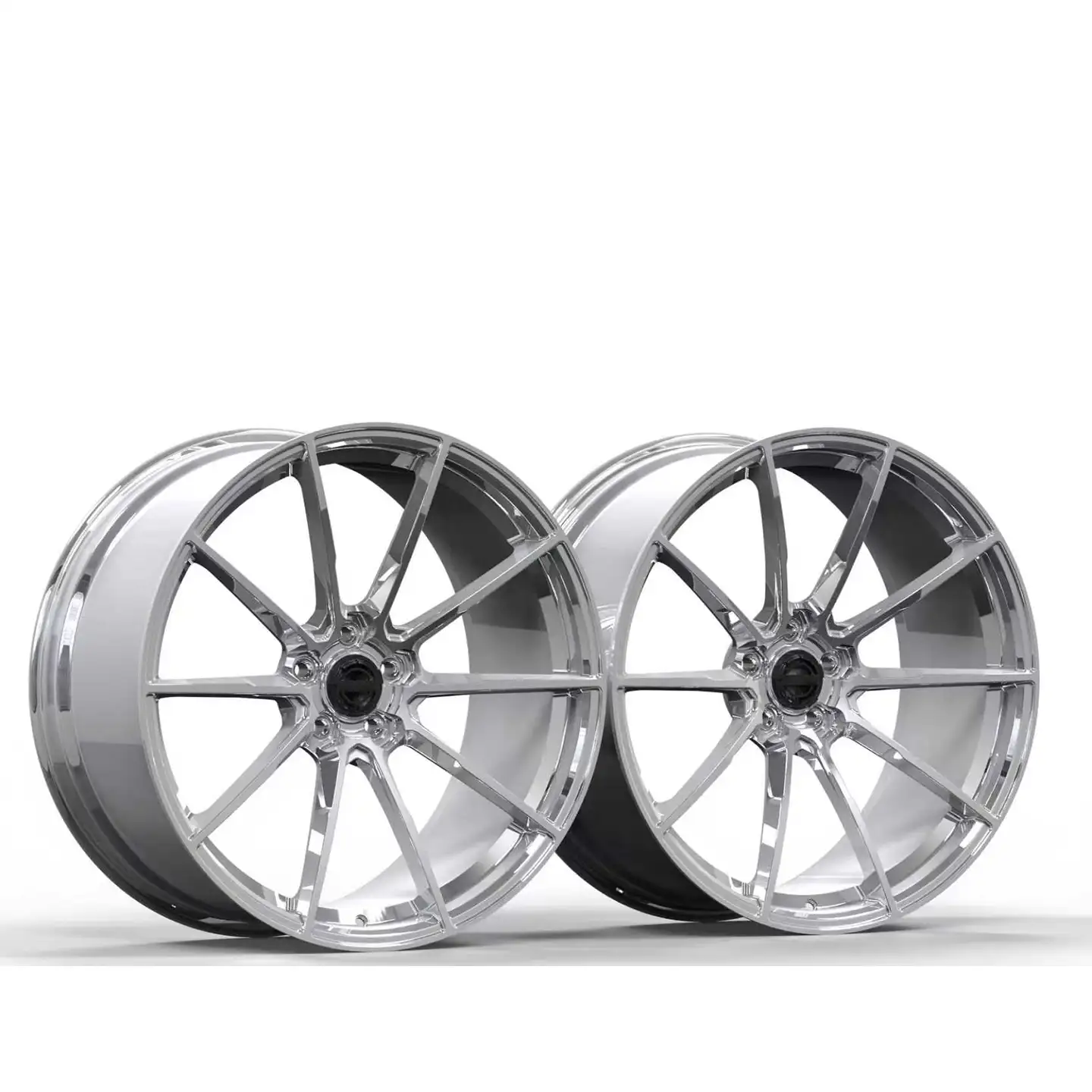
This set was built for a 2020 Mercedes-AMG E63 S on the W213 platform. The specification is a 21-inch staggered pair: 21×9.5 at ET20 for the front axle and 21×10 at ET40 for the rear, on a 5×112 bolt circle with a 66.6 mm center bore, weighing 12 kg and rated at 800 kg per wheel. The design is ten slim spokes grouped in five pairs with a stepped lip, finished in electroplated white so the whole wheel reads as a single bright mirror surface. The lug seat is a 15×32 R14 ball seat, long shank, matching the AMG hub hardware.



Specifications
| Item | Specification |
| Model No. |
L266707 (blank: JC135 / JC130) |
| Size |
Front: 21×9.5 Rear: 21×10 |
| PCD |
5×112 |
| Offset (ET) |
ET20/40 |
| Center Bore |
66.6 mm |
| Weight |
12kg per wheel |
| Load Rating |
800 kg per wheel |
| Lug Seat |
15×32 R14 ball seat, long shank |
| Finish |
Electroplated White (Cu / semi-bright Ni / bright Ni / micro-Cr) |
| Construction | Forged Monoblock |
| Fitment Basis | Check Data |
| Lead Time |
30 days |
-
Descriptions

XINGTU's engineers want to highlight three details that define this build.
First, the set was built to the submitted data on both axles: 21×9.5 ET20 front and 21×10 ET40 rear, 5×112 PCD, 66.6 mm center bore and a 15×32 R14 ball seat with a long shank. The 5×112 pattern and the 66.6 mm bore are consistent with published AMG fitment data for this generation, and the widths follow the usual AMG 9.5 front / 10 rear split. The seat is a ball seat, not a taper: AMG hubs use ball-seat bolts with a long shank, so taper nuts must never be fitted, and bolt length has to be checked against the actual seat depth — a long-shank ball seat engages differently from a short one, and any spacer changes the effective offset and the thread engagement at the same time. The offset pair on this drawing is 20 front and 40 rear, a 20 mm step, which places the front outer edge noticeably further out than the rear; on a stock-body W213 that has to be verified against the fender lip, the liner and the steering at full lock before the drawing is released, along with caliper-to-spoke clearance on the AMG brakes. Tire sizing also has to be fixed first, since this is a 21-inch set and the plate gives no tire data.
Second, the construction is a forged monoblock: the ten spokes, the hub pad and the full barrel are machined from one continuous forged 6061 blank, with no bolted joint. Each pair of spokes is deep in section from the hub pad outward and joins its neighbour near the rim, so the arm carries bending through depth rather than width, which is how the wheel holds 800 kg at 12 kg. The stepped lip is a machined step in the same forging, cosmetic only — the wheel is a single structural piece and is neither a two-piece nor a beadlock, even though the lip step and the plating make it look like a multi-piece.
Third, the finish is electroplated white on a 6061 substrate, and the plating line is what governs the schedule. 6061 is a wrought alloy with very little silicon, around 0.6–0.8%, so unlike A356 it carries no large population of free silicon particles — silicon dust, pinholes and speckling are far less likely, and plating yield is much higher. It still contains Mg₂Si, though, and a badly controlled caustic etch will grey, cloud and eventually blister it, so the etch is kept deliberately mild: low-concentration NaOH for 20–40 seconds and no longer, followed by a light nitric desmut in place of A356's fluoride silicon removal. The stack is substrate → double zincate → strike nickel → acid copper → semi-bright nickel → bright nickel → micro-chrome. Two steps are never cut: the double zincate stays double rather than a single dip, and the part goes wet into the strike nickel bath instead of being air-dried, because aluminium re-oxidises almost immediately. The copper is 15–25 μm and is polished to mirror before the nickel goes on — on a forged blank with few surface defects it is there to be polished, not to fill porosity, which is also why the mirror has more headroom here. Assembly faces stay out of the bath, and nothing ships before CASS salt spray and tape / thermal-shock adhesion testing.
From Design to Delivery
Quality Verified
- Front 21×9.5 and rear 21×10 dimensions inspected
- ET20 front and ET40 rear offsets checked
- 5×112 PCD and 66.6 mm center bore verified
- 15×32 R14 ball seat, long shank, interface checked
- Wheel weight verified at 12 kg
- Load rating confirmed at 800 kg per wheel
- Ten-spoke geometry, spoke root radii and pair junctions inspected
- Stepped lip and flange profile checked
- Valve stem hole, mounting step and centre bore seal confirmed protected through plating
- Etch depth controlled by time and concentration (low-NaOH, 20–40 s); no over-etch greying or clouding
- Desmut and zincate coverage checked; no air-dry gap between zincate and strike nickel
- Strike nickel 2–3 μm, acid copper 15–25 μm, semi-bright nickel 8–15 μm, bright nickel 10–15 μm, micro-chrome 0.2–0.5 μm verified
- Copper polished out to mirror; surface checked for swirl and orange peel before nickel
- Plating brightness and coverage inspected across spokes, recesses and lip
- Edge build-up and burn marks checked on spoke edges and lip radius
- Plating adhesion tested by tape and thermal shock
- CASS salt spray performed
- Radial and lateral runout checked
- Dynamic balancing completed for every wheel
Result
The finished set is a bright, almost liquid surface: ten slim spokes catch the light in narrow highlights, the recesses between them stay dark, and the stepped lip holds a hard ring of reflection all the way round.
The reason the mirror reads this clean is the layer underneath it—the copper was polished out before the nickel went on, and because the forged 6061 blank carries so few surface defects, that polishing step is working on a sound base rather than filling porosity.
The duplex nickel then does the corrosion work and the micro-chrome gives the surface its wear layer, so the brightness is structural rather than a thin cosmetic film.

Upgrading an AMG to a 21-inch electroplated set without changing the fastening?ed Set?
XINGTU machines forged 6061 monoblock, two-piece and three-piece wheels around your hub data, brake package, suspension clearance and load target, and runs full Cu / duplex-Ni / micro-Cr plating with CASS and adhesion testing before release.
-
Build & Fitment
Alloy plating advantage
6061 has low silicon, reducing speckling and raising plating yield, yet controlled mild etching is critical to avoid hazing and blistering.
Plating process
The multi‑layer stack includes double zincate, nickel, copper and chrome. Critical steps such as wet transfer to strike nickel cannot be skipped.
Quality control
Mounting surfaces are masked from plating; finished wheels pass CASS salt spray and adhesion tests before delivery.
-
FAQs
1. Can I use taper nuts for this AMG wheel?
No. It uses an R14 ball seat with long‑shank bolts; taper hardware risks improper engagement and failure.
2. Is the stepped lip a two‑piece or beadlock design?
It is a one‑piece forged monoblock, and the lip step is only visual styling.
3. Why is 6061 better for plating than cast A356?
Its low silicon content lowers pinhole and speckle risk, though careful etching is still required.
4. What plating steps are mandatory?
Double zincate and wet entry into strike nickel are non‑negotiable to prevent rapid aluminum re‑oxidation.
5. When is the wheel approved for shipment?
After passing CASS salt spray and adhesion tests, with assembly areas kept free of plating.
6. How long did this recorded build take?
The documented production schedule was 30 days from data review to final inspection and packing. Shipping time and any later design or fitment revisions are separate.
Related Products