18" 2-Piece Forged Wheels for 1970 Chevrolet Camaro Full Custom | Gloss Black + Red Rivets | Deep Concave Stance
- Model: RC1069-2XXT
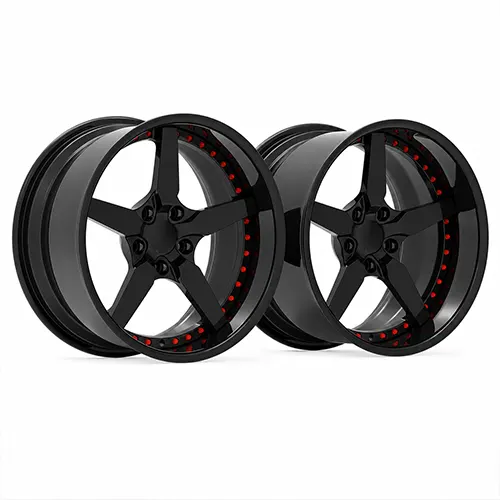
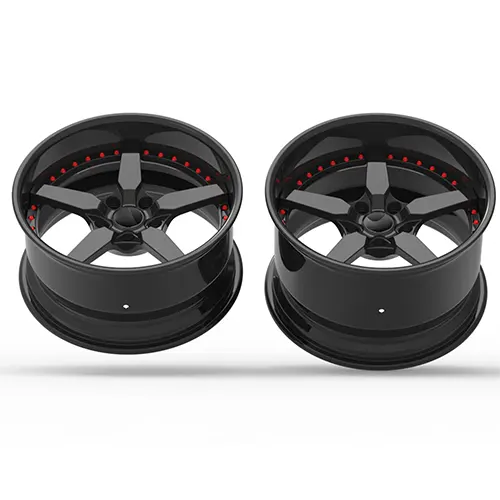
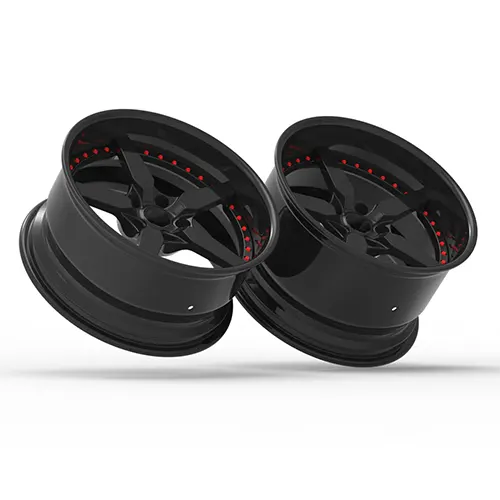
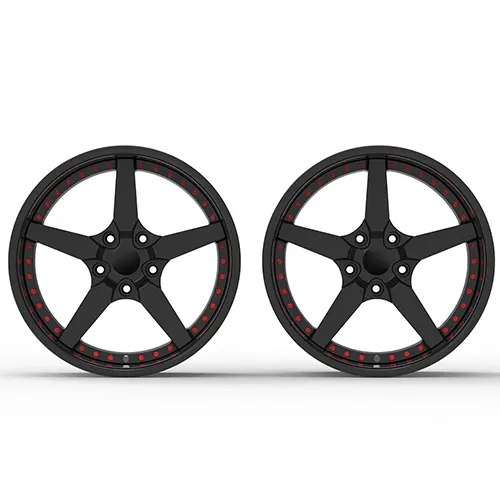
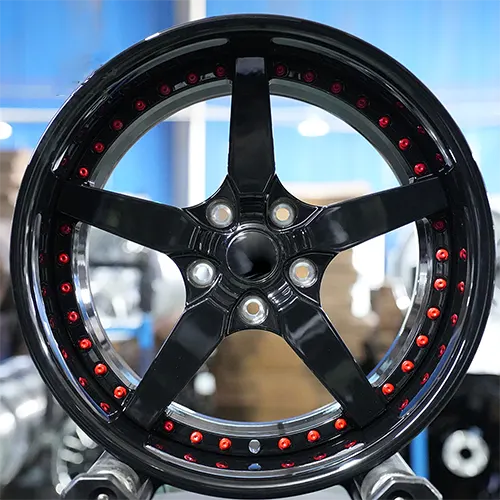
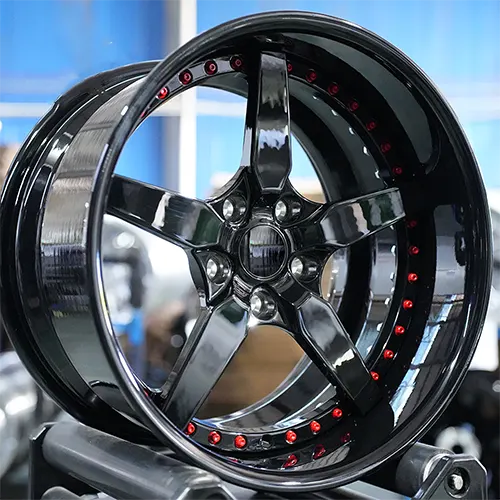
Classic five-spoke simplicity is retained, but the proportions are entirely modern. A 9J front and substantially wider 11J rear allow the forged centers to use different lip depths within the same 18-inch two-piece design, creating a clean front profile and a much deeper rear. Gloss Black keeps the spokes visually solid, while red rim hardware traces the genuine assembly line around the wheel rather than acting as an unrelated color accent.



Specifications
| Item | Specification |
| Model No. | RC1069-2XXT |
| Wheel Size | Front 18x9.0 / Rear 18x11.0 |
| Offset (ET) | Front 0 / Rear 12.7 |
| Bolt Pattern (PCD) | 5x120.65 |
| Center Bore | 70.3 mm |
| Weight | Front 11.0 kg / Rear 11.6 kg |
| Load Rating | 750 kg |
| Construction | 2‑Piece Forged |
| Finish | Gloss Black with Red Rivets |
-
Descriptions

Engineering Notes
Front 18×9 and rear 18×11 sizing gives this Camaro a deliberate change in proportion from axle to axle. ET0 at the front keeps the face visually strong, while the wider 18×11 rear creates substantially more depth without forcing the same treatment onto all four corners.
That difference matters on a classic muscle-car body. Rear width should look stronger because the car itself carries more visual mass around the rear quarter, while the front needs enough presence without becoming unnecessarily heavy.
Gloss black keeps the five-spoke form simple. Red assembly hardware then becomes the small but deliberate detail that separates the center from the outer section.
Rather than modernizing the Camaro by adding more design elements, this configuration works by changing proportion: familiar spoke architecture, deeper rear geometry and a sharper material contrast.
Vehicle-specific measurements remain important on classic builds, where brake conversions, suspension changes and axle configurations can vary considerably.
From Design to Delivery
Quality Verified
Different front/rear depths, genuine two-piece assembly and recorded brake clearance make dimensional control more important than generic claims about a “pro-touring” stance.
- Quality Verified 100% CMM dimensional inspection
- Dynamic balancing
- Structural load testing (750kg rated)
- Torqued-to-spec rim bolts
- Gloss Black finish QC (100% CMM
Result
The wheel keeps the Camaro’s five-spoke identity intact while changing the way that shape occupies the wheel.
Up front, the face remains comparatively shallow and clean. At the rear, the 11J width gives the same spoke architecture far more depth. Gloss Black visually connects both axles, while the red hardware provides a precise line around the assembly.
That is the strongest commercial point: familiar design language is retained, but the two-piece architecture gives it proportions that a conventional one-piece five-spoke cannot reproduce as convincingly.

Building a classic muscle car or other full custom?
Get a 2-piece forged setup tuned to your exact width & offset
-
Build & Fitment
9J Front and 11J Rear Create Two Different Profiles
The two-inch width increase is large enough to change how the forged center sits within the wheel.
Instead of forcing the same lip depth onto both axles, the two-piece construction lets the rear use the additional space to develop a substantially deeper profile.
Brake Clearance Is Part of the Center Design
The existing Engineering Notes specifically state that brake clearance was verified for upgraded aftermarket calipers before assembly.
That matters because concavity cannot be increased without considering the space behind the spokes. Face depth and brake packaging need to work together.
5×120.65 / CB70.3
The page records a 5×120.65 bolt pattern and 70.3 mm center bore for the Camaro hub setup.
No ET values are published in the supplied content, so none should be added.
For another Camaro build, the required face depth can be checked against the actual brake and wheel package before machining.
-
FAQs
1. Why do the front and rear wheels have noticeably different depth?
The front uses a 9J width while the rear grows to 11J. Two-piece construction allows the lip depth to be developed separately at each axle, so the wider rear can carry a much deeper profile without forcing the front to use the same geometry.
2. Why retain a simple five-spoke center on such a custom setup?
The five-spoke layout preserves a visual connection with classic American performance-wheel styling. The modern character comes from the deeper two-piece architecture rather than from replacing the familiar face with a more complicated spoke pattern.
3. Are the red rivets purely decorative?
The page links the visible hardware to the genuine two-piece assembly, and the Quality Verified section includes torque checks on the rim bolts. Their red finish adds contrast, but the hardware itself has a structural assembly role.
4. How does brake clearance affect the concave profile?
The existing Engineering Notes state that clearance was checked against upgraded aftermarket calipers before assembly. This matters because the forged center cannot simply be pushed deeper for appearance if the spoke profile interferes with the brake package behind it.
5. What hub dimensions are used?
The wheel is machined around a 5×120.65 PCD and 70.3 mm center bore, matching the hub dimensions recorded on the page.
6. Why are no offset values listed?
The supplied page does not publish ET figures. Since concavity can be affected by several variables, inventing an offset from the appearance of the finished wheel would be misleading.
7. What load rating is published?
The Quality Verified section lists structural testing at 750 kg.
8. What makes the rear wheel genuinely deep rather than simply concave-looking?
The extra two inches of rear width are used within a real two-piece structure, allowing the center and outer rim to sit at different depths. The visual effect comes from the actual wheel section rather than a face styled to imitate a deep barrel.
9. Can the same rear depth be retained if larger brakes are fitted?
Not automatically. Since the page already identifies brake clearance as part of the fitment process, changes to caliper size may affect the allowable center position and therefore the achievable concavity.
10. Why is Gloss Black paired with red hardware instead of a second large color area?
Keeping the wheel predominantly black preserves the simple five-spoke form. The red hardware creates a narrow accent exactly where the two-piece joint is located, so color reinforces the construction instead of distracting from it.
More Forged Wheel Cases