17×4.5 / 15×8.0 Forged Beadlock Wheels for 1978 Ford Fairmont (Fox Platform) – Polished with Gloss Black Machined Beadlock Ring 5×114.3
- Model: RC1213-7XXT
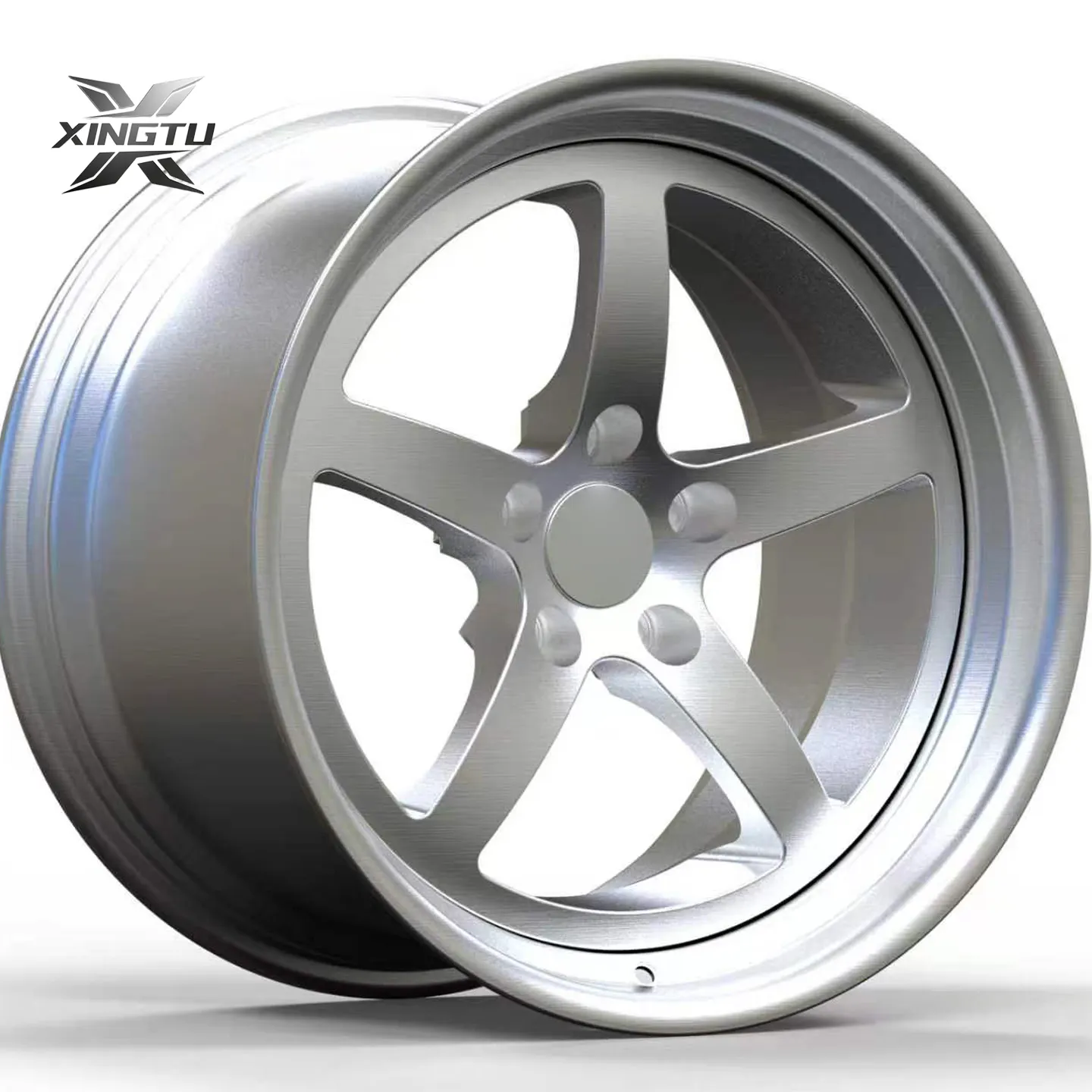
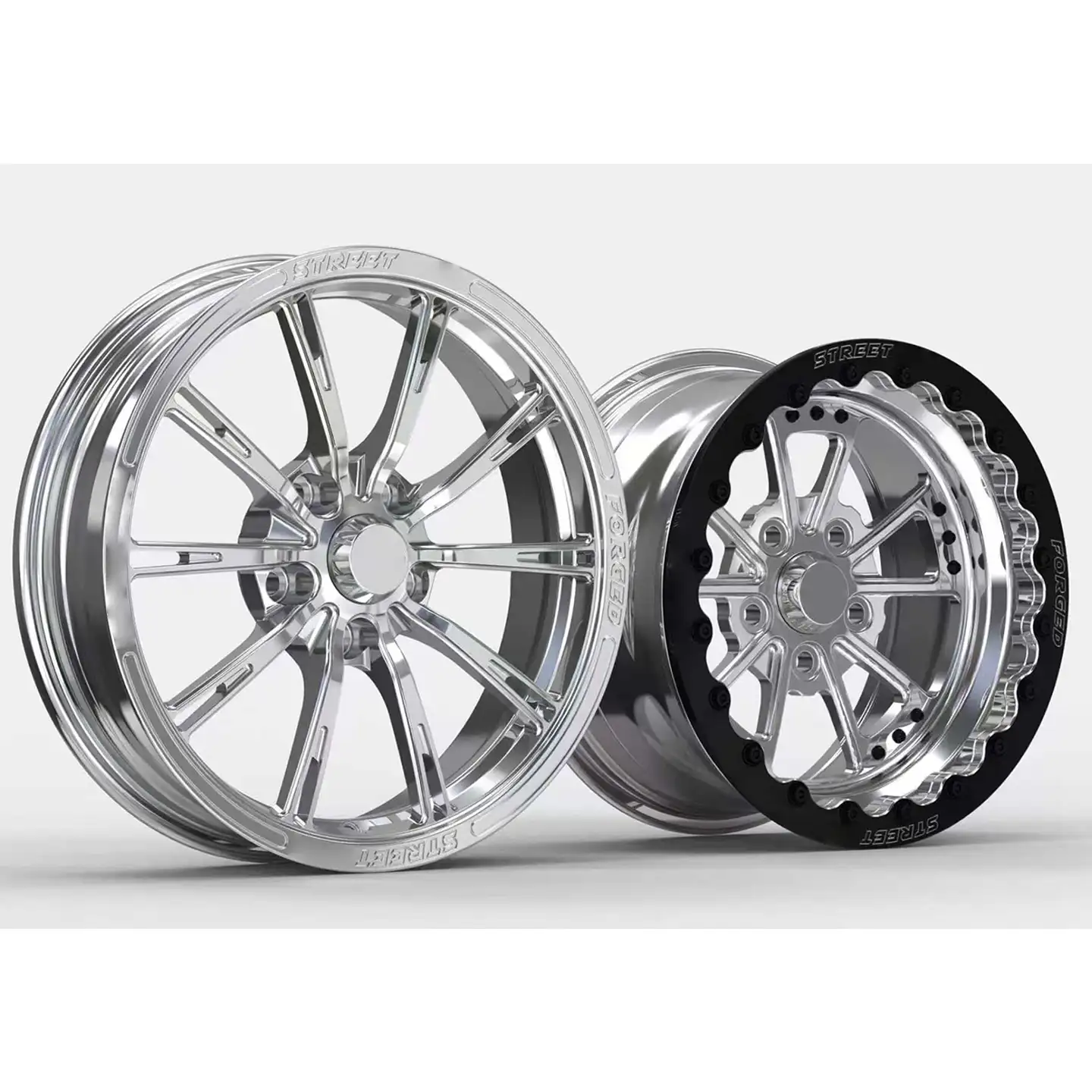
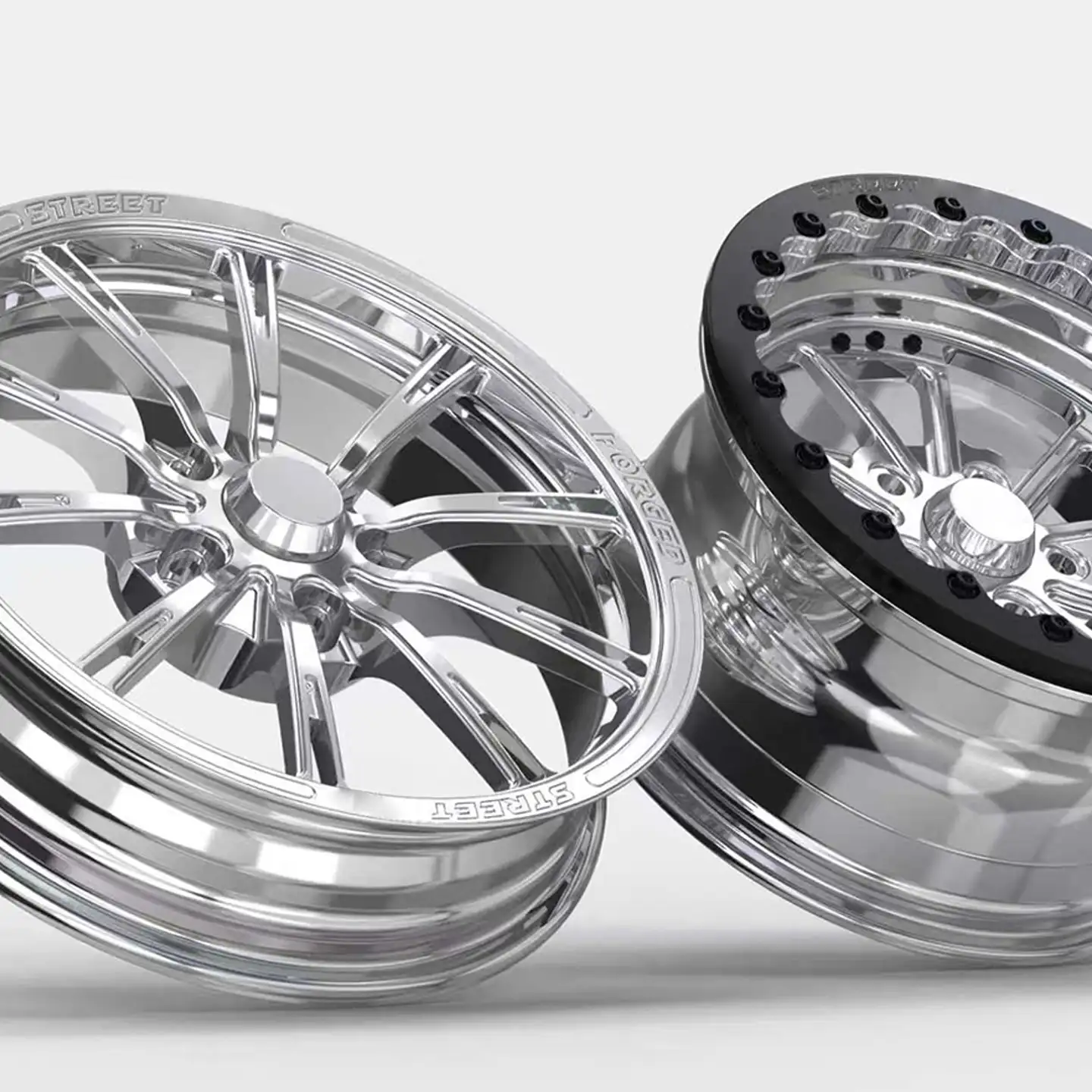
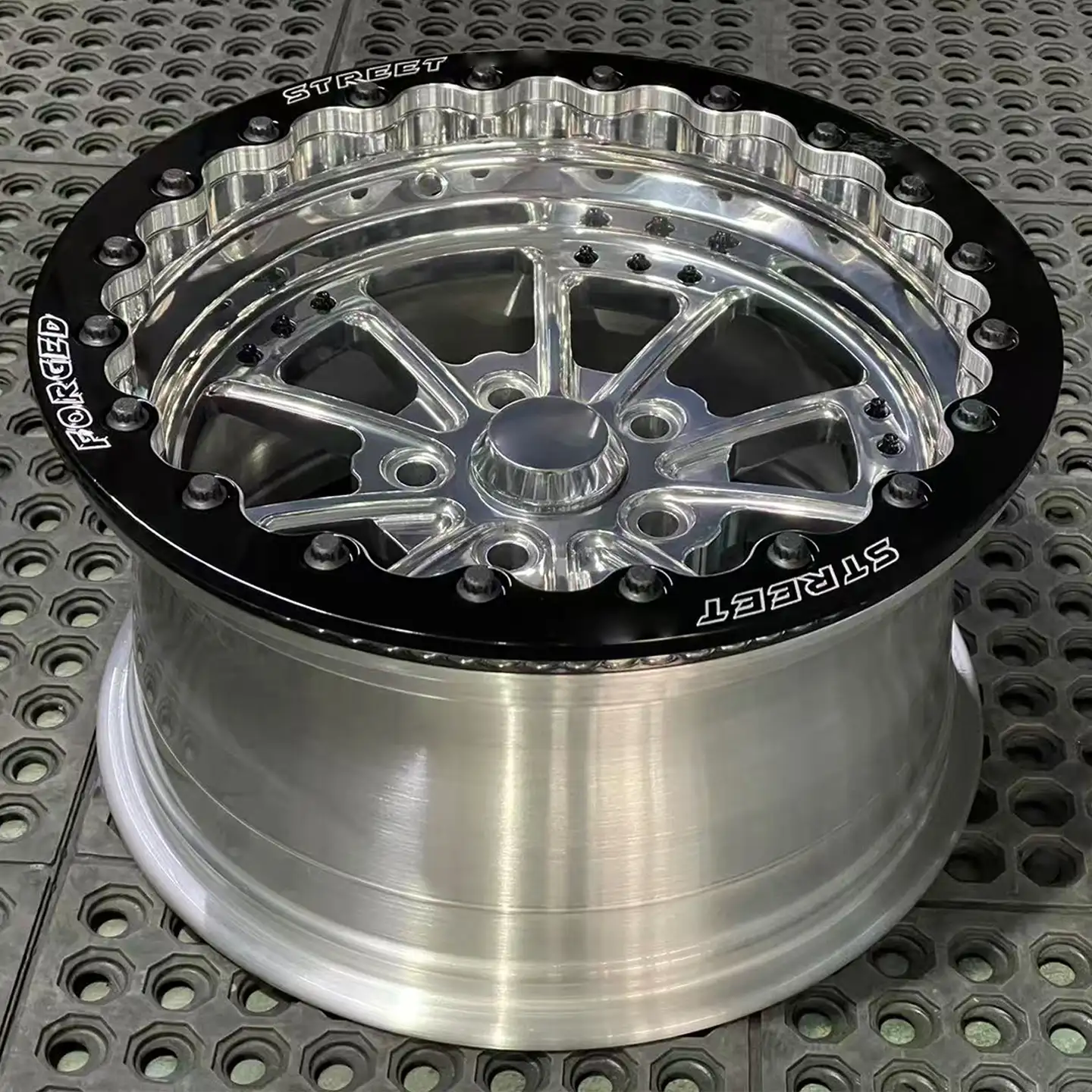
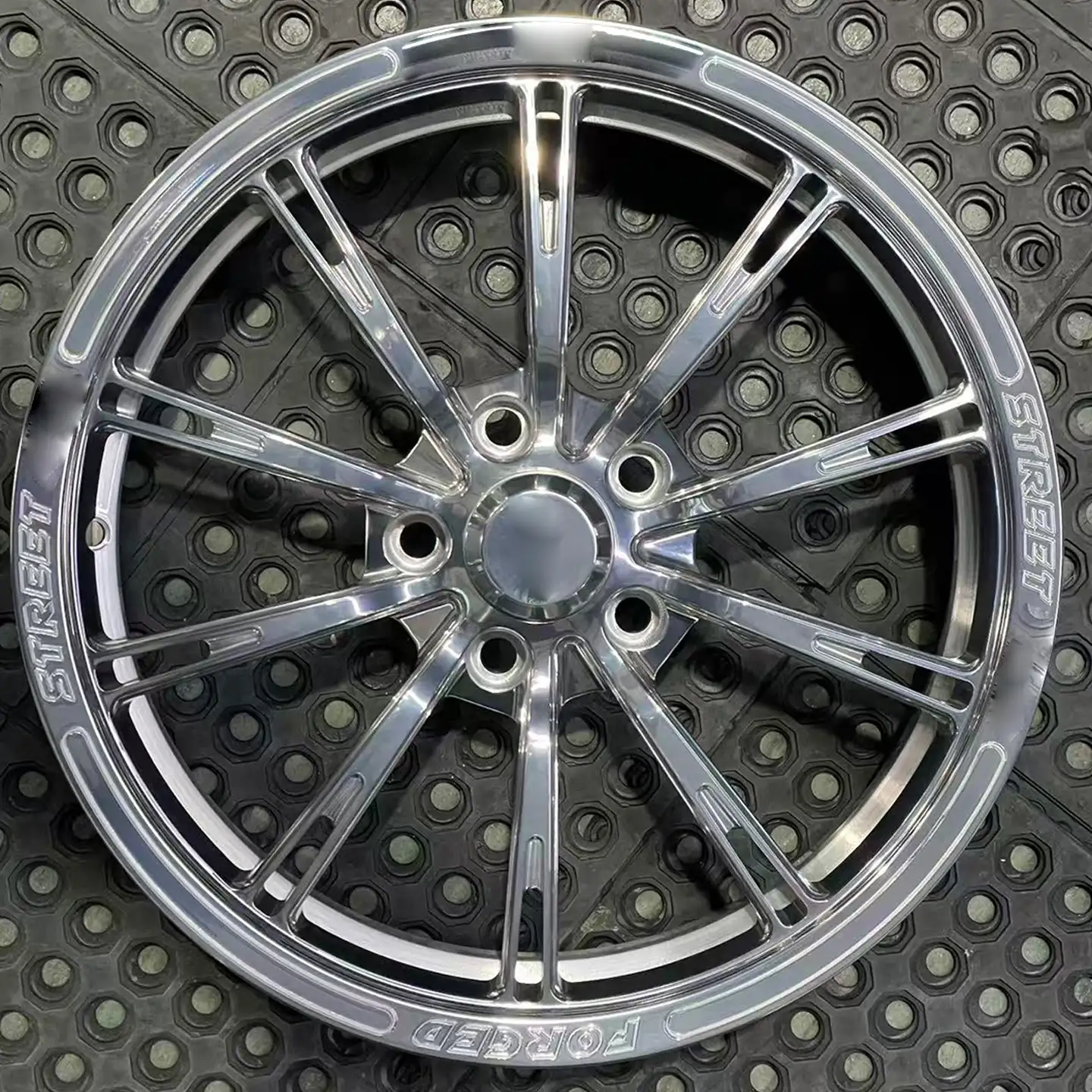
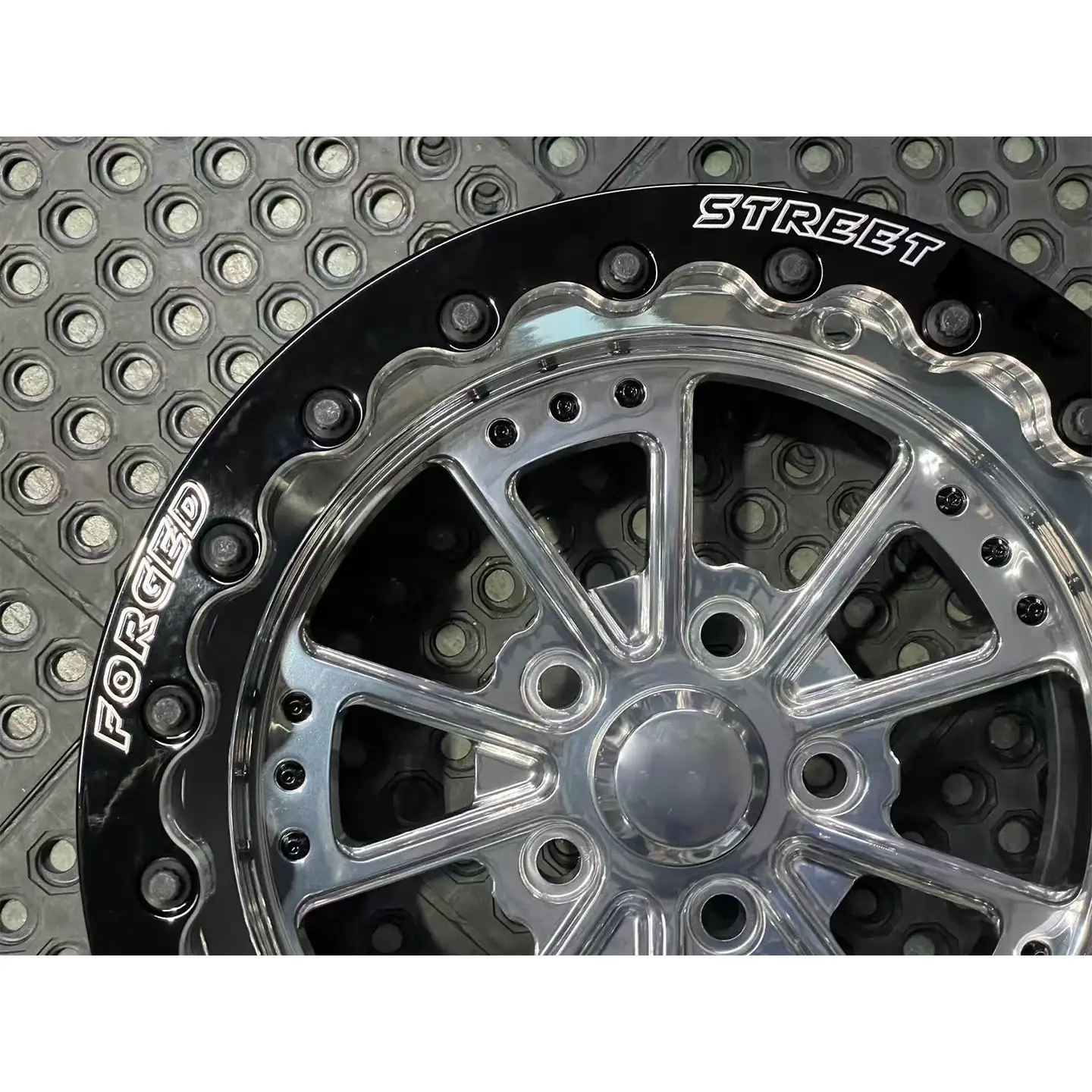
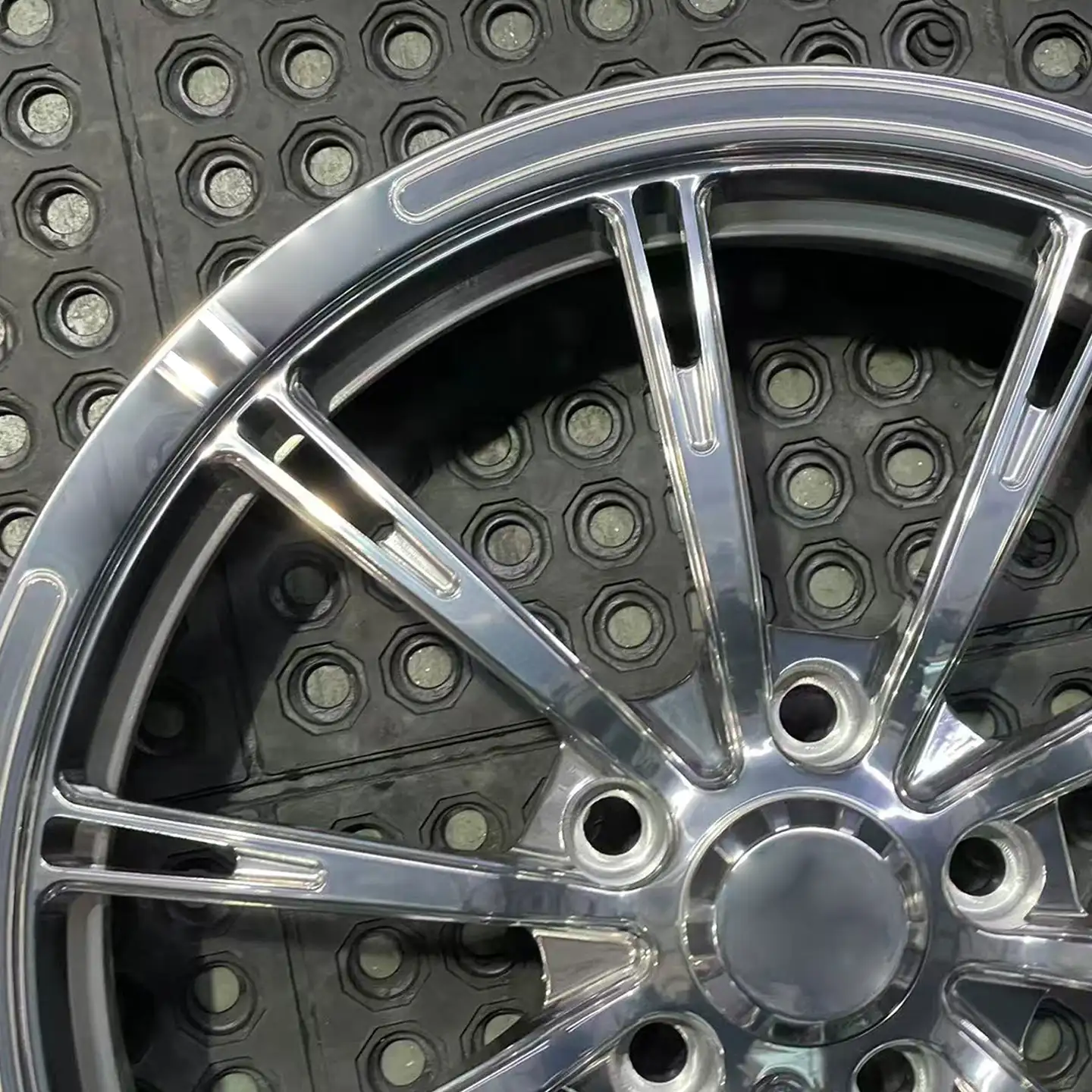
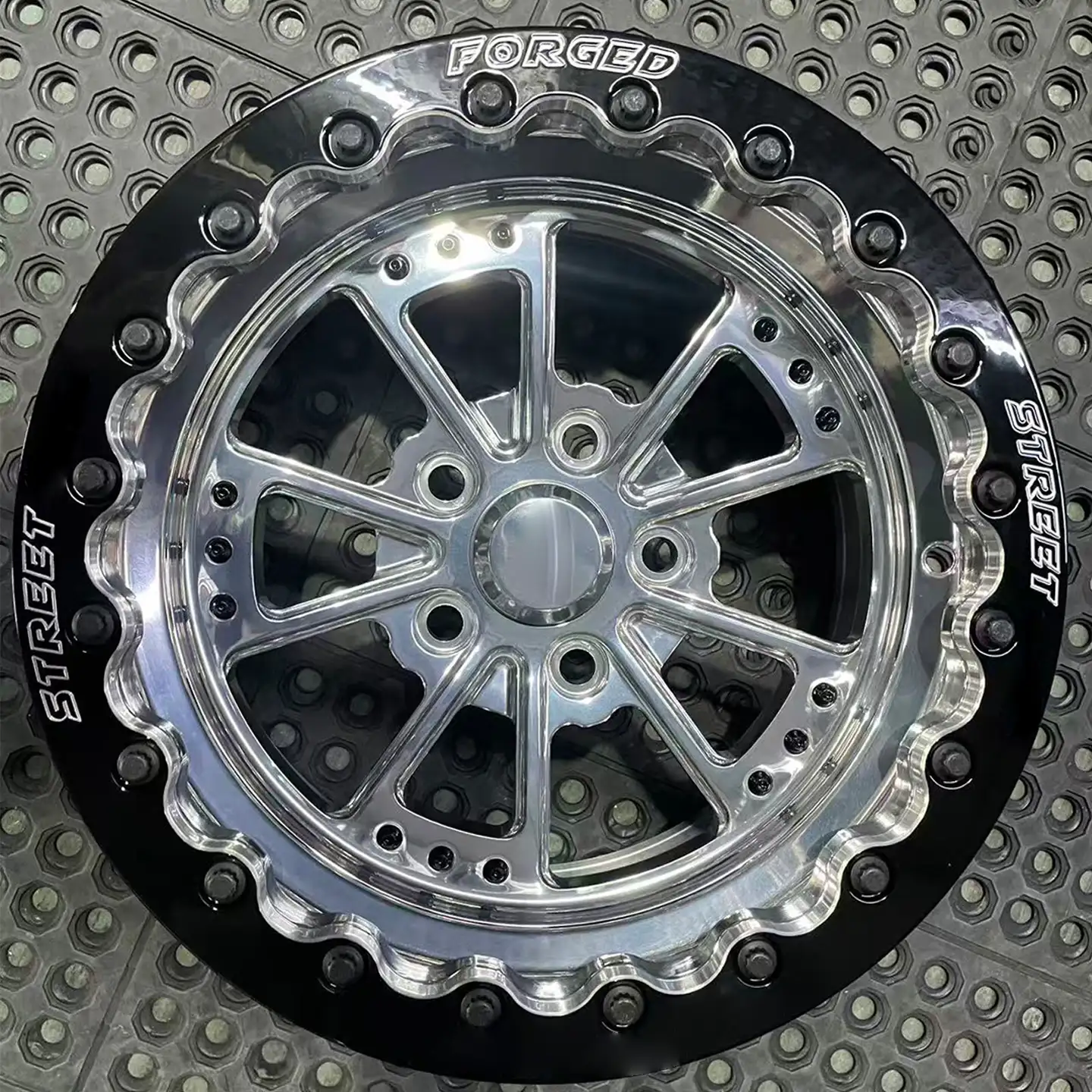
This set was built for a 1978 Ford Fairmont — the car that introduced Ford's Fox platform, and the body that later carried the Fox-body Mustang. The specification is a drag proportion rather than a road proportion: 17×4.5 at ET-13 for the front, 15×8.0 at ET0 for the rear, on a 5×114.3 (5×4.5") bolt circle with an 81 mm center bore, weighing 7.1 kg and 7.6 kg in the same front-to-rear order as the sizes. The face is ten slim spokes with a machined window between each pair; the finish is polished, and the beadlock ring is gloss black with its lettering and edges cut back to bright metal.



Specifications
| Item | Specification |
| Model No. |
RC1213-7XXT |
| Size |
Front: 17×4.5 Rear: 15×8.0 |
| PCD |
5×114.3 (5×4.5") |
| Offset (ET) |
Front: ET-13 Rear: ET0 |
| Center Bore |
81 mm |
| Weight |
7.1 kg front / 7.6 kg rear |
| Load Rating |
Not stated on the specification plate |
| Lug Seat |
Not stated on the specification plate |
| Finish |
Polished, beadlock ring gloss black with machined-bright details |
|
Beadlock |
Bolted outer clamping ring |
| Construction |
Forged |
| Fitment Basis | Check Data |
| Lead Time |
45 days (beadlock ring, polished finish and two-tone ring) |
-
Descriptions

XINGTU's engineers want to highlight three details that define this build — and this time they are about the car as much as about the wheel.
First, the proportions are the design. A 1978 Fairmont is a three-box body: a long flat hood, an upright greenhouse and a tall, flat rear quarter panel. That shape only looks right when the car sits nose-down and tail-up, and the 17×4.5 / 15×8.0 split is what creates that attitude. The narrow 17-inch front with a tall sidewall drops the nose, cuts frontal area and takes weight off the front corners; the 15-inch rear with an eight-inch barrel puts the width and the sidewall exactly where a launch loads it. The offsets do the rest of the styling work: ET-13 pulls the narrow front back under the fender so it reads as a front runner rather than a small wheel standing proud, while ET0 on the rear pushes the outer face out to the lip so the deep dish is what you see in profile. Set against the Fairmont's flat panels, that combination is what makes the car read as a period drag build instead of a modern large-diameter street set.
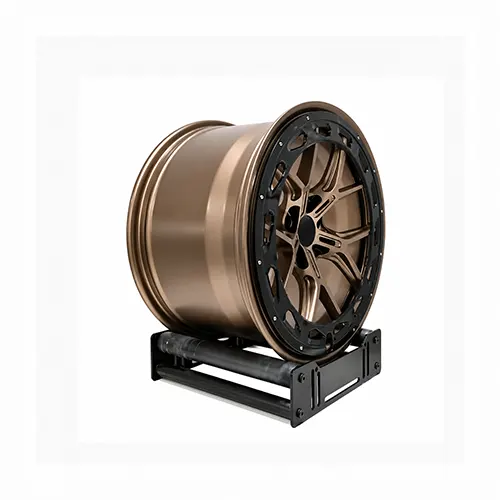
Second, the beadlock is a device, not trim. The ring is a separate machined part that clamps the outer tire bead against the rim flange under a full circle of bolts — that clamp is what keeps the bead from creeping and peeling away from the flange under load, and it is the reason a beadlock exists at all. Because it is a clamping joint, it is only as good as its torque procedure: the ring bolts are run up in stages in a cross pattern to a recorded figure, and re-checked after the first heat cycle, when ring and bead have settled. Two things follow that are easy to get wrong. The tire has to suit the wheel — a beadlock clamps the outer bead only, the inner bead still depends on the standard bead seat, so tire choice is part of the wheel specification rather than an afterthought. And the ring bolts are a beadlock joint, not a decorative multi-piece lip: reading them as trim, or re-using them as a cosmetic bolt circle, misrepresents what holds the tire on.
Third, the finish is chosen to answer the car. The centre and barrel are polished, and the beadlock ring is gloss black with the lettering and edges cut back to bright metal. On a 1978 Fairmont that is not decoration — the car's own trim language is bright metal against black rubber, black window surrounds and black bumper strips, so a polished wheel with a black ring sits inside the existing palette instead of fighting it. The dark ring also does a graphic job: on a body made of flat panels, a black circle at the lip separates the wheel from the tire and from the shadow under the rear quarter, which is what makes the stance legible from across a parking lot. The machined-bright lettering then catches light along the ring, so the wheel identifies itself at a distance without a coloured centre cap. Polished is also the honest finish for this period — a tinted or satin coating would date the car forward, while polished aluminium reads as the material a late-seventies drag car would actually have run.
From Design to Delivery
Quality Verified
- Front 17×4.5 and rear 15×8.0 dimensions inspected
- ET-13 front and ET0 rear offsets checked
- 5×114.3 (5×4.5") PCD and 81 mm center bore verified
- Wheel weights verified at 7.1 kg front and 7.6 kg rear
- Ten-spoke geometry and window profiles inspected
- Barrel and outer beadlock flange machined to drawing
- Beadlock ring scallop profile and bolt circle checked
- Ring flatness checked before assembly
- Ring bolts run up in stages in a cross pattern; torque values recorded and logged
- Bead seat and flange condition checked after assembly
- Polished surfaces inspected under directional light for swirl and blend lines
- Ring gloss black coverage checked; lettering and edges cut back cleanly
- Machined-bright lettering checked for legibility and burr-free edges
- Radial and lateral runout checked
- Dynamic balancing completed for every wheel
- Final dimensional check against drawing RC1213-7XXT
Result
The wheel does two jobs on this car at once. Mechanically, the rear carries a genuine clamped bead and a recorded torque sequence, so the tire is held by something that can be inspected rather than assumed.
Visually, the polished face and the black ring give the Fairmont the attitude its body was always asking for: the nose sits down over the small front, the deep dish fills the rear quarter, and the black circle at the lip draws a hard edge between wheel and tire so the car reads as a build rather than a car with new wheels on it.

Building a Fox-body car on a drag proportion and want the beadlock done properly?
XINGTU machines forged wheels with bolted beadlock rings around your hub data, tire choice, suspension clearance and intended use, and finishes them polished, painted, two-tone or with machined-bright detailing.
-
Build & Fitment
Stance defines the build.
For the 1978 Fairmont, the split setup – 17×4.5 ET‑13 front, 15×8.0 ET0 rear – delivers the classic nose‑down, tail‑up drag profile. The sizing and offsets keep the wheel tucked and visually aligned with the car’s original three‑box lines, avoiding a modern large‑diameter street look.
The beadlock is a functional component, not cosmetic trim.
Its ring clamps the outer tire bead to prevent bead slip under load. Bolts must be torqued in a staged cross pattern and rechecked after heat settlement. Only the outer bead is secured; the inner bead still relies on the rim seat, so tire selection is part of the wheel specification.
Finish is period‑matched.
Polished centre and barrel, paired with a gloss‑black beadlock ring with machined bright lettering and edges. This follows the car’s original trim palette, clarifies the wheel’s outline from a distance, and preserves the authentic late‑1970s drag‑car aesthetic.
-
FAQs
1. Why this front/rear split?
To achieve the intended drag stance and weight distribution for the 1978 Fairmont.
2. Can the beadlock bolts be used for decoration?
No; they form a critical load‑bearing clamping joint.
3. Is the finish just for looks?
No, it is selected to match the vehicle’s era and styling language.
4. Does the beadlock secure both beads?
Only the outer bead; the inner bead depends on the standard rim seat.
5. Are these offsets universal for all Fairmonts?
No, fitment must be verified on the actual vehicle.
6. How Long Does Production Take for This Wheel Set?
The recorded production schedule is 45 days, covering component machining, assembly, brushed silver finishing, outer-lip polishing, sealing and final inspection. Shipping time and any additional design revisions are separate from the production schedule.
Related Products