
Three Piece Forged Wheels Trends 2026: Designs, Finishes and Fitment
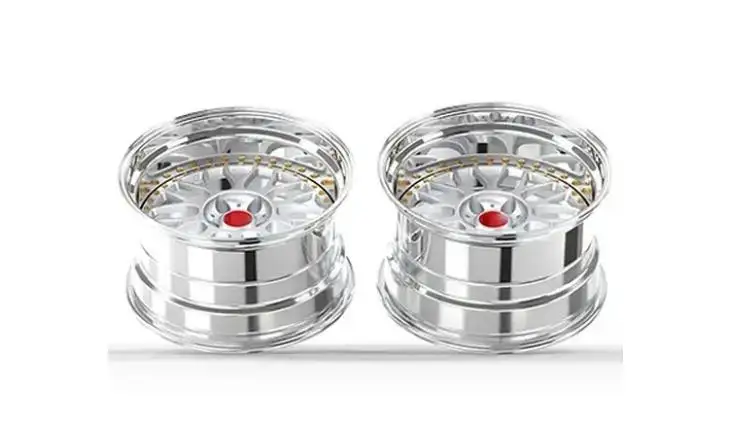
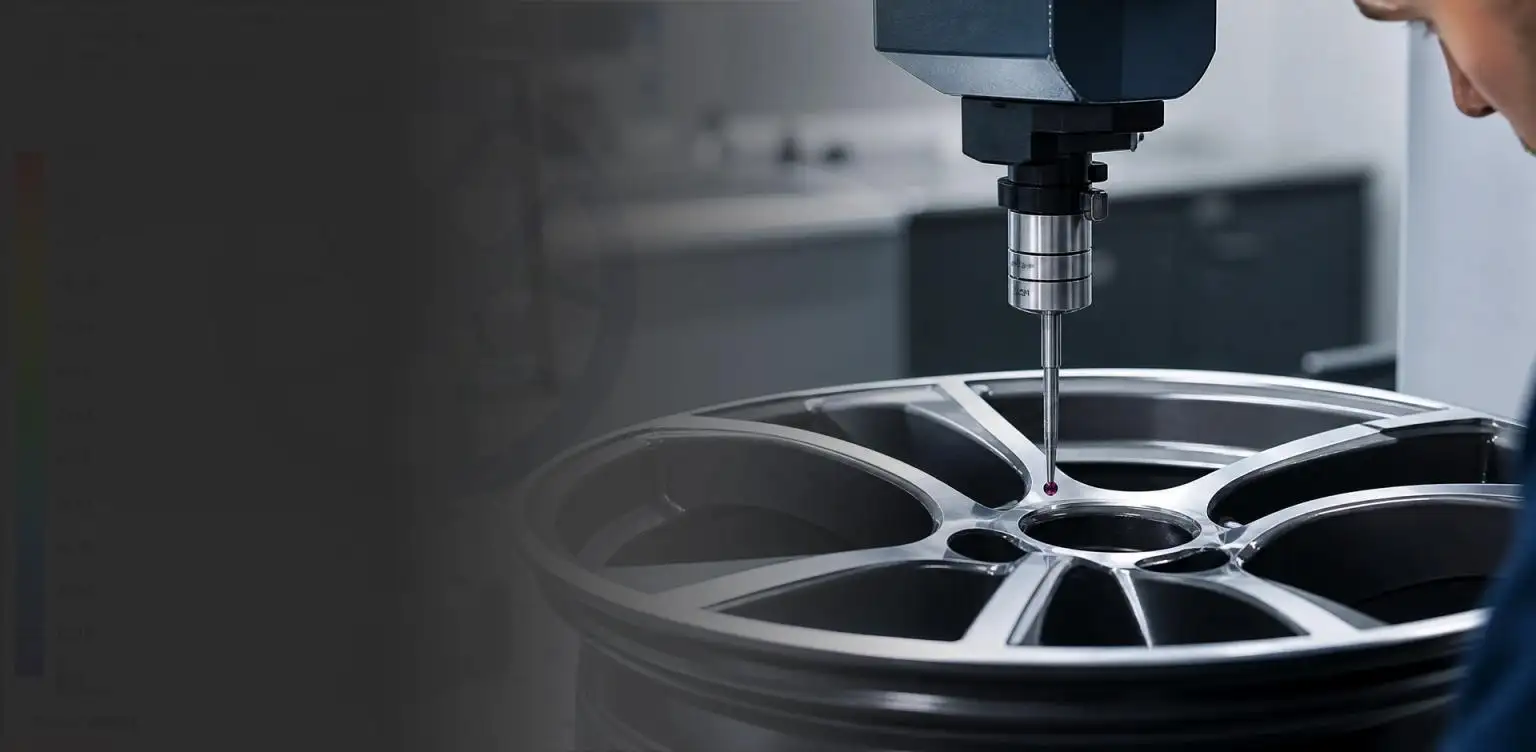
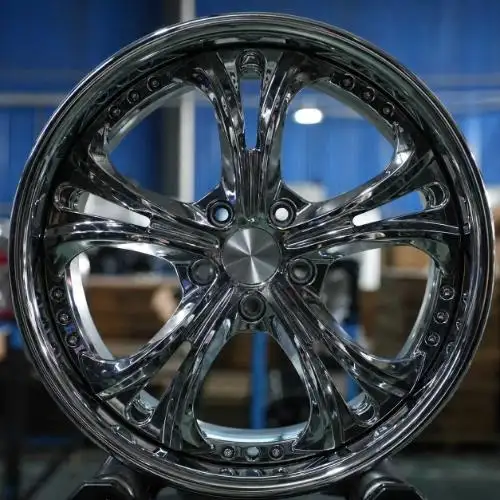
In 2026, Three Piece Forged Wheels are becoming less about extreme dimensions and more about controlled customization. At XINGTU, we evaluate a three-piece wheel as an engineered system: the center profile, inner barrel, outer lip, fasteners, sealing joint, finish and vehicle fitment must function together.
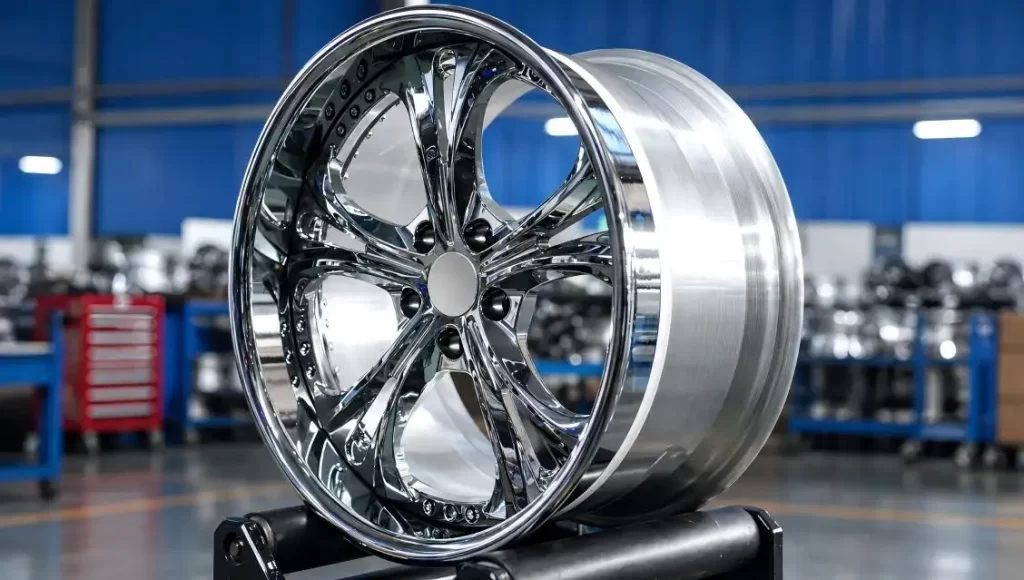
A deep lip or complex finish may attract attention, but correct offset, brake clearance, load capacity and assembly quality determine whether the wheel is suitable for real driving.
What Is Changing in 2026?
The main direction is vehicle-specific development. Instead of selecting a generic diameter and adjusting the stance with spacers, buyers increasingly expect Three Piece Forged Wheels to be engineered around the actual car.
Current priorities include:
•Model-specific PCD, center bore and lug-seat geometry
•Front and rear offsets matched to suspension and body clearance
•Separate finishes for the center, lip, barrel and hardware
•Brake-caliper clearance confirmed before machining
•Replaceable or refinishable individual wheel sections
•Balanced proportions rather than maximum lip depth
This approach is particularly relevant to performance cars, European touring models, restomods and vehicles with upgraded brakes or suspension.
How Three Piece Forged Wheels Are Constructed
A true three-piece wheel uses three principal structural sections:
- A forged center disc
- A separate outer lip
- A separate inner barrel
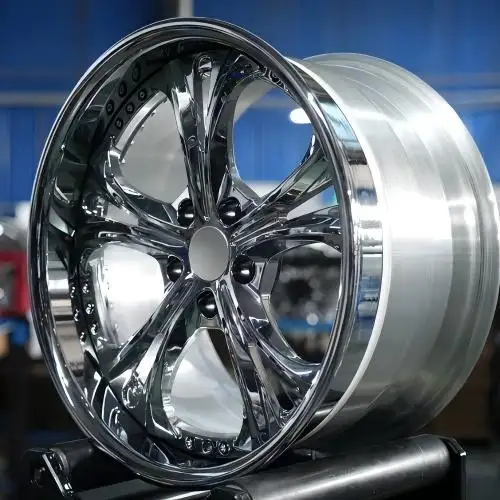
The components are assembled with perimeter fasteners. The barrel joint must then be sealed and checked for air retention. In many Three Piece Forged Wheels, the center is CNC-machined from a forged aluminum blank, while the barrel sections are produced through separate forming and machining operations.
| Construction | Dimensional Flexibility | Finish Options | Service Requirements |
| Forged monoblock | Limited after machining | Primarily one finish zone | Lowest assembly maintenance |
| Two-piece forged | Moderate | Center and barrel separation | Joint and hardware inspection |
| Three-piece forged | High | Center, lip, barrel and hardware | Seal and fastener maintenance |
Three-piece construction is not automatically lighter than a monoblock. Additional lips, fasteners and joint material can increase mass. Its main engineering advantage is configuration flexibility.
Design Trends for Three Piece Forged Wheels
Period-Correct Spoke Designs
Five-spoke, mesh and multi-spoke centers remain suitable for classic European and motorsport-inspired builds. Modern CNC machining allows these familiar layouts to use refined spoke transitions, recessed hardware and controlled pocketing.
Spoke geometry must still provide:
•Adequate brake-caliper clearance
•ufficient material around the hub and lug holes
•A suitable load path from the rim to the hub
•Practical access for cleaning and fastener inspection
Deep Lips With Measured Fitment
Deep-dish designs remain prominent, but lip depth cannot be chosen independently. It is affected by:
•Wheel width
•Offset
•Center-disc mounting position
•Brake package
•Inner suspension clearance
•Fender position
A wider lip may require the center disc to move inward, which can reduce caliper clearance. At XINGTU, we treat lip depth as an output of the fitment calculation, not the starting specification.
Exposed and Concealed Hardware
Visible assembly bolts support a technical or retro appearance, while concealed hardware creates a cleaner face. Hardware decisions also affect corrosion resistance, access for service and the visual separation between the center and outer lip.
Finish Trends: Separate Surfaces, Different Functions
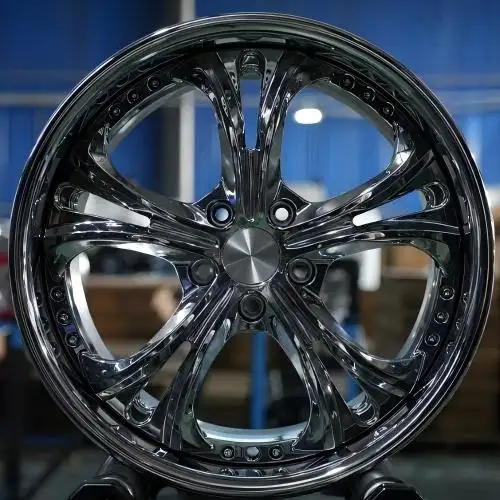
One advantage of Three Piece Forged Wheels is the ability to finish each section independently.
| Finish | Typical Application | Engineering Consideration |
| Brushed clear coat | Premium street builds | Clear-coat coverage must protect the machined surface |
| High-polished aluminum | Outer lips and classic builds | Requires regular cleaning and oxidation control |
| Powder coating | Daily-use centers | Good durability, but repair color matching may vary |
| Chrome finish | Luxury and retro applications | Surface preparation is critical to finish consistency |
| Two-tone treatment | Custom and show builds | Requires precise masking and component-level QC |
A finish should be selected according to climate, brake-dust exposure, cleaning frequency and repair expectations—not appearance alone.
Fitment Requires More Than Diameter and PCD
The fitment of Three Piece Forged Wheels should be calculated using the complete vehicle configuration. Required information includes:
•Vehicle model, year and trim
•Wheel diameter and front/rear width
•PCD and center bore
•Lug-seat geometry
•Front and rear offset
•Brake-caliper envelope
•Suspension type and modifications
•Fender or widebody measurements
•Intended tire size
•Permitted axle load
• Square or staggered layout
When wheel width changes, both the inner and outer positions change. One inch equals 25.4 mm, so increasing width by one inch adds approximately 12.7 mm to each side before the offset change is considered.
A practical comparison is:
•Outer-position change: half of the width increase minus the offset increase
•Inner-position change: half of the width increase plus the offset increase
Therefore, ET value alone cannot confirm fitment. A lower offset generally moves the wheel outward, but actual clearance also depends on width, tire sidewall shape and spoke profile.
Square vs. Staggered Fitment
A square setup uses the same dimensions at all four corners and may support tire rotation. A staggered setup uses different front and rear widths, offsets or diameters.
| Application | More Suitable Direction |
| Tire rotation and predictable replacement | Square |
| Rear-wheel-drive visual balance | Staggered |
| Wider rear tire requirement | Staggered |
| Track setup | Depends on chassis balance and tire strategy |
| Classic or show build | Determined by body proportions |
Neither layout should be selected solely for appearance.
Manufacturing and Quality Checks That Matter
For Three Piece Forged Wheels, inspection must cover both individual components and the completed assembly. At XINGTU, the engineering review focuses on:
•Forged material condition and machining accuracy
•PCD, center bore, offset and mounting-face dimensions
•Radial and lateral runout
•Fastener specification and controlled assembly torque
•Barrel-joint sealing and air-retention testing
•Dynamic balance
•Finish thickness and visual consistency
•Load rating appropriate for the vehicle
Load rating should be compared with the vehicle's permitted axle load—not only curb weight. Brake clearance should also be verified from the caliper profile rather than wheel diameter alone.
XINGTU BMW E91 Three Piece Forged Wheels Example
XINGTU's BMW E91 wheel project shows how design, finish and fitment can be developed as one specification.
The configuration uses a 6061-T6 forged five-spoke center with true three-piece construction. A bright chrome center and outer lip are combined with a polished aluminum barrel section, creating distinct finish zones without relying on painted graphics.
Key specifications include:
•PCD: 5×120 mm
•Front offset: ET32
•Rear offset: ET40
•Center bore: 72.5 mm
•Front weight: 13.9 kg
•Rear weight: 14 kg
•Load rating: 700 kg per wheel
These dimensions should not be copied automatically to every BMW E91. Suspension height, brake upgrades, tire selection and body modifications must be confirmed before production.
Maintenance and Rebuilding
Compared with monoblock wheels, Three Piece Forged Wheels require periodic inspection of the perimeter hardware and barrel seal. Owners should also watch for corrosion, finish damage and slow air loss.
An outer lip or barrel may sometimes be replaced or refinished separately. Cracked centers, distorted mounting faces or damaged lug seats, however, require professional structural assessment.
Final Perspective
Well-designed Three Piece Forged Wheels should combine purposeful styling with verified engineering. For BMW E91 owners and other custom-build customers, XINGTU can review vehicle measurements, finish requirements and intended use before converting the design concept into a production-ready wheel specification.
FAQs
Q1. Does XINGTU Offer True Three Piece Forged Wheels?
Yes. XINGTU develops true Three Piece Forged Wheels using a separate forged center, inner barrel and outer lip. These components are assembled with perimeter hardware and sealed to maintain air pressure.
Q2. What Material Does XINGTU Use for Three Piece Forged Wheels?
The XINGTU BMW E91 project uses a center CNC-machined from 6061-T6 forged aluminum. Material and structural specifications should be confirmed for each custom wheel project.
Q3. Can XINGTU Customize Wheel Size and Offset?
Yes. XINGTU can customize wheel diameter, width, front and rear offset, PCD and center bore. The final dimensions depend on the vehicle, brakes, suspension, tires and body clearance.
Q4. What Information Does XINGTU Need to Check Fitment?
Customers should provide the vehicle model, year, trim, current wheel and tire sizes, brake configuration, suspension modifications and intended fitment. Widebody or modified vehicles may also require physical measurements.
Q5. Can XINGTU Produce Square and Staggered Wheel Setups?
Yes. XINGTU can develop square or staggered Three Piece Forged Wheels. The appropriate layout depends on chassis balance, tire requirements, drivetrain, axle clearance and the desired appearance.


