
Wheel Center Bore Explained: Fitment, Measurement, and Engineering Considerations
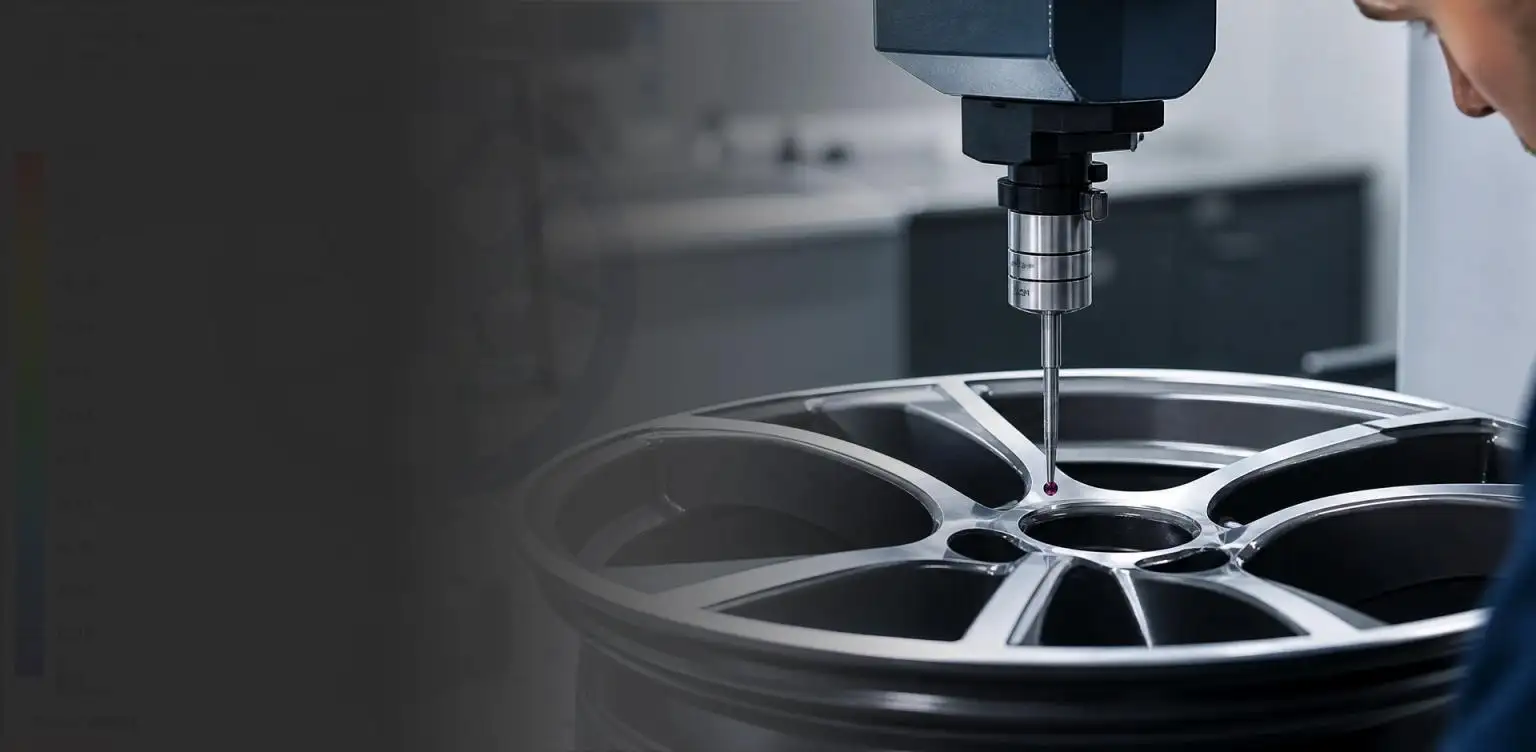
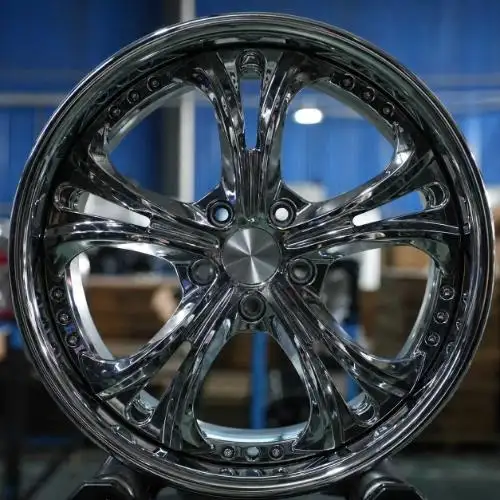
A wheel can have the correct diameter, width, and bolt pattern yet still be unsuitable for a vehicle. The missing parameter is often the center bore.
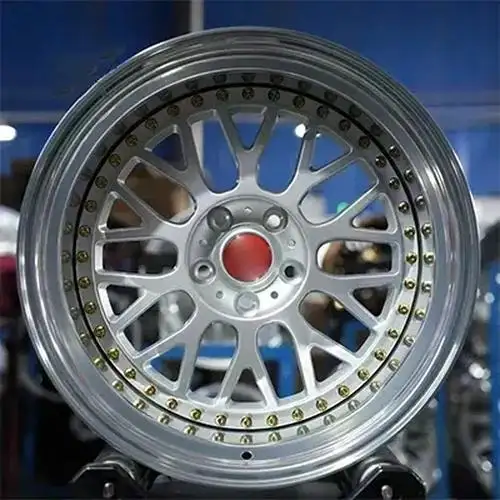
This Wheel Center Bore Explained guide examines the center bore as part of the complete wheel-to-hub interface. From XINGTU's engineering perspective, center bore selection should always be evaluated together with PCD, offset, fastener seat, hub geometry, and brake clearance—not as an isolated number.
Wheel Center Bore Explained: Quick Answer
The wheel center bore, also called the hub bore or CB, is the machined opening in the center of the wheel mounting face. It fits over the vehicle's hub pilot and helps establish concentric wheel positioning during installation.
Three fitment conditions are possible:
| Center-Bore Relationship | Installation Result | Required Action |
| Wheel bore matches hub pilot | Direct hub-centric fitment | Confirm tolerance, engagement, and complete wheel specifications |
| Wheel bore is larger | Radial clearance remains | Use a correctly sized centering ring if the application permits |
| Wheel bore is smaller | Wheel cannot fully seat | Do not force, grind, or tighten it into position |
"Matching" does not mean a zero-clearance interference fit. The bore and hub must follow the specified dimensional clearance so the wheel installs correctly without excessive movement.
What Does the Center Bore Control?
The center bore helps align the wheel's rotational axis with the vehicle hub. It must not be confused with:
•PCD: The diameter and arrangement of the wheel bolt holes
•Center cap opening: The decorative opening visible from the wheel face
•Lug-hole diameter: The holes receiving studs or wheel bolts
•Offset or ET: The mounting pad's position relative to the wheel centerline
A matching PCD only confirms that the bolt holes follow the same pattern. It does not confirm center-bore compatibility, brake clearance, offset, or fastening geometry.
At XINGTU, we therefore treat the center bore as one element of a complete fitment package. Vehicle make, model, year, hub dimensions, PCD, offset, brake configuration, and preferred wheel size should be reviewed before machining.
Hub-Centric vs. Lug-Centric Wheels
Any professional Wheel Center Bore Explained discussion must distinguish between hub-centric and lug-centric installation.
| Fitment Factor | Hub-Centric | Lug-Centric |
| Installation alignment | Hub pilot and center bore assist centering | Fasteners and lug seats establish centering |
| Center-bore configuration | Vehicle-specific or ring-adapted | Commonly larger than the hub pilot |
| Centering ring | Not required for a direct bore | May be required for certain applications |
| Installation sensitivity | Relatively straightforward | Highly dependent on hardware and tightening sequence |
| Common use | OEM and vehicle-specific wheels | Some multi-fit aftermarket wheels |
It is inaccurate to say that the center bore alone carries the vehicle's full weight. In a properly installed assembly, the fasteners generate clamping force between the wheel mounting pad and hub face. The center bore primarily assists concentric positioning, while correct torque, clean contact surfaces, and suitable fastener seats remain essential.
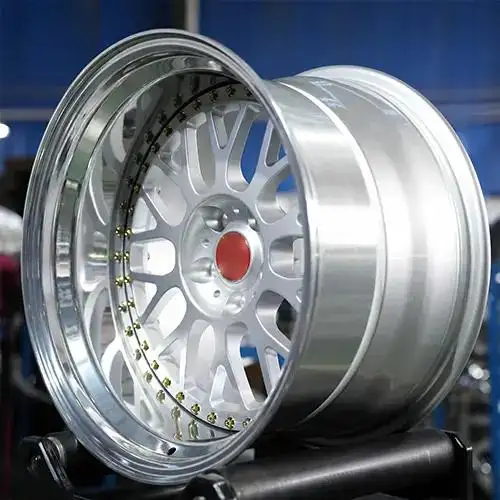
Center-Bore Geometry Goes Beyond Diameter
The nominal bore diameter is important, but an engineering review should also consider:
Hub-Pilot Engagement
The hub pilot needs sufficient engagement with the wheel bore or centering ring. A matching diameter may still be ineffective if the hub pilot is too short or interrupted by an unsuitable spacer.
Entrance Chamfer
Many center bores include a chamfer that helps the wheel pass over the hub's edge or radius. If the chamfer conflicts with the hub geometry, the wheel may appear installed while the mounting pad is not fully seated.
Coating and Surface Condition
Powder coating, paint buildup, corrosion, burrs, or debris can reduce effective clearance. Critical mounting interfaces should remain dimensionally controlled after finishing.
Spacer and Adapter Interfaces
A spacer introduces an additional mounting interface. Its inner bore, outer pilot, thickness, and available pilot engagement must all be checked rather than evaluating the wheel bore alone.
When Should a Centering Ring Be Used?
A centering ring fills the gap between an oversized wheel bore and a smaller vehicle hub pilot. It may be appropriate when:
•The ring's outer diameter matches the wheel bore
•Its inner diameter matches the hub pilot
•The wheel manufacturer permits ring-adapted fitment
•The ring does not interfere with the bore chamfer
•Adequate hub-pilot engagement remains available
•PCD, offset, load rating, and brake clearance are already correct
A centering ring cannot solve:
•An undersized wheel bore
•Incorrect PCD
•The wrong conical, ball, or flat lug seat
•Insufficient brake clearance
•Excessive or unsuitable offset
•Inadequate wheel load capacity
Engineering-polymer rings resist corrosion and are practical for many road applications. Aluminum rings provide greater rigidity but require attention to corrosion and seizure. Dimensional accuracy and application suitability matter more than material alone.
For a vehicle-specific forged wheel, XINGTU will check if the bore can be machined directly to the hub. For a stockpile of multiple vehicles, a larger master bore with application-specific rings may cover a wider range of vehicles, but only after the complete fitment has been confirmed.
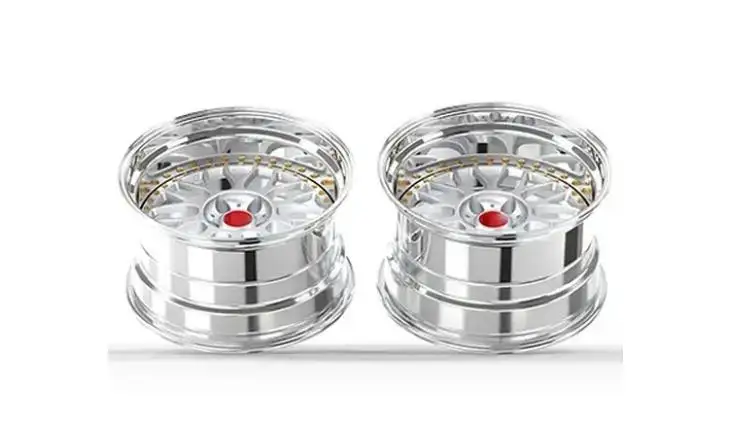
Wheel Center Bore Explained: How to Measure It
Use a digital caliper or another suitable precision instrument rather than a tape measure.
•Remove rust, dirt, burrs, and coating buildup from the measurement surfaces.
•Measure the wheel bore with the caliper's inside jaws.
•Measure the hub pilot with the outside jaws.
•Take readings in several directions to detect irregularity.
•Measure the cylindrical engagement area—not the decorative chamfer.
•Confirm the hub's effective length if spacers are involved.
•Compare physical measurements with reliable vehicle and wheel data.
Do not measure the center cap opening. It may have no relationship to the mounting bore behind it.
Diagnosing Center-Bore-Related Problems
| Symptom | Possible Cause | Inspection Priority |
| Wheel does not sit flush | Bore too small, chamfer interference, rust, or debris | Bore, hub edge, and mounting face |
| Speed-related vibration | Poor centering, wrong ring, imbalance, or runout | Centering interface, balance, and radial runout |
| Fasteners repeatedly loosen | Wrong lug seat, torque, or incomplete seating | Hardware and mounting pad contact |
| Wheel is difficult to remove | Corrosion or seized metal ring | Hub and ring contact surfaces |
| Visible wobble | Contaminated mounting face or damaged wheel/hub | Axial and radial runout |
Another Wheel Center Bore Explained mistake is blaming every vibration on the bore. Tire imbalance, bent wheels, damaged hubs, incorrect spacers, unsuitable hardware, and uneven tightening can create similar symptoms.
Complete XINGTU Fitment Checklist
Before approving a custom wheel specification, confirm:
•Vehicle make, model, year, and axle
•Wheel diameter and width
•PCD and center bore
•Offset and mounting-pad position
•Brake-caliper envelope
•Suspension and fender clearance
•Lug-seat type and hardware length
•Hub-pilot diameter and engagement
•Spacer or adapter configuration
•Tire size and wheel load requirement
Conclusion
Wheel Center Bore Explained mostly focuses on how center bore accuracy can help achieve a correct installation but can not make up for incorrectness in other aspects of the fitment system. Diameter, chamfer, hub engagement, mounting surfaces, fasteners, offset, and brake clearance need to work as a system.
For a custom project of forged wheels for a vehicle, XINGTU can look at the entire application data and include the necessary center bore in the machining specification. Check out XINGTU wheel center bore applications or provide your vehicle and fitment info for a more detailed technical review.
FAQs
Q1. What Is a Wheel Center Bore?
The wheel center bore is the machined opening in the center of the wheel's mounting face. It fits over the vehicle's hub pilot and helps position the wheel concentrically during installation.
Q2. Can XINGTU Customize the Center Bore of a Forged Wheel?
Yes. XINGTU can machine the center bore according to the intended vehicle application. The final specification must be confirmed together with the PCD, offset, wheel size, fastener seat, and brake-clearance requirements.
Q3. What Vehicle Information Does XINGTU Need?
XINGTU normally requires:
•Vehicle make, model, and year
•Front and rear wheel sizes
•PCD or bolt pattern
•Hub-pilot diameter
•Required center bore
•Offset or ET
•Brake-caliper information
•Spacer or adapter details
•Lug-seat type
Q4. Can XINGTU Produce Direct Hub-Centric Wheels?
Yes, where verified vehicle data are available, XINGTU can develop a vehicle-specific center bore intended to fit the original hub pilot directly. Actual dimensions and required clearances should be approved before machining.
Q5. Does a Matching PCD Guarantee That a XINGTU Wheel Will Fit?
No. Matching PCD only confirms the bolt-hole arrangement. Center bore, offset, wheel width, brake clearance, lug-seat geometry, suspension clearance, and load rating must also be checked.
Share on Social:


