19-Inch 3-Piece Forged Wheels for BMW E91 325i LCI | Chrome Star Center & Polished Aluminum Barrel
- Model: RC1405-1XXT (1995 / 19105)
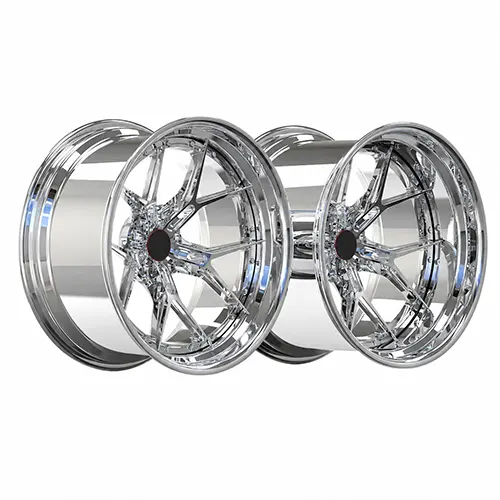
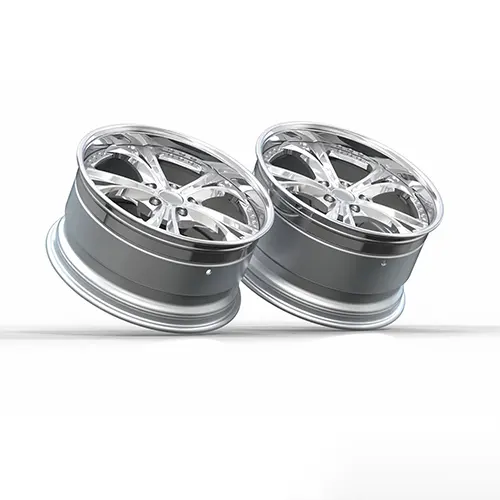
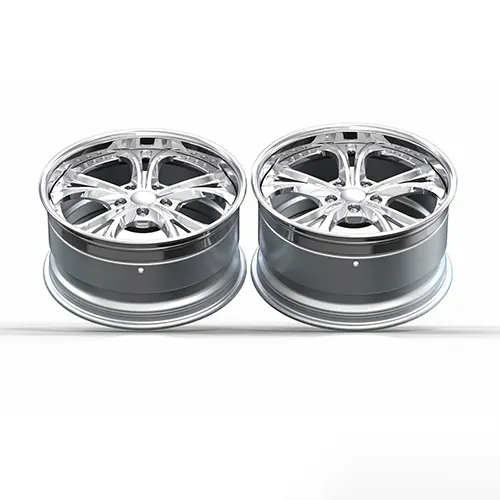
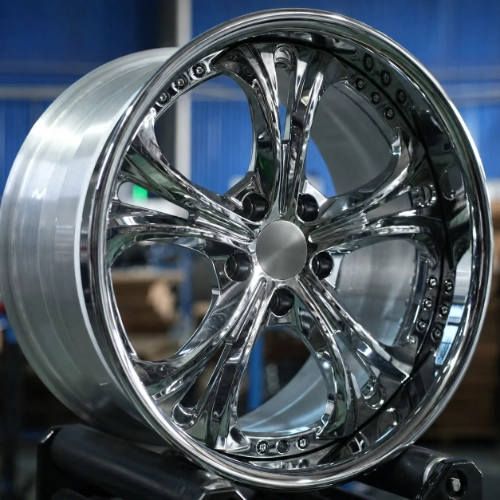
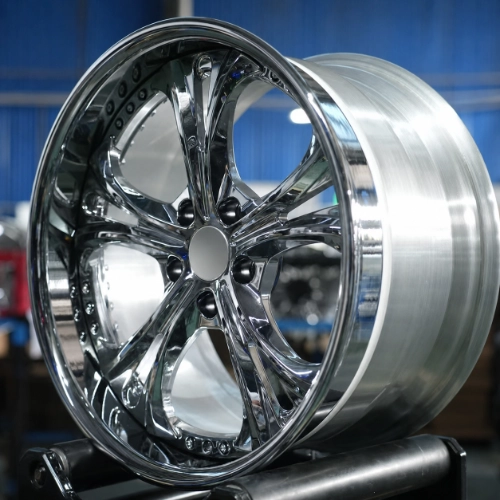
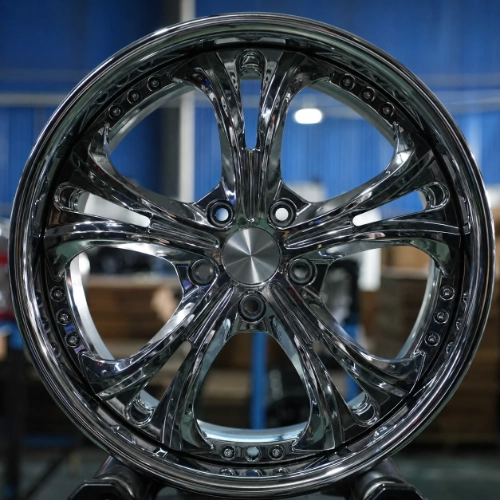
Three independently forged sections give this E91 wheel its character before any finish is applied. Bright chrome covers the five-spoke center and upper lip, while the lower barrel retains the warmer appearance of polished aluminum. Functional hardware defines both component joints and keeps the three-piece construction visually legible. Staggered 19-inch sizing with ET32 / ET40 was manufactured around the adjusted arches and suspension of this specific Touring, while 5×120 and CB72.5 retain the required mounting interface.



Specifications
| Item | Specification |
|---|---|
| Model No. | RC1405-1XXT (1995 / 19105) |
| Size (Front) | 19×9.5 inch |
| Size (Rear) | 19×10.5 inch |
| PCD | 5×120 mm |
| Offset (Front) | ET32 |
| Offset (Rear) | ET40 |
| Center Bore | 72.5 mm |
| Weight (Front) | 13.9 kg |
| Weight (Rear) | 14 kg |
| Load Rating | 700 kg per wheel |
| Finish | Bright chrome center + bright chrome outer lip (upper barrel) + bare polished aluminum barrel (lower) |
| Construction | 3-Piece Forged (bolted center + upper barrel + lower barrel) |
-
Descriptions

Engineering Notes
Three-piece construction introduces two genuine assembly interfaces.
Forged 6061-T6 forms the center, while separate upper and lower barrel sections complete the wheel. Functional stainless hardware joins the components, with both interfaces torqued and pressure-tested after assembly.
That architecture gives the wheel more than visible bolts. Barrel sections, center position and finish treatment can remain physically independent rather than being simulated on a single shell.
Published load capacity is 700 kg per wheel.
Two Metal Finishes Reveal Three Components
Bright chrome and polished aluminum may both reflect strongly, yet their visual character remains different.
Chrome creates a colder and more glass-like surface across the center and upper lip. Polished natural aluminum sits deeper inside the wheel with a warmer metallic appearance.
Changing viewing angle reveals those differences progressively, which makes the physical construction easier to understand.
Exposed Hardware Has Nothing to Imitate
Fasteners are positioned exactly where the forged pieces meet.
Nothing is added simply to create a three-piece appearance. Mechanical joints already provide the visual detail.
That authenticity matters commercially for customers specifically shopping for genuine multi-piece forged construction rather than perimeter-bolt styling.
Geometry Follows the Modified Touring
ET32 / ET40 belongs to a vehicle whose arch and suspension positions were already changed before wheel manufacture.
Wheel geometry therefore responds to the prepared chassis rather than presenting the finished dimensions as a universal E91 recommendation.
That is precisely where made-to-order manufacturing adds value: wheel position can follow the actual car.
From Design to Delivery
Quality Verified
Two sealed component joints require consistent hardware control, while chrome plating and polished aluminum introduce different surface-inspection requirements.
- CMM dimensional inspection (PCD / CB / runout)
- Dynamic balancing on every wheel
- 3-piece hardware (both joints) torqued to spec & pressure-tested for seal
- Forged 6061-T6, hub-centric machining verified
- Multi-layer bright chrome plating adhesion & mirror QC before packing
- Polished aluminum barrel finish inspected under controlled lighting
Result
Bright chrome concentrates reflection around the center and upper rim. Polished aluminum creates a quieter metallic layer farther inside the barrel. Exposed hardware marks both genuine structural interfaces.
Construction remains readable from the outside.
Combined with customized ET32 / ET40 geometry and a 700 kg rating, the finished wheel feels purpose-built for the modified Touring rather than adapted from a conventional BMW wheel.

Building a custom E9x, F30, or any European saloon or wagon with adjusted arches?
XINGTU forges 1-piece, 2-piece, and 3-piece constructions to your exact submitted fitment—
bright chrome, dark chrome, brushed, painted, or polished finishes all available. -
Build & Fitment
ET32 / ET40 Belongs to the Prepared Chassis
Offsets reflect existing body and suspension changes.
Another E91 may require a different front-to-rear relationship even with the same center design.
5×120 and CB72.5 Perform Different Jobs
PCD establishes fastener position.
Center bore establishes radial location at the hub.
Both remain part of the complete mounting specification.
Three Pieces Mean Two Assembly Joints
Each component boundary requires controlled hardware torque and sealing.
Assembly complexity is greater than on a conventional two-piece wheel because both joints need to function correctly.
Barrel Sections Can Be Developed Independently
Center design can remain while upper or lower barrel dimensions change around another confirmed vehicle configuration.
Finish Separation Follows Real Parts
Chrome, polish, brushing or paint can be assigned to different forged components without introducing arbitrary finish lines.
Modified-Vehicle Fitment Should Be Confirmed Before Machining
Arch position, suspension geometry and desired wheel position should be resolved before final offsets and barrel proportions are released.
-
FAQs
1. What makes the wheel genuinely three-piece?
Forged center, upper barrel and lower barrel are three separate structural components.
2. Are the perimeter fasteners functional?
Yes. They physically join the forged sections.
3. Why does three-piece construction require two sealed interfaces?
Three components create two joints, and both need to remain airtight after assembly.
4. Why combine chrome with polished aluminum?
Different metallic reflections make component depth more visible without adding another color.
5. Are ET32 / ET40 standard E91 offsets?
No. Those values were manufactured around the adjusted vehicle used for this build.
6. What mounting geometry is used?
5×120 PCD and CB72.5.
7. What load rating is specified?
700 kg per wheel.
8. Can barrel dimensions change while keeping the same center?
Yes. Three-piece construction allows component proportions to be developed around a different confirmed fitment.
9. Why choose genuine three-piece forging over cosmetic perimeter hardware?
Real multi-piece construction provides independent components, functional joints and greater control over barrel configuration.
10. What should be confirmed for another modified E91?
Wheel width, offset, hub dimensions and available arch/suspension space should be checked before production.
Related Products