Bespoke Forged Wheels vs. Standard Aftermarket Wheels: Fitment, Strength and Customization
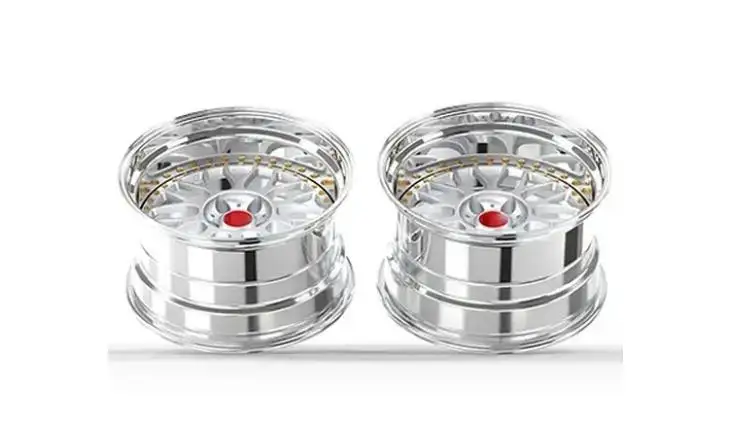
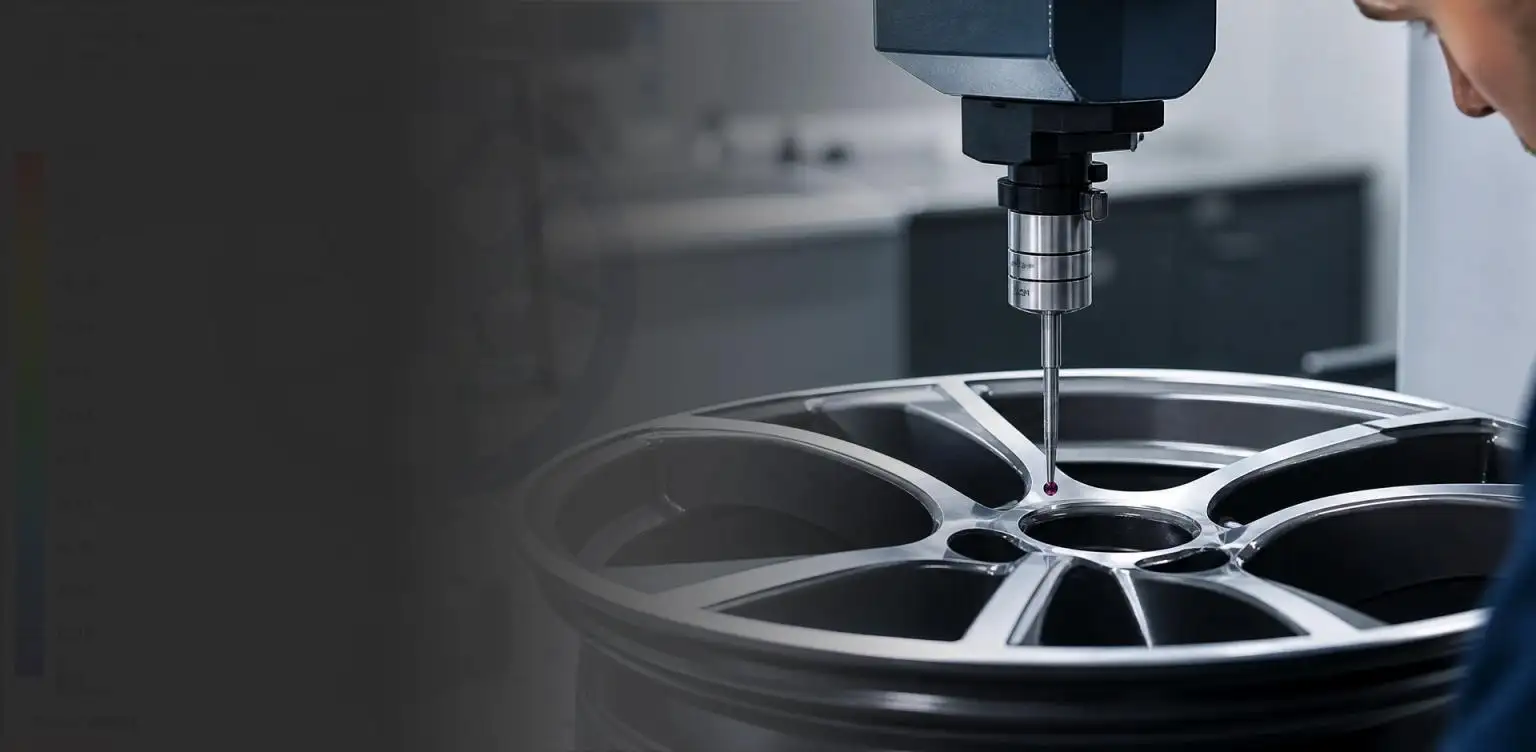
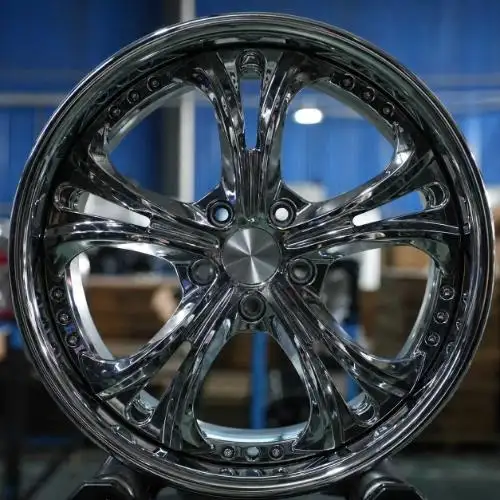
Selecting Bespoke Forged Wheels over standard aftermarket wheels is more than a cosmetic decision. Wheels are engineered to fit a variety of vehicles by using standard widths, offsets, and bolt patterns. Standard wheels also have to match various load ratings. Bespoke wheels are designed to fit one specific vehicle. Bespoke wheels are engineered to fit that vehicle's brake, suspension, tire, and load requirements.
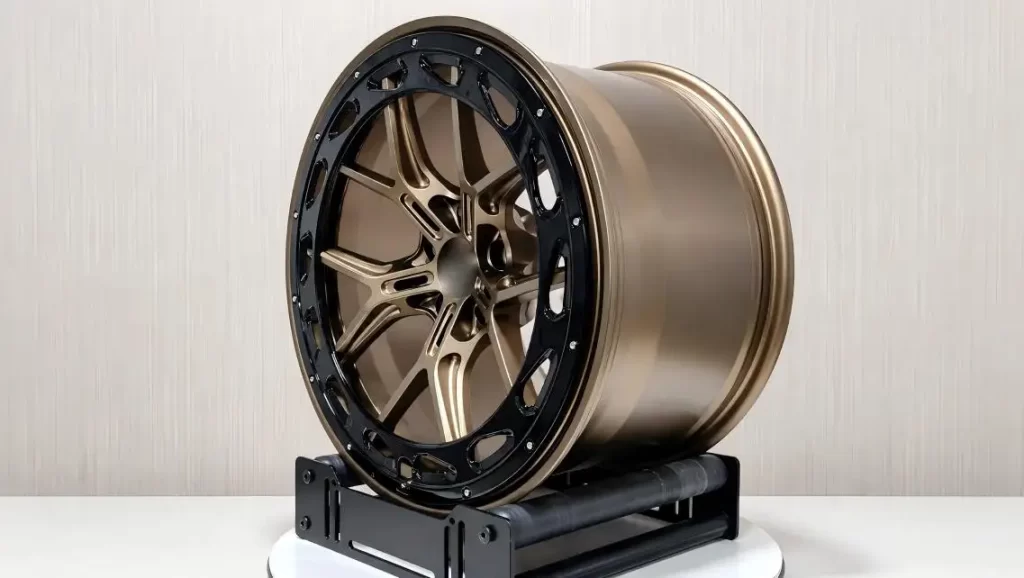
At XINGTU, we view customization as dimensional and structural control—not merely selecting a color or adding a logo.
The Main Differences at a Glance
"Standard aftermarket" does not describe a manufacturing method. A standard aftermarket wheel may be cast, flow-formed or forged. Therefore, buyers should compare the actual specifications rather than assume every custom-forged wheel is stronger than every catalog wheel.
| Decision Factor | Bespoke Forged Wheels | Standard Aftermarket Wheels |
| Fitment basis | Vehicle- and modification-specific data | Fixed catalog specification |
| Offset and width | Selected for the required inner and outer position | Limited to available combinations |
| Brake clearance | Spokes and barrel can be developed around a caliper profile | Must be confirmed against an existing design |
| Structural design | Can be optimized for a defined load case | Designed for broader applications |
| Weight | Potential for targeted material distribution | May include additional margin for multiple fitments |
| Appearance | Adjustable spoke profile, concavity and finish | Limited to catalog options |
| Lead time | Requires design approval and production | Stock products may ship immediately |
| Replacement | Original drawing and finish revision may be required | Common models are generally easier to replace |
Fitment Is the Primary Reason to Choose Bespoke
The strongest case for Bespoke Forged Wheels is a vehicle that cannot be served properly by a general-purpose specification. Diameter and PCD are only the starting points.
A professional fitment review should examine:
•Wheel diameter, width, offset and backspacing
•PCD, center bore and bolt-seat geometry
•Hub-face and mounting-pad requirements
•Radial and axial brake-caliper clearance
•Inner-barrel clearance
•Suspension, tie-rod and upright clearance
•Fender position and suspension travel
•Tire section width and rolling diameter
•Vehicle mass and axle-load distribution
Understanding Width and Offset Changes
When comparing a proposed wheel with the current wheel, a useful preliminary calculation is:
| Position Change | Simplified Calculation |
| Additional outward extension | Half the width increase minus the offset increase |
| Additional inward extension | Half the width increase plus the offset increase |
For example, moving from an 8.5-inch wheel to a 9.5-inch wheel adds approximately 12.7 mm on each side before accounting for offset. Increasing positive offset by 5 mm produces roughly 7.7 mm more outward extension and 17.7 mm more inward extension.
This calculation helps screen a specification, but it does not replace physical measurements, caliper templates or 3D fitment verification.
Strength Depends on More Than Forging
Bespoke Forged Wheels are not automatically stronger because they are custom-made. Forging can provide a dense, consistent material structure, but final performance depends on the complete wheel design and production route.
Critical factors include:
•Alloy grade and heat-treatment condition
•Forging blank quality
•Grain flow and material integrity
•Hub-pad and spoke-root thickness
•Spoke-to-rim transitions
•Bolt-hole geometry
•Rim-flange and inner-barrel sections
•CNC machining consistency
•Surface-treatment control
•Intended wheel load
Removing material can reduce unsprung mass, but the lightest wheel is not necessarily the best-engineered wheel. Excessively thin spokes, sharp machining transitions or extreme concavity can increase local stress. Weight reduction should follow load definition and structural assessment—not a target weight chosen for marketing.
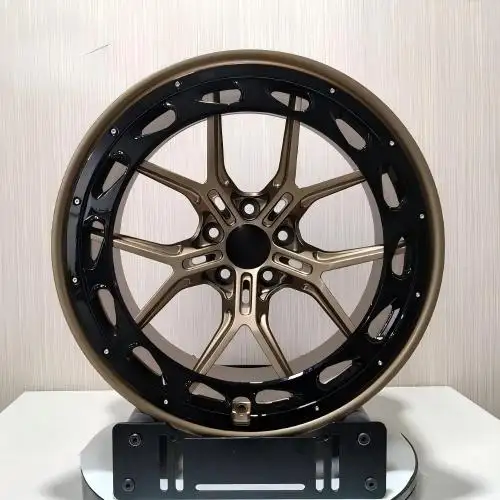
What Test Evidence Should Buyers Review?
Depending on the market and vehicle category, a validation plan may include:
•Dynamic radial fatigue testing
•Cornering or bending fatigue testing
•Dimensional and runout inspection
•Material and heat-treatment records
•Surface and visual inspection
Standards such as SAE J2530 or market-specific JWL/VIA programs may be relevant, but a standard name alone is insufficient. The report should match the wheel size, offset, load rating and design revision being purchased.
Customization Must Respect Engineering Limits
The design freedom of Bespoke Forged Wheels can be divided into three areas.
Engineering Parameters
Width, offset, center bore, PCD, mounting-pad height and spoke clearance can be adjusted around the vehicle.
Visual Parameters
Spoke count, spoke profile, concavity, lip appearance, machining details and surface finish can be developed to suit the vehicle.
Brand Parameters
Private-label projects may include engraved logos, center caps, custom packaging, warranty cards and exclusive designs.
However, not every visual request is technically compatible with every vehicle. A deep-concave face requires sufficient distance between the hub mounting surface and the outer spoke profile. Large brake calipers, high positive offsets or shallow wheel widths may restrict the available concavity. At XINGTU, we treat these conflicts as fitment questions to resolve before machining begins.
Cost, Lead Time and Replacement Planning
Wheels customized by Bespoke Forged Wheels come at a higher cost and longer lead time because each project goes through a review of specifications, design approval, machining, and finishing. task complicated further by custom finishes, atypical dimensions, and low volume orders.
Wheels can be considered off-the-shelf options when:
•The vehicle runs factory brakes and suspension
•A catalog size already offers verified clearance
•Cost and timely delivery are of main concern
•Easiness of replacement takes precedence over exclusivity
For custom projects, the approved drawing, finish code, and order revision should be kept by the buyer. These facilitate the reproduction of a similar wheel should a replacement be necessary in the future.
Which Wheel Type Fits the Project?
| Vehicle or Project Condition | More Suitable Direction |
| Common vehicle with factory hardware | Standard aftermarket wheel |
| Large aftermarket brake package | Bespoke Forged Wheels |
| Wide-body or air-suspension build | Bespoke Forged Wheels |
| Unusual PCD, center bore or offset | Bespoke Forged Wheels |
| Immediate stock replacement | Standard aftermarket wheel |
| Exclusive OEM or private-label design | Bespoke Forged Wheels |
| Heavy EV or SUV | Decide by axle load, wheel rating and test evidence |
How XINGTU Develops Bespoke Forged Wheels
Our wheel solutions start with actual vehicle data as opposed to relying on aesthetic references alone, like most companies. A typical process looks like:
- Collecting the specifications for the vehicle, brakes, suspension, tires and target wheels.
- Verifying offset, width, center bore, PCD and critical clearances.
- Providing fitment information and 3D renders for verification.
- Finalizing spoke design including concavity, finish and branding.
- Manufacturing one-off, low-volume and OEM wheels.
- Providing manufacturing updates and performing final inspection prior to shipment.
This process bridges the approved visual design to the wheel that will be installed on the vehicle.
Our Forged Wheels are most effective when a couple specific things are true: the design needs to fit a certain space exactly, the weight needs to be controlled, the clearence for the brakes needs to be filled, and the design needs to be unique. In cases where the requirements for the project are met by the catalog wheels, then aftermarket wheels are the way to go.
For a vehicle-specific assessment, send XINGTU the model, year, brake setup, suspension details, tire size and preferred wheel dimensions. Explore XINGTU Bespoke Forged Wheels solutions to begin a fitment and design review.
FAQs
Q1. How does XINGTU confirm the wheel design before manufacturing?
XINGTU can provide 3D renderings and specification verification before production. Customers should confirm the spoke design, concavity, dimensions, finish and branding details before the design is released for manufacturing.
Q2. Does XINGTU verify wheel fitment before production?
Yes. XINGTU provides one-to-one fitment checking based on the submitted vehicle and modification data. The review may cover width, offset, PCD, center bore, brake clearance, suspension clearance and tire positioning.
Q3. Can XINGTU manufacture only one set of Bespoke Forged Wheels?
XINGTU supports one-set orders for qualifying custom projects. This is useful for individual enthusiasts, tuning shops and vehicle builders that do not require wholesale quantities.
Q4. Can XINGTU customize wheel width, offset, PCD and center bore?
These parameters can be developed around the vehicle application, subject to engineering feasibility. XINGTU reviews the complete fitment package because changing one dimension can affect brake, suspension, fender and tire clearance.
Q5. Can XINGTU design wheels for large aftermarket brake calipers?
Yes, provided sufficient brake data is available. Customers should submit the caliper model, brake-disc size and, where possible, a caliper template. XINGTU can then evaluate radial, axial and spoke-to-caliper clearance.


