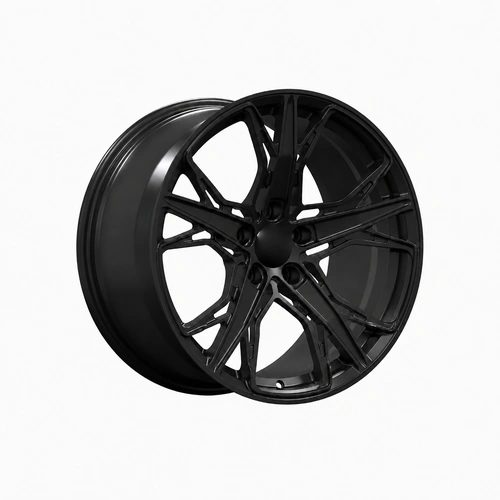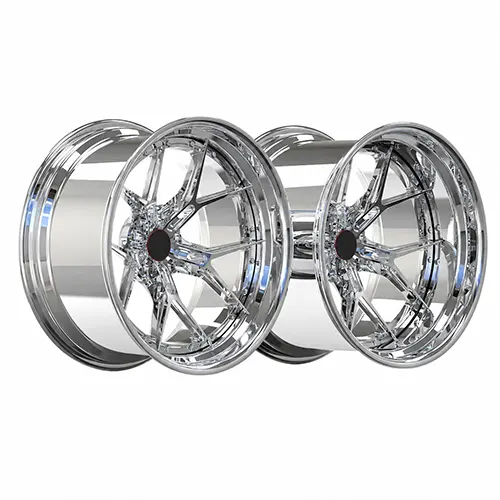
8.5"/11" Staggered Two-Piece Forged Wheels for 2012 Audi R8 GT | Gunmetal & Polished
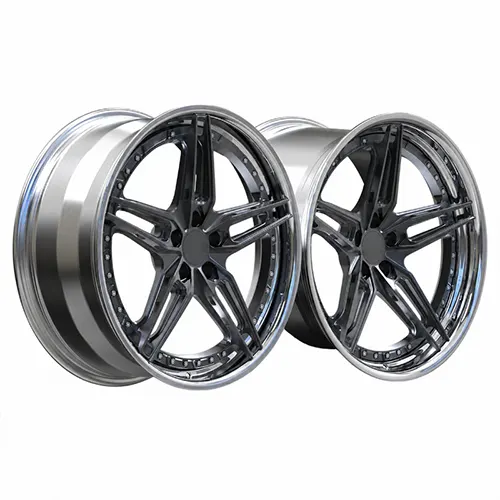
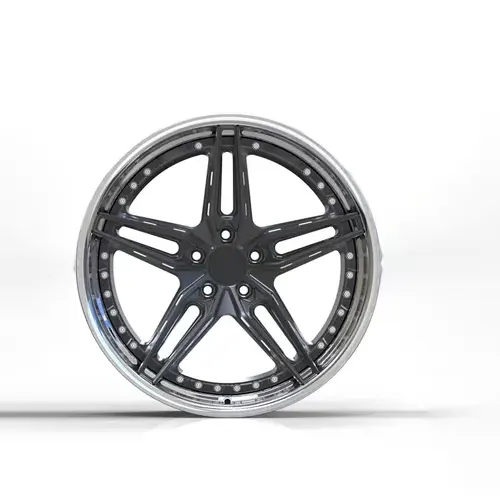
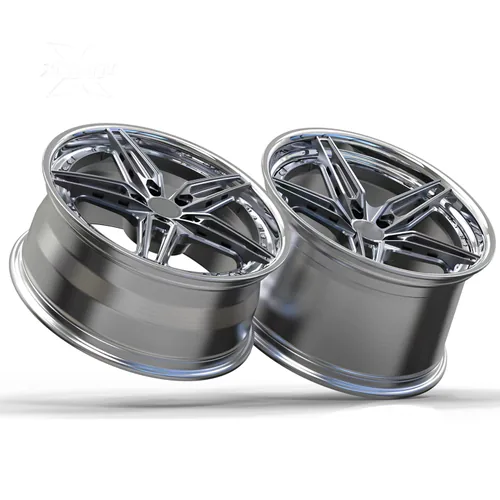
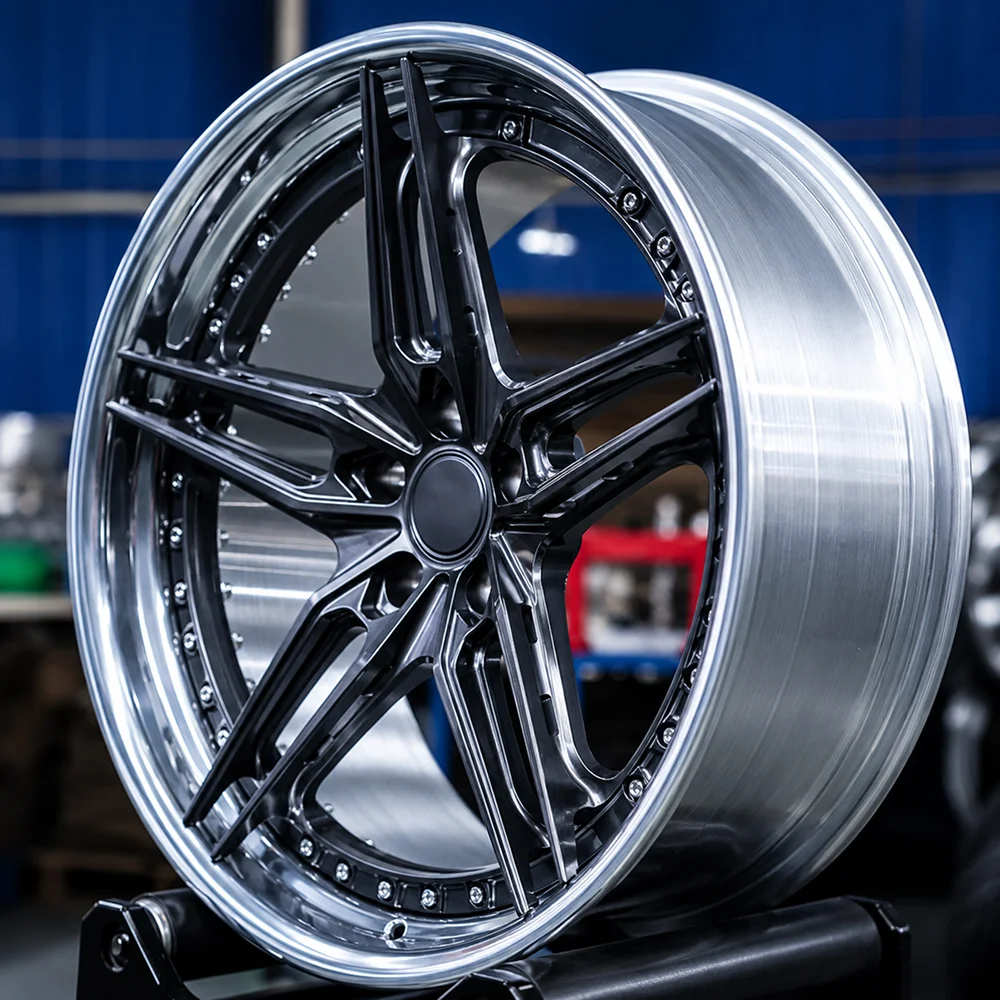
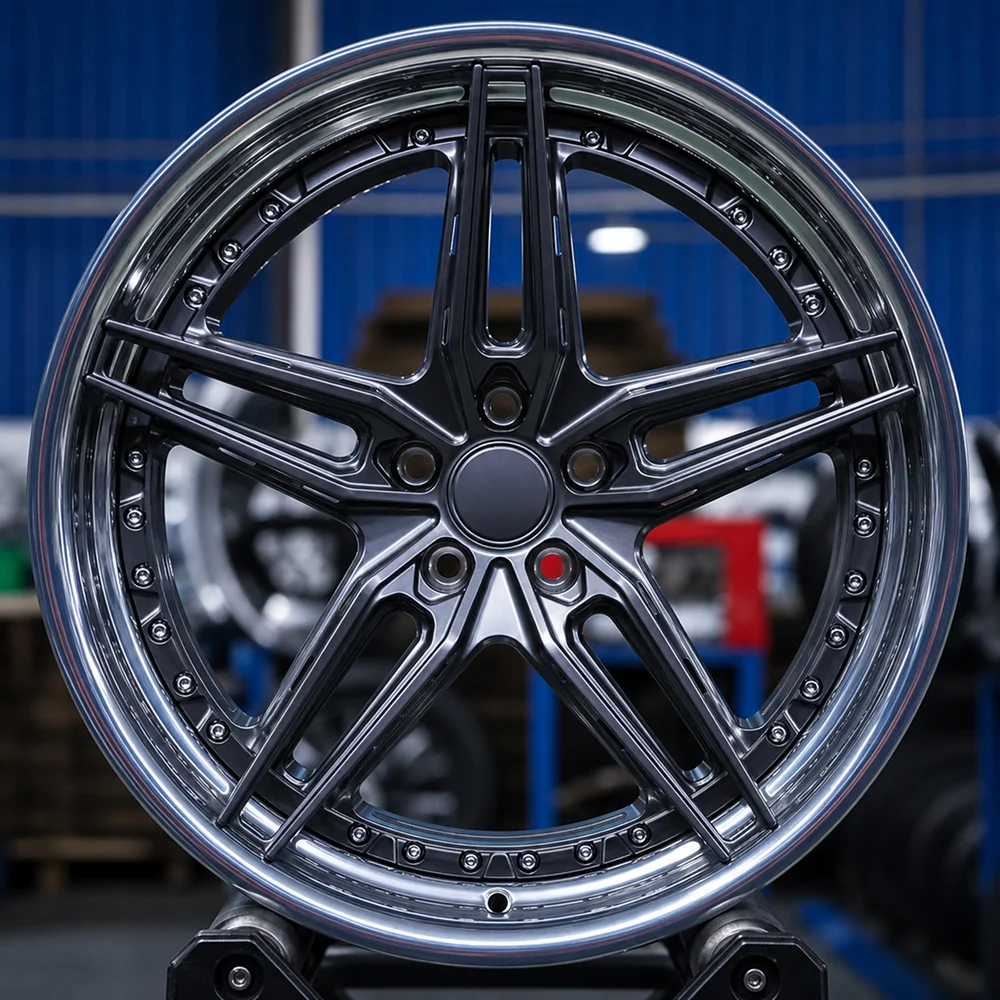
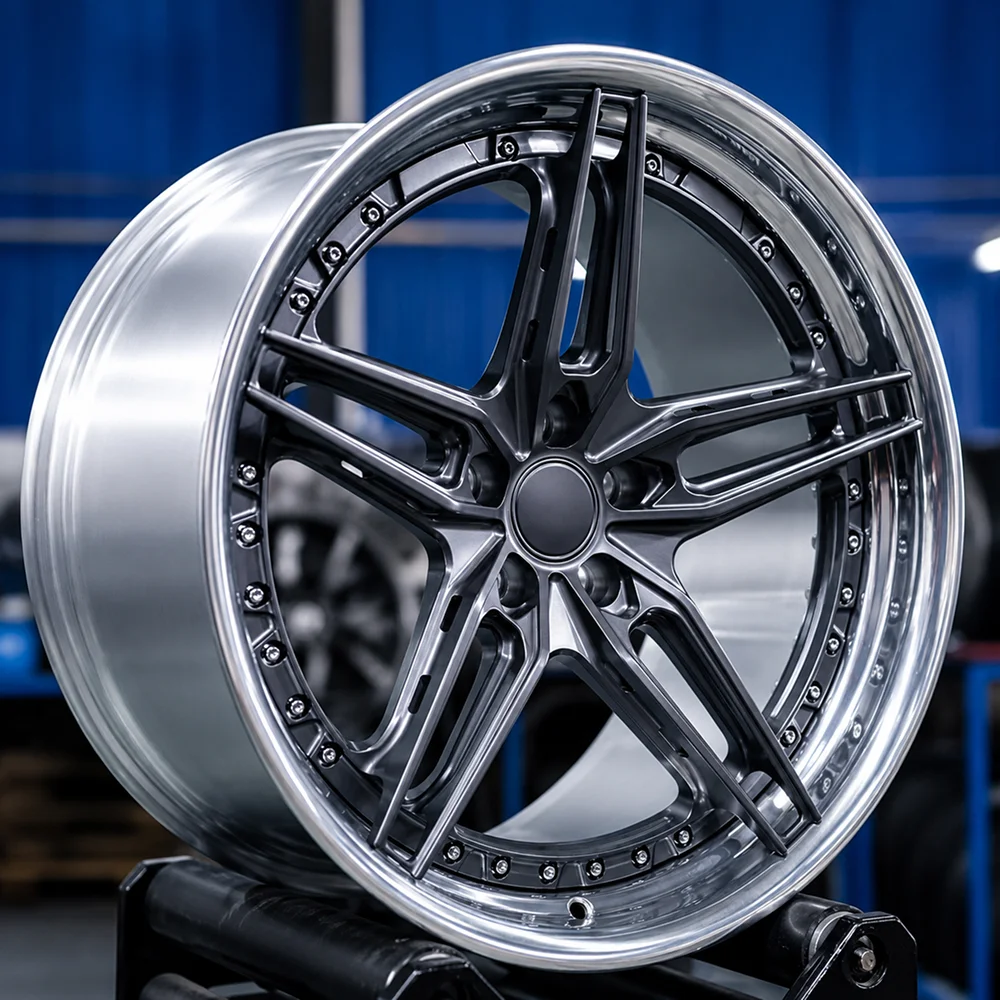
Rear width gives these R8 GT wheels their unmistakable proportion. An 8.5-inch front is paired with an 11-inch rear, creating a substantial difference across the two axles while ET34 and ET30 control the final wheel position. Two-piece forged construction allows the outer section and lip depth to be developed around the R8 GT’s body clearance rather than forcing one common profile front and rear. Gunmetal and polished surfaces add contrast without distracting from the wide rear geometry that defines the wheel.


Specifications
| Item | Specification |
| Vehicle | 2012 Audi R8 GT |
| Construction | 2-Piece Forged |
| Fitment | Staggered Front / Rear Setup |
| Front Width | 8.5" |
| Rear Width | 11" |
| PCD | 5 × 112 |
| Front Offset | ET34 |
| Rear Offset | ET30 |
| Center Bore | 57.1 mm |
| Load Rating | 800 kg per wheel |
| Brake Clearance | Factory Big Brake Compatible |
| Finish | Gunmetal Center + Polished Outer Section |
-
Descriptions

Engineering Notes
The R8 GT’s wide rear track and mid-engine layout place very different demands on the two axles, which is reflected directly in the wheel specification. Front width is held at 8.5 inches with ET34, while the rear expands to 11 inches at ET30. The 2.5-inch increase gives the rear substantially more section width without asking the front wheel to carry the same visual or packaging volume.
Mounting dimensions follow the recorded 5×112 PCD and 57.1 mm center bore, maintaining the hub-centric interface specified for the R8 GT. Rather than treating bolt pattern as the only fitment requirement, width, offset and center bore are considered together to position each wheel correctly.
Two-piece construction is particularly useful here because lip depth can be adjusted independently around the front and rear packaging requirements. Existing fitment notes also record clearance for the factory big brakes, allowing the wheel profile to sit close to the arches without ignoring the caliper envelope behind the face.
Gunmetal and polished surfaces give the finished wheel a clear material contrast, but they do not need to carry the whole design. Most of the visual impact already comes from the difference between the relatively compact front wheel section and the much broader rear.
From Design to Delivery
Quality Verified
Two-piece assembly, axle-specific geometry and brake clearance all depend on dimensional consistency. Final inspection therefore covers the mounting dimensions and offset before the assembled wheels move through sealing, pressure testing and dynamic balancing.
- CMM dimensional inspection on PCD, bore & offset
- Torque-spec assembly hardware, sealed & pressure-tested
- Dynamic balancing on every wheel
- Load-rated to 800kg per wheel
Result
The finished wheel set has a noticeably rear-biased proportion without relying on an exaggerated face design.
From the front, the 8.5-inch wheel keeps the appearance comparatively compact. The 11-inch rear shows far more rim depth and physical volume, giving the back of the R8 GT the stronger visual anchor already suggested by the car’s body shape.
Gunmetal and polished surfaces make that depth easier to read, while the two-piece format keeps the separate wheel sections visible rather than disguising them as a monoblock. The same construction also leaves the individual sections more practical to refinish later, which adds long-term value beyond the initial appearance.

Own an R8 or other 5x112 Audi?
Get a fitment-verified two-piece forged set in your spec
-
Build & Fitment
The rear is not simply a slightly wider version of the front. A 2.5-inch increase creates a fundamentally different wheel section and gives the back much greater volume.
That difference is why the wheel should be understood as an axle-specific front/rear package rather than a single design repeated in two nearby widths.
ET34 Front / ET30 Rear
Offset moves outward as rear width increases.
ET34 is paired with the narrower 8.5-inch front, while ET30 accompanies the 11-inch rear. Those figures work together with their respective widths to determine the inner and outer wheel positions.
Reading ET30 in isolation would miss the most important point: it belongs to a wheel that is 2.5 inches wider than the front.
5×112 / CB57.1 Defines the Hub Interface
The recorded mounting specification uses a 5×112 bolt pattern and a 57.1 mm center bore.
Keeping the center bore specific to the R8 GT allows the wheel to locate through a hub-centric interface rather than treating 5×112 alone as sufficient fitment information.
For a precision application such as this, PCD, center bore, width and offset need to be considered as one complete specification.
Lip Depth Follows the Available Space
Two-piece construction gives the outer section more flexibility than a fixed monoblock profile.
Rather than choosing one lip depth primarily for appearance, the front and rear sections can be proportioned around their respective width, offset and body clearance. On the R8 GT, that becomes especially visible at the rear, where the 11-inch width gives the outer wheel section considerably more depth.
This is one of the strongest reasons for using a genuine two-piece architecture on this wheel: the depth is a consequence of the actual geometry, not a simulated styling feature.
Brake Clearance Remains Part of the Package
A wider or more aggressive wheel is only useful when the face still clears the braking hardware behind it.
The existing fitment notes confirm clearance for the R8 GT’s factory big brakes. That gives the front-wheel profile an engineering constraint beyond stance alone and explains why wheel-face position cannot be judged only by how close it sits to the arch.
Another R8 May Need a Different Face Position
The 8.5-inch ET34 front and 11-inch ET30 rear dimensions belong to the fitment shown here and should not automatically be transferred to another R8 configuration.
Brake hardware, suspension changes, tire choice and the desired wheel position can all affect the final geometry. For another R8 specification, the dimensions can be reviewed with XINGTU before machining so the front and rear profiles are developed around the actual available space.
-
FAQs
1. What are the front and rear wheel widths?
The front wheels are 8.5 inches wide, while the rear wheels increase substantially to 11 inches.
2. Why is the rear wheel 2.5 inches wider?
The wider rear section follows the R8 GT’s rear-biased proportions and gives the back a much greater wheel volume than the front.
3. What offsets are used?
The front uses ET34 and the rear uses ET30.
4. Why does the wider rear wheel use a lower offset?
Width and offset work together. ET30 is paired specifically with the 11-inch rear section, while ET34 corresponds to the narrower 8.5-inch front.
5. What bolt pattern and center bore are specified?
The recorded fitment uses 5×112 PCD with a 57.1 mm center bore.
6. Is this a genuine two-piece forged wheel?
Yes. The existing wheel specification uses two-piece forged construction with separate sections assembled and sealed before final testing.
7. Why use two-piece construction on the R8 GT?
It allows the front and rear wheel sections, including lip depth, to be developed around their different widths, offsets and available body clearance.
8. Does the wheel clear the factory brakes?
Yes. The existing fitment notes record safe caliper clearance for the factory big brakes.
9. What load rating is specified?
The published Quality Verified section lists 800 kg per wheel.
10. What finish is used?
The wheel combines Gunmetal and Polished surface treatments, giving the forged sections a clear metallic contrast.
11. Can the wheel be refinished later?
The separate two-piece construction makes the individual sections more practical to service or refinish in the future than a finish treatment spread across one continuous wheel body.
12. Can the same ET34 / ET30 fitment be used on every Audi R8?
Not automatically. Width, brake clearance, suspension configuration and required wheel position should be checked before the final machining specification is confirmed.
More Forged Wheel Cases