Sustainable Forged Wheel Supplier: Lightweight Design and Heavy-Metal-Free Coatings
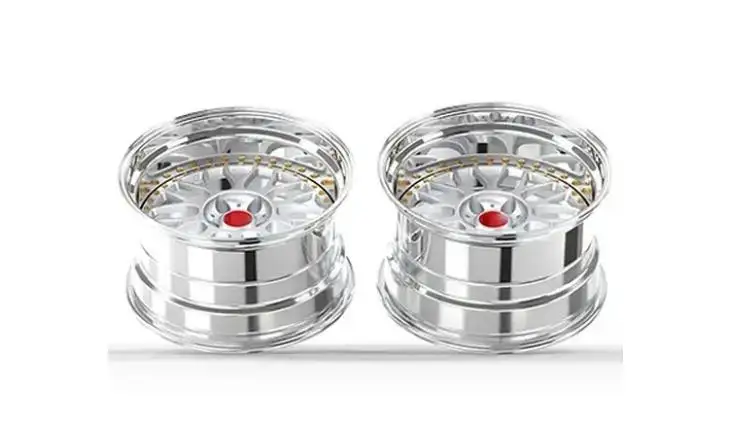
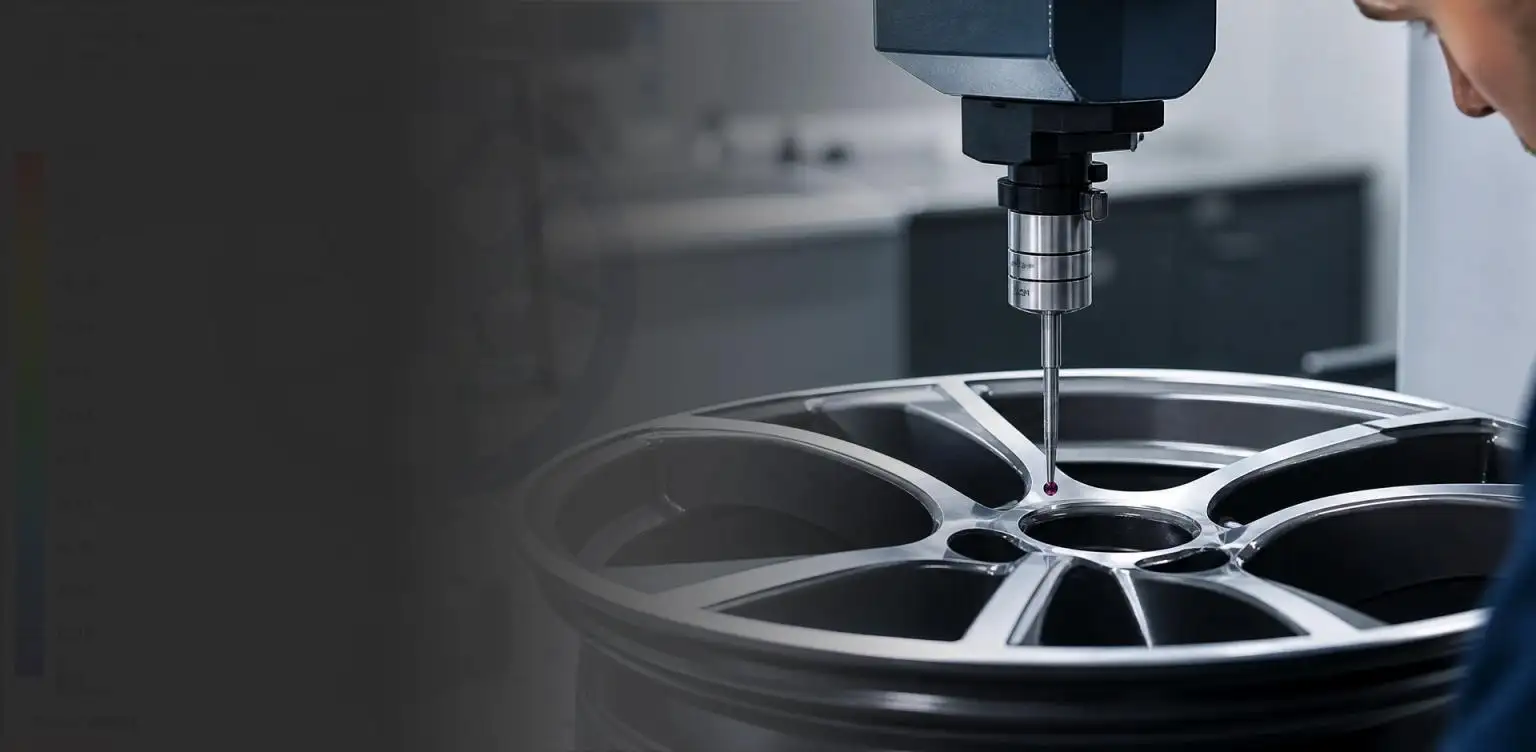
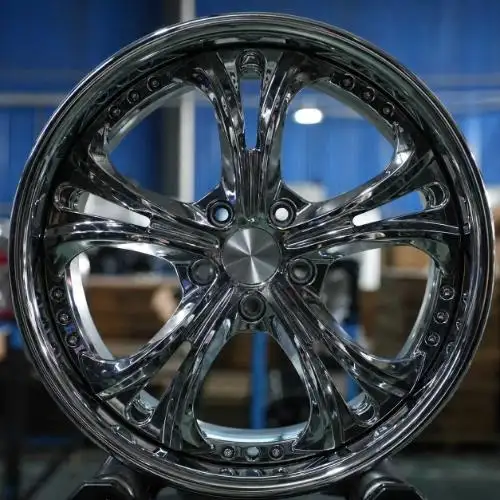
Sustainability in forged-wheel production cannot be reduced to a low wheel weight or an "eco-friendly" coating label. At XINGTU, we treat it as an engineering requirement covering material use, structural efficiency, coating chemistry, corrosion resistance, fitment accuracy and service life.
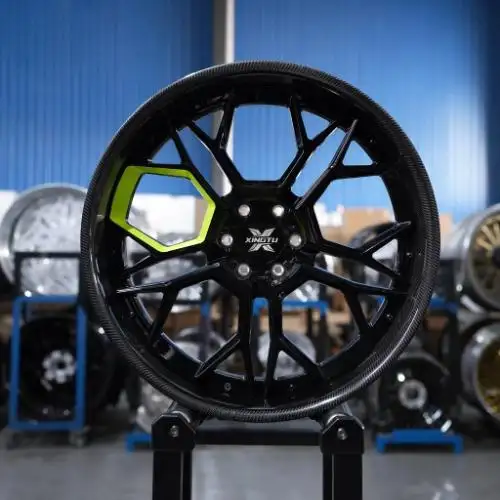
A responsible Forged Wheel Supplier should therefore provide measurable specifications—not unsupported environmental claims.
What a Sustainable Forged Wheel Supplier Must Control
The following factors should be reviewed as one system:
| Engineering Area | Main Question | Evidence Required |
| Material | Is the alloy suitable and traceable? | Alloy certificate and batch records |
| Structure | Where has material been retained or removed? | 3D model and FEA data |
| Safety | Does the wheel suit the actual axle load? | Rated load and physical test results |
| Fitment | Will it clear the brake, hub and bodywork? | PCD, ET, CB and clearance report |
| Coating | Which substances are restricted? | SDS, TDS or chemical declaration |
| Durability | Can the finish resist its operating environment? | Adhesion, salt-spray and weathering data |
| Quality | Is every wheel checked consistently? | CMM, runout and balancing records |
This broader view prevents "sustainable" from becoming another unverified product description.
How a Forged Wheel Supplier Engineers Lightweight Wheels
Forged wheels are commonly machined from high-strength aluminum blanks. The forging process produces a dense material structure, allowing engineers to optimize the spoke, hub and rim sections more precisely than with many conventional cast designs.
XINGTU uses 6061-T6 forged aluminum in many custom projects. During design, we examine areas including:
•Spoke-root stress
•Hub-pad thickness
•Bolt-hole and lug-seat geometry
•Inner-barrel brake clearance
•Rim-flange strength
•Local wall thickness around machined pockets
Five-axis CNC machining can remove low-value material from these areas while retaining material along the primary load paths. However, aggressive machining is not automatically better. Excessive pocketing may reduce stiffness or introduce stress concentrations.
Weight Must Be Compared Under Equal Conditions
The following equation is useful for an initial comparison:
Weight reduction (%) = (reference weight − new weight) ÷ reference weight × 100
The result is only meaningful when wheel diameter, width, construction, load rating and test conditions are comparable.
Minimum wheel capacity should not be calculated from curb weight divided by four. A Forged Wheel Supplier should begin with the vehicle's permitted axle loads, calculate the load per wheel on the more heavily loaded axle, and then apply the required engineering margin and market-specific test criteria.
The design brief must also define:
•Road, track, off-road or display use
•Tire size and inflation range
•Maximum vehicle and axle loads
•Brake-caliper envelope
•PCD, offset and center bore
•Lug-seat profile and fastener type
•Radial, cornering-fatigue and impact requirements
FEA helps identify stress distribution, but simulation does not replace physical fatigue and impact testing.
Fitment Is Part of Sustainable Engineering
Incorrect fitment creates waste through remachining, returns, tire contact, vibration and premature component wear. We therefore start a custom project with the vehicle rather than the wheel face design.
Our typical engineering sequence includes:
- Confirm the vehicle, tire, axle load and operating conditions.
- Verify PCD, ET, center bore, lug seat and brake dimensions.
- Build the wheel and brake-clearance model.
- Review spoke geometry and structural load paths.
- Approve the 3D rendering and technical specification.
- Machine, finish, inspect and dynamically balance the wheel.
Accurate hub-centric machining, correct fastener seating and controlled runout are just as important as reducing several hundred grams.
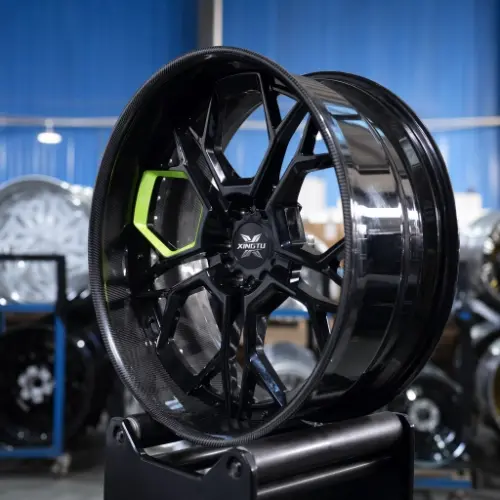
What "Heavy-Metal-Free" Should Actually Mean
The term "heavy-metal-free" is incomplete unless the restricted substances and allowable thresholds are defined. Lead-free, hexavalent-chromium-free, chromium-free and heavy-metal-free are not interchangeable claims.
A coating specification should clarify:
•Which restricted substances are covered
•Whether the requirement applies to pretreatment, pigment, basecoat and clearcoat
•Maximum permitted concentrations
•Applicable customer or destination-market requirements
•Whether compliance is supplier-declared or laboratory-tested
A typical wheel finish can contain several stages:
•Cleaning and surface preparation
•Chemical pretreatment
•Corrosion-resistant primer
•Powder or liquid color layer
•Transparent protective coat
•Controlled curing and final inspection
At XINGTU, heavy-metal-free coating options are considered together with appearance and durability. A lower-risk chemistry is only useful if the system still achieves adequate adhesion, edge coverage and corrosion protection.
Coating Evidence Buyers Should Request
| Requirement | Suitable Evidence |
| Restricted-substance control | SDS, TDS or material declaration |
| Film consistency | Dry-film-thickness report |
| Adhesion | Cross-cut or specified adhesion test |
| Corrosion resistance | Salt-spray test method, duration and acceptance result |
| Appearance | Color, gloss and surface-defect inspection |
| Outdoor durability | UV, humidity or weathering data where required |
"Heavy-metal-free" also does not mean VOC-free or chemical-free. Precise terminology matters when comparing any Forged Wheel Supplier.
Durability Reduces Lifecycle Waste
A wheel that needs early refinishing or replacement consumes additional material, coating, packaging and transportation. For this reason, our sustainability assessment extends beyond the initial manufacturing stage.
Depending on the project, XINGTU quality plans can include:
•CMM inspection of PCD, center bore and runout
•Hub and lug-seat profile verification
•Dynamic balancing
•X-ray or dye-penetrant flaw detection
•Coating appearance and adhesion checks
•Salt-spray durability testing
•Protective packaging inspection
These controls reduce avoidable rework while supporting longer, more predictable service.
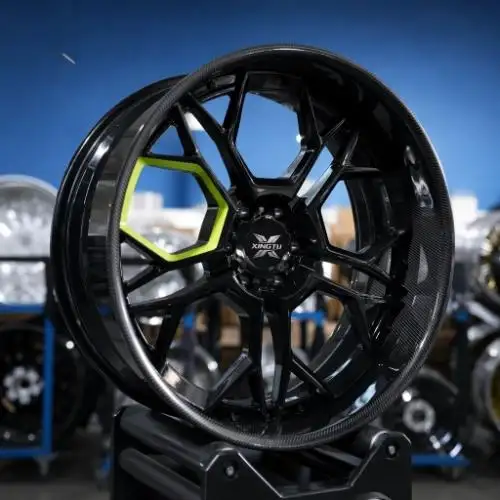
What XINGTU's Forged-Wheel Cases Demonstrate
Our case library shows why weight must always be interpreted with size and load capacity.
| Vehicle | Specification | Weight | Rated Load |
| BMW X5 M | 19×8.5 monoblock | 12.3 kg | 750 kg/wheel |
| Ford Mustang GT350 | 19×11 monoblock | 12.5 kg | 750 kg/wheel |
| Cadillac Escalade | 24×14 monoblock | 19 kg | 1,100 kg/wheel |
| Jeep Grand Cherokee | 24×10 monoblock | 20.5 kg | 1,000 kg/wheel |
The SUV wheels are heavier because their dimensions and load requirements differ. This does not make them less efficiently designed. A credible Forged Wheel Supplier should explain the tradeoff between mass, stiffness, load, fitment and styling for each application.
Common Sustainability Misconceptions
•"Forged always means low-carbon." Actual impact also depends on aluminum sourcing, energy, machining waste, coating and service life.
•"The lightest wheel is the best wheel." Safety, stiffness and intended use come first.
•"Heavy-metal-free coatings are less durable." Performance depends on pretreatment, formulation, curing and inspection.
•"Load rating proves compatibility." Offset, center bore, lug seat and brake clearance must also be validated.
A Measurable Approach to Sustainable Forged Wheels
Choosing a sustainable Forged Wheel Supplier requires verified material data, application-specific lightweight design, clearly defined coating chemistry and documented quality control.
XINGTU combines these considerations with vehicle-specific fitment and practical production experience. Explore our forged-wheel case studies to compare real dimensions, weights, load ratings and finishes—and use those references to build a more precise custom wheel specification with XINGTU.
FAQs
Q1. What makes XINGTU a sustainable Forged Wheel Supplier?
XINGTU considers material efficiency, wheel weight, rated load, fitment accuracy, coating durability and quality control together. Sustainability is treated as a measurable engineering requirement rather than a general marketing claim.
Q2. What aluminum does XINGTU use for forged wheels?
Many XINGTU custom-wheel projects use forged 6061-T6 aluminum because it provides a practical balance of strength, machinability, corrosion resistance and weight. The final material specification should be confirmed for each project.
Q3. How does XINGTU reduce forged-wheel weight safely?
XINGTU reviews spoke roots, hub-pad thickness, rim sections, brake clearance and structural load paths. FEA and five-axis CNC machining help remove non-essential material without relying on uniform wall thinning.
Q4. How does XINGTU determine the required wheel load rating?
The engineering team considers vehicle axle loads, tire specifications, wheel dimensions and operating conditions. Track, road, SUV and off-road applications may require different load margins and testing criteria.
Q5. What fitment information does XINGTU require?
Customers should provide the vehicle make, model and year, plus the preferred diameter, width, tire size, PCD, offset and finish. Brake dimensions, center bore, lug-seat type and intended use may also be required.


