2018 Porsche Panamera (971) | Staggered 21" 2-Piece Forged · Satin Black Turbine + Carbon or White Outer Ring
- Model: L262634
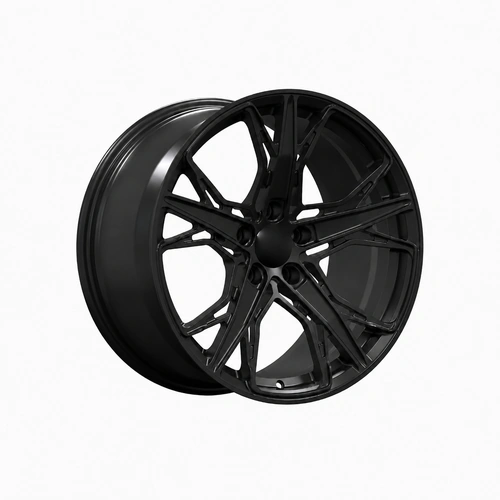
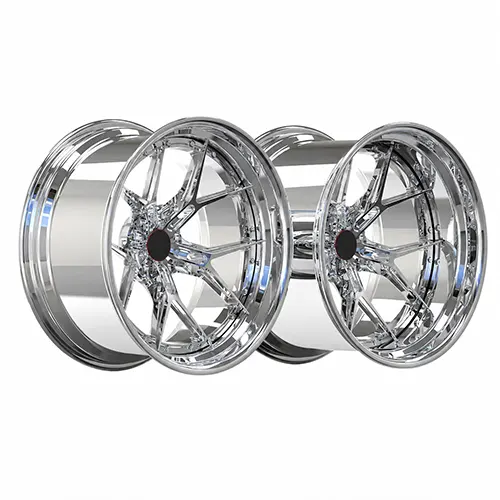
Turbine blades make this Panamera wheel feel architectural rather than conventionally sporty. Narrow radial sections sweep around the center with very little visual interruption, creating a continuous sense of movement across the 21-inch face. Satin black keeps that geometry controlled, while the outer treatment can shift the character dramatically: carbon adds darker texture; white aluminum turns the perimeter into a sharp graphic frame.


Specifications
| Item | Specification |
| Model No. | RC900-2 |
| Construction | 2‑Piece Forged + Carbon Fiber Outer Ring, 6061‑T6 Aluminum |
| Front Size | 21 × 10.5" |
| Rear Size | 21 × 12.5" |
| PCD | 5 × 130 |
| Front Offset | ET42 |
| Rear Offset | ET43 |
| Center Bore | 70.3 mm |
| Front Weight | 14 kg |
| Rear Weight | 15.6 kg |
| Load Rating | 725 kg |
| Finish | Satin Black Mesh + Gloss Milled Lettering + Carbon Fiber Outer Ring |
-
Descriptions

Engineering Notes
Hardware interface deserves unusual attention on this project. Vehicle-specific Engineering Notes identify a 15×32×R14 ball seat rather than a common taper seat. That radius is part of the fastening geometry, so correct machining matters just as much as PCD or center bore when the wheel is installed.
Panamera-specific data in the same section records 21×10.5 ET55 at the front and 21×12.5 ET50 at the rear, paired with 5×130 PCD and a 71.6 mm center bore. Two extra inches of rear width give the back considerably more wheel volume while both axles retain a common 21-inch diameter.
Turbine geometry brings a different machining challenge from five-spoke or Y-spoke designs. Numerous narrow blades sit close together, so visual consistency depends on clean repetition across the entire radial pattern. Satin black helps here: low reflection keeps the face coherent and lets the geometry appear as one flowing surface rather than dozens of competing highlights.
Outer-ring choice changes the visual architecture without changing the forged load-bearing structure beneath it. Current Engineering Notes clearly distinguish the carbon or white outer ring
From Design to Delivery
Quality Verified
Fitment accuracy begins at the hub and fastening interface on this build. Ball-seat profile, axle-specific dimensions and assembled-wheel integrity all carry more value here than adding generic claims about luxury or high-speed performance.
- CMM dimensional inspection on PCD, bore & offset
- Ball-seat profile verified to Porsche OEM spec
- Torque-spec assembly hardware, sealed & pressure-tested
- Dynamic balancing on every wheel
- Load-rated to 850kg per wheel
Result
One turbine center produces two distinctly different finished wheels.
Carbon pushes the perimeter visually backward and lets the satin-black blades remain dominant. White does the reverse, drawing a clean circle around the wheel and making the 21-inch diameter appear more graphic.
That flexibility is more interesting than simply offering another paint color because the entire relationship between center and perimeter changes.

Own a Panamera, Cayenne, or other 5x130 Porsche?
Get a custom two-piece forged set in your exact size & finish
-
Build & Fitment
Porsche Fitment Starts at the Fastener Interface
5×130 alone does not describe this wheel correctly. R14 ball-seat geometry and the 71.6 mm hub-centric bore are equally relevant to how the wheel meets the vehicle.
That technical detail gives the page a much stronger identity than generic wording about “precision fitment.”
Two Inches of Rear Width, Same Diameter
Front sizing is 21×10.5; rear sizing becomes 21×12.5.
Keeping both at 21 inches lets the turbine pattern retain one visual scale across the vehicle, while width gives the rear the stronger physical presence.
Brake Envelope Shapes the Turbine Face
Current Engineering Notes specifically mention clearance for the Panamera's PCCB/PSCB brake package. That matters because the closely packed turbine blades cannot be positioned only for appearance; their inner profile has to respect the available caliper envelope.
Carbon or White Is More Than a Color Choice
Carbon introduces weave and a darker edge. White aluminum creates a clean, high-contrast perimeter.
Xingtu can treat the outer ring as a separate design decision while keeping the underlying forged-wheel geometry tied to the vehicle.
-
FAQs
1. What wheel sizes does the Panamera-specific Engineering Notes section list?
21×10.5 front and 21×12.5 rear.
2. Why is the R14 ball seat important?
Lug-seat shape controls how the fastening hardware contacts the wheel. This project uses a radius seat rather than a conventional taper profile.
3. Does the design account for Porsche ceramic brakes?
Yes. Existing Engineering Notes reference clearance for the PCCB/PSCB brake package.
4. Is the carbon outer ring structural?
No. Current page content identifies the ring as cosmetic; structural loads remain with the forged aluminum wheel.
5. Why are both axles kept at 21 inches?
Equal diameter keeps the turbine face proportion consistent, while the much wider rear wheel creates the front-to-rear difference.
6. Can the outer ring use white instead of carbon?
Yes. Both carbon and white aluminum treatments are described on the current project page.
More Forged Wheel Cases