2016 Ford Mustang GT Premium (S550) | 19" Forged Monoblock · Gunmetal Milled Face + Polished Lip
- Model: RC573-3XT
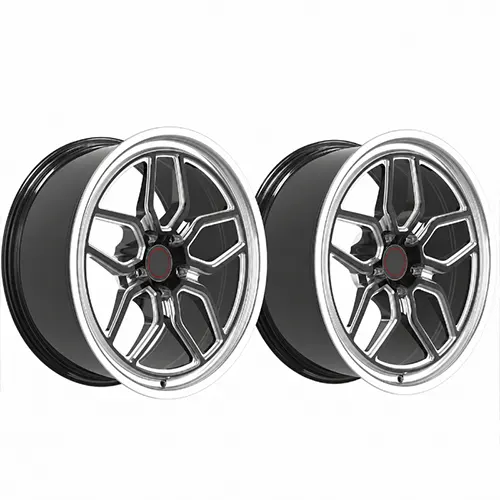
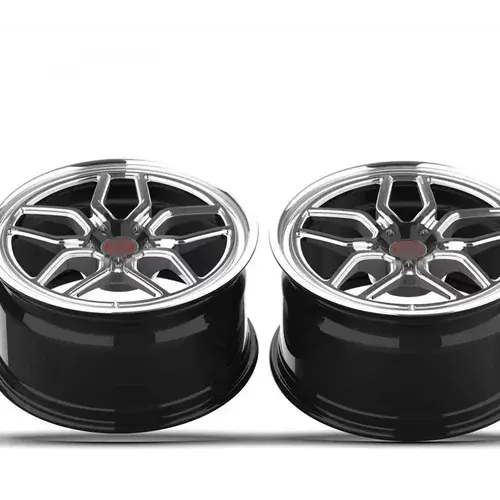
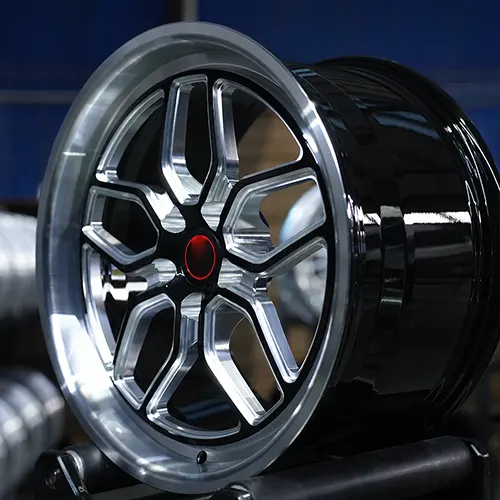
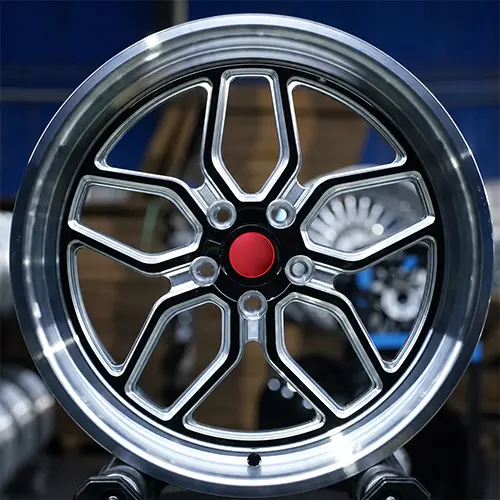
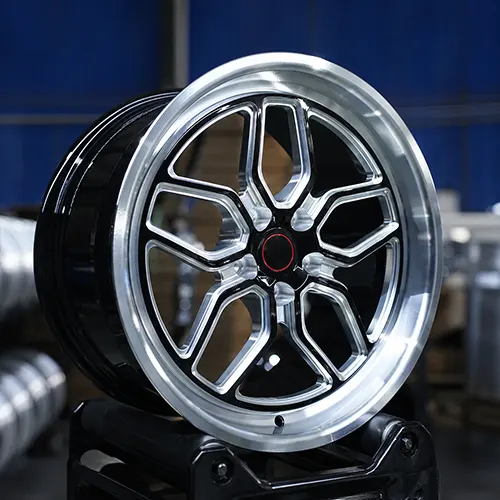
Machining is the visual language of this Mustang wheel. Instead of relying on a separate polished rim or exposed assembly hardware, bright aluminum is cut directly out of the darker gunmetal surface, tracing the spoke edges and outer perimeter with crisp metallic highlights. That process gives the wheel a dimensional, almost two-piece appearance while preserving a single forged monoblock structure. The stagger remains deliberately restrained at 19×10 front and 19×10.5 rear.



Specifications
| Item | Specification |
| Model No. | L262916 |
| Construction | Forged Monoblock, 6061‑T6 Aluminum |
| Front Size | 19 × 10 |
| Rear Size | 19 × 10.5 |
| PCD | 5 × 114.3 |
| Offset | ET50 (all four) |
| Center Bore | 70.5 mm |
| Front Weight | 12.6 kg |
| Rear Weight | 13 kg |
| Load Rating | 750 kg |
| Finish | Gloss Gunmetal Milled Face + Polished Lip |
-
Descriptions

Engineering Notes
What looks like a multi-finish wheel is produced from one forged structure.
Gunmetal establishes the darker base. CNC machining then removes finish from selected spoke faces and edges, exposing bright aluminum beneath. Because the contrast is created by cutting rather than by applying another color, tool-path accuracy becomes part of the final appearance. Uneven depth or inconsistent edge definition would remain immediately visible.
Wheel dimensions are intentionally close front to rear. A 19×10 front is paired with a 19×10.5 rear, while ET50 remains unchanged on all four wheels. This half-inch rear increase gives the car a modest stagger without turning the back wheel into an exaggerated deep-dish design.
Monoblock construction keeps the outer profile clean. No assembly ring interrupts the perimeter, so the bright machined rim detail reads as part of the forged shape rather than as a separate component.
Existing project notes also record a 5×114.3 PCD, 70.5 mm center bore and spacer-free fitment. Finished weights are 12.6 kg front and 13 kg rear, with a 750 kg load rating.
Machining Creates the Contrast
Dark paint alone would flatten much of the spoke geometry.
Milling exposes the upper surfaces and edges, allowing the wheel to show depth through light rather than through another component. The effect becomes particularly clear in the workshop images, where the bright cut sections outline each spoke against the gunmetal recesses.
From Design to Delivery
Quality Verified
Machined surfaces place unusual emphasis on edge definition. Every bright section is created by the CNC pass itself, so inspection has to confirm that the cut remains clean and consistent across the complete face.
- CMM dimensional inspection on PCD, bore & offset
- Machined-face surface inspected for flawless cut
- Dynamic balancing on every wheel
- Load-rated to 750kg per wheel
Result
This wheel references classic muscle-car proportions without copying an old construction method.
Open spokes, a bright perimeter and dark recessed sections carry some of that familiar visual character, but forged monoblock construction and CNC-milled finishing make the execution much cleaner and more contemporary.
The modest stagger also suits the design. Rear width increases enough to add substance, yet the identical ET50 specification keeps the set visually disciplined.

Building a Mustang GT or other 5x114.3 muscle car?
Get a custom forged set in your exact size & finish
-
Build & Fitment
One Offset, Two Widths
ET50 remains unchanged on both axles.
That makes the width change easier to understand: 10 inches at the front, 10.5 inches at the rear. The rear gains a little extra section width without introducing a second offset strategy.
Spacer-Free Geometry Is More Meaningful Than “Flush”
Existing Engineering Notes state that the wheel was developed without spacers.
That is more useful than vague stance language because it describes how the actual wheel was positioned on the S550 rather than how it merely appears in photographs.
Polished-Lip Appearance Without a Separate Lip
Visually, the bright outer edge resembles a conventional polished-lip wheel.
Structurally, it remains part of the monoblock. That distinction is worth explaining because buyers often associate this kind of two-tone face with multi-piece construction.
Mild Stagger Suits the Design
Half an inch of rear width is enough here.
The wheel already gains visual complexity from the milled face, so an extreme front-to-rear size difference would add little to the overall composition.
-
FAQs
1. Are these Mustang GT S550 wheels 2-piece?
No. They use forged monoblock construction.
2. What sizes are fitted?
Front wheels measure 19×10 and rear wheels 19×10.5.
3. Do both axles use ET50?
Yes. ET50 is specified at all four positions.
4. How is the bright spoke detail produced?
Selected areas of the gunmetal finish are CNC-milled back to exposed aluminum, creating sharp metallic highlights.
5. Are spacers required?
Existing Engineering Notes state that this specific fitment was developed without spacers.
6. How much do the wheels weigh?
The front is listed at 12.6 kg and the rear at 13 kg.
7. What load rating is specified?
The current page lists 750 kg per wheel.
More Forged Wheel Cases