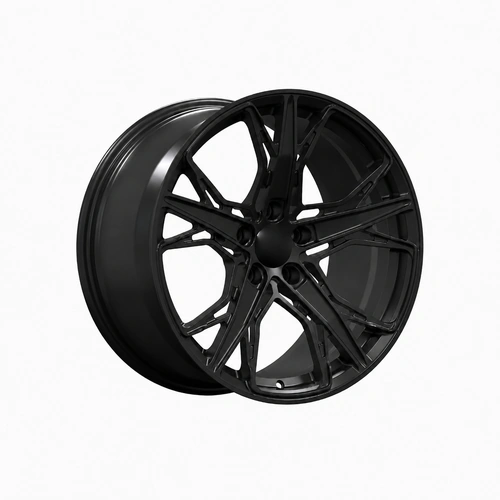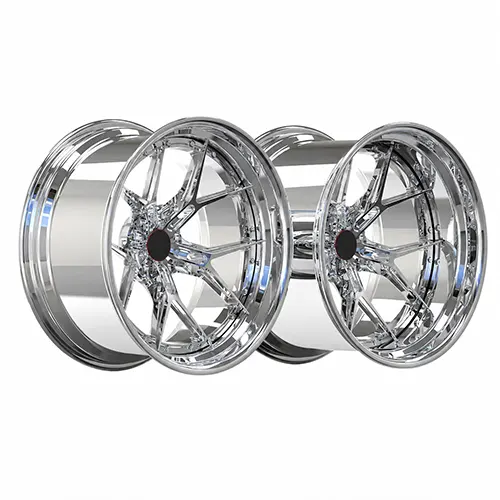
2025 Ford Mustang Dark Horse | Staggered 20" Forged Monoblock · Chrome Polished
- Model: RC682-1RC
Chrome polish completely changes the attitude of this Dark Horse setup. Rather than using another dark motorsport finish, the wheel puts its machined form on display through a bright reflective surface. Open turbine-style spokes leave the brake area visible, while staggered 20×10 front and 20×11 rear dimensions add a subtle increase in width toward the back. Front and rear wheel weights remain closely matched at 11.8 kg and 12 kg.


Specifications
| Item | Specification |
| Model No. | RC682‑1RC |
| Construction | Forged Monoblock, 6061‑T6 Aluminum |
| Front Size | 20 × 10 |
| Rear Size | 20 × 11 |
| PCD | 5 × 120 |
| Front Offset | ET10 |
| Rear Offset | ET23 |
| Center Bore | 66.9 mm |
| Front Weight | 11.8 kg |
| Rear Weight | 12 kg |
| Load Rating | 725 kg |
| Finish | Chrome Polished |
-
Descriptions

Engineering Notes
Rear width increases from 20×10 to 20×11, yet finished wheel weight moves only from 11.8 kg to 12 kg. That narrow weight gap is more informative than simply describing the set as lightweight: the wider rear gains additional volume without introducing a disproportionate increase in mass.
ET10 at the front and ET23 at the rear position each width independently. Rather than exaggerating the stagger through an aggressive rear offset, the setup uses a measured change in width to give the back of the Dark Horse more presence.
Open turbine-inspired spokes expose much of the brake hardware and keep the 20-inch face visually light. Chrome polishing then takes advantage of those broad, uninterrupted spoke surfaces; reflections follow the machining rather than disappearing into a dense pattern.
Surface quality becomes especially visible with this finish. Small inconsistencies that a dark coating could hide would remain obvious across polished spoke transitions, making preparation and finishing an important part of the final appearance.
From Design to Delivery
Quality Verified
- CMM dimensional inspection on PCD, bore & offset
- Mirror-chrome surface inspected for flawless finish
- Dynamic balancing on every wheel
- Load-rated to 725kg per wheel
Result
Only a subtle dimensional difference separates the two axles, but that restraint suits the Dark Horse. Rear width is noticeable without turning the setup into an exaggerated stagger, while the polished open-spoke face gives the car a completely different character from the darker finishes normally associated with modern Mustang builds.

Building a Mustang Dark Horse or other performance car?
Get a custom forged set in your exact size, offset & finish
-
Build & Fitment
A Small Difference With a Clear Purpose
Moving from 20×10 to 20×11 does not sound dramatic on paper. Visually, though, the extra rear width adds enough depth to distinguish the back of the car without making it look disconnected from the front.
ET10 front and ET23 rear are part of this specific configuration. Different suspension or brake hardware can change what another Dark Horse requires, so those values should remain tied to the actual vehicle rather than treated as a universal formula.
Open Spokes, Visible Hardware
Turbine-inspired five-spoke geometry keeps the wheel face relatively open. That openness has a strong visual effect on a Dark Horse because much of the brake package remains visible behind the spokes.
Instead of relying on dozens of fine elements, the design uses broader surfaces and clear gaps. Chrome polish then turns those larger surfaces into highlights as the car moves or the viewing angle changes.
Lightweight Character Without an Overly Thin Look
Reducing mass does not require the wheel to look visually fragile. Spoke width and curvature still provide enough substance for a 20-inch performance wheel, while CNC machining removes material where the final design does not need unnecessary bulk.
For other Mustang specifications, Xingtu can adjust dimensions and finish around the car rather than forcing this exact combination onto every build. A different brake package, suspension setup or stance can be reviewed before the wheel specification is confirmed.
-
FAQs
1. What sizes are used on these Mustang Dark Horse forged wheels?
Front wheels measure 20×10, while the rear wheels are 20×11.
2. How much do the wheels weigh?
The listed front weight is 11.8 kg and the rear is 12 kg.
3. Why is the rear only one inch wider?
A modest increase keeps the front and rear visually related while still adding more width and presence at the driven end of the car.
4. What offsets are used on this Dark Horse?
ET10 is used at the front and ET23 at the rear for the current configuration.
5. Does the open spoke design expose the brakes?
Yes. Large openings between the spokes leave much more of the brake area visible than a dense mesh-style wheel.
6. Can the chrome finish be changed?
Yes. Another set can use a different available finish if the vehicle calls for a darker, softer or more contrasting appearance.
7. Is brake clearance checked before machining?
The existing project description states that fender and brake-caliper clearance are verified before machining.
8. Can Xingtu make another staggered specification for the Dark Horse?
Yes. Width, offset and finish can be developed around the actual vehicle setup rather than copying this 20×10 / 20×11 configuration unchanged.
More Forged Wheel Cases