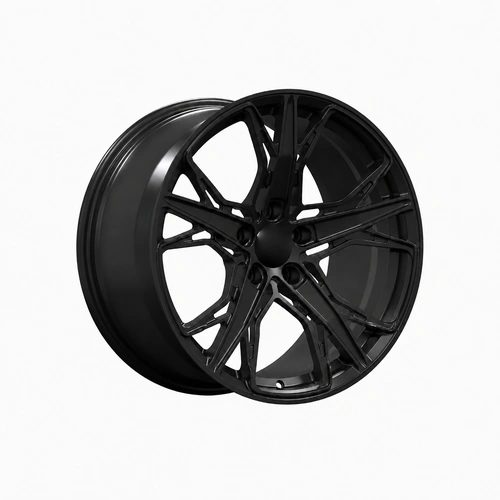
2016 Mercedes-AMG GLE 63 S Coupe | 23" 2-Piece Forged · Gloss Black Face + Carbon Fiber Outer Ring
- Model: L262684
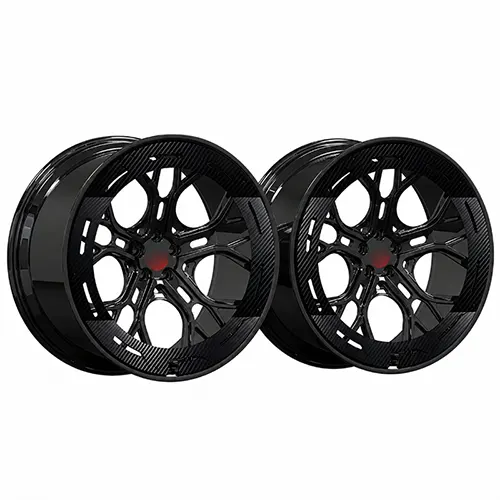
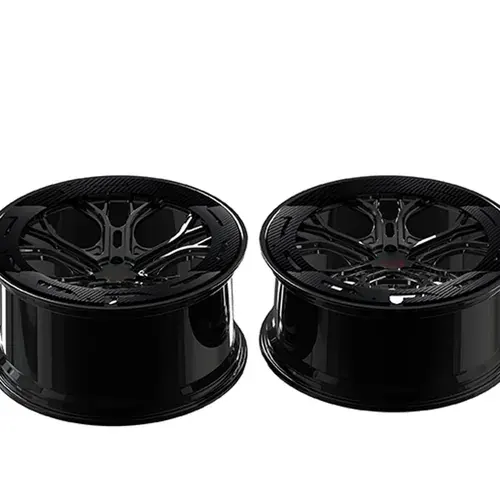
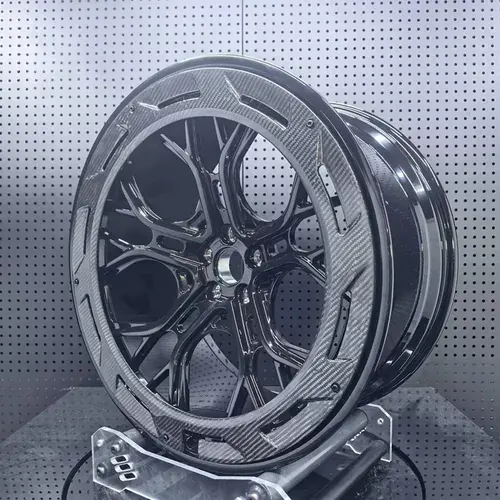
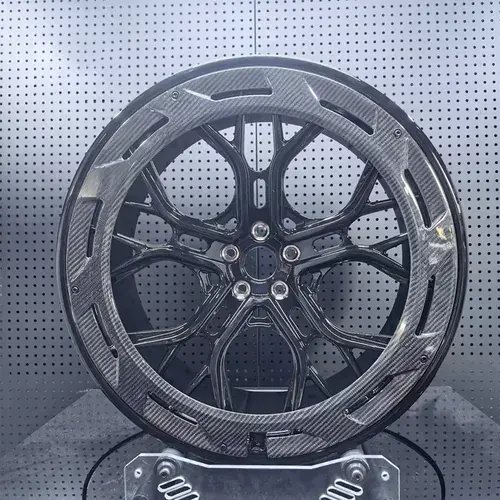
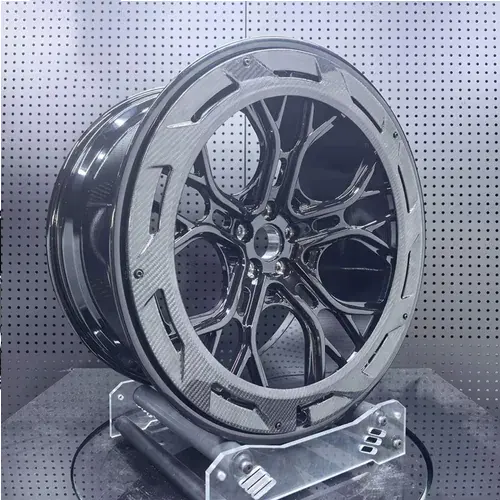
Large SUV wheels can easily become visually heavy. This design avoids that by dividing the 23-inch face into three distinct layers: open gloss-black spokes, a deep dark barrel and a vented carbon-fiber perimeter. The result has the scale needed for the GLE 63 S Coupe without becoming a solid black disc. Beneath the carbon detailing, the forged aluminum wheel retains the 900 kg load rating specified for the project.



Specifications
| Item | Specification |
| Model No. | L262684 |
| Construction | 2‑Piece Forged + Carbon Fiber Outer Ring, 6061‑T6 Aluminum |
| Front Size | 23 × 10 |
| Rear Size | 23 × 11.5 |
| PCD | 5 × 112 |
| Front Offset | ET33 |
| Rear Offset | ET19 |
| Center Bore | 66.6 mm |
| Weight | 20 kg per wheel (all four) |
| Load Rating | 900 kg |
| Lug Seat | 15 × 32 × R14 Ball Seat |
| Finish | Gloss Black Face + Carbon Fiber Outer Ring |
-
Descriptions

Engineering Notes
Engineering Notes
Load and fastening geometry deserve equal attention on this wheel.
Each completed wheel is listed at 20 kg with a 900 kg load rating. That gives the 23-inch package measurable engineering context without resorting to vague claims about SUV strength.
Mercedes-specific lug geometry adds another layer. This project uses a 15×32×R14 ball seat rather than a common 60-degree taper. Radius, PCD and center bore work together at the mounting interface; correct bolt pattern alone does not describe the complete fitment. The page records 5×112 PCD and a 66.6 mm center bore.
Front geometry is 23×10 ET33, while the rear moves to 23×11.5 ET19. Rear changes are therefore not limited to width. A substantially lower offset accompanies the additional 1.5 inches, giving the back wheel its own distinct envelope rather than simply enlarging the front specification.
Carbon Is the Skin, Not the Structure
Carbon fiber is visually dominant, but it does not carry the wheel load.
Existing Engineering Notes describe the outer ring as a cosmetic overlay. Forged 6061-T6 aluminum remains the structural wheel beneath it. That distinction is commercially important: this is a forged aluminum wheel with carbon detailing, not a structural carbon-fiber rim.
Vented sections through the outer ring prevent the carbon perimeter from becoming visually solid. They also introduce a sharper, more technical rhythm around the edge that contrasts with the smoother gloss-black spokes.
From Design to Delivery
Quality Verified
Load capacity, ball-seat accuracy and assembly integrity are the meaningful QC points on this GLE 63 S project. Carbon treatment changes the appearance, but correct fitment still begins with the forged wheel beneath it.
- CMM dimensional inspection on PCD, bore & offset
- Ball-seat profile verified to AMG OEM spec
- Torque-spec assembly hardware, sealed & pressure-tested
- Dynamic balancing on every wheel
- Load-rated to 900kg per wheel
Result
Carbon and gloss black create contrast through texture rather than color.
Straight-on, the dark spokes dominate and the wheel looks relatively restrained. At an angle, the woven perimeter becomes much more apparent, with the machined openings breaking up the edge and giving the 23-inch diameter greater definition.
Rear dimensions reinforce the visual weight at the back without requiring another finish or decorative lip.

Own a GLE 63, G-Wagon, or other 5x112 Mercedes SUV?
Get a custom forged set in your exact size, offset & finish
-
Build & Fitment
Carbon and gloss black create contrast through texture rather than color.
Straight-on, the dark spokes dominate and the wheel looks relatively restrained. At an angle, the woven perimeter becomes much more apparent, with the machined openings breaking up the edge and giving the 23-inch diameter greater definition.
Rear dimensions reinforce the visual weight at the back without requiring another finish or decorative lip.
-
FAQs
1. What wheel sizes are used on the GLE 63 S?
Front wheels are 23×10 and rear wheels 23×11.5.
2. What offsets are specified?
Front offset is ET33, while the rear uses ET19.
3. Is the carbon fiber ring structural?
No. The page identifies it as a cosmetic outer overlay; the forged aluminum wheel carries the structural load.
4. Why is the R14 ball seat important?
It matches the radius-style fastening interface specified for this Mercedes-AMG application rather than using a conventional taper seat.
5. What load rating is listed?
Each wheel is rated at 900 kg.
6. How much does one wheel weigh?
The current specification lists 20 kg per wheel.
7. Does the wheel account for AMG brake clearance?
Yes. Existing Engineering Notes state that the fitment was developed around clearance for the large brake calipers.
More Forged Wheel Cases