24x10 Forged Monoblock Wheels for 2013 Jeep Grand Cherokee WK2 – Satin Black Turbine 5x127
- Model: L263196 (blank: JC190)
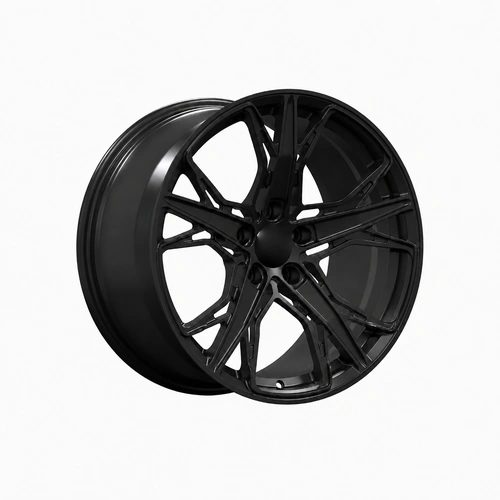
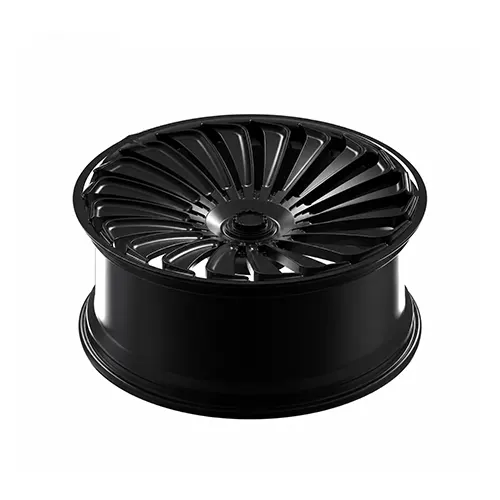
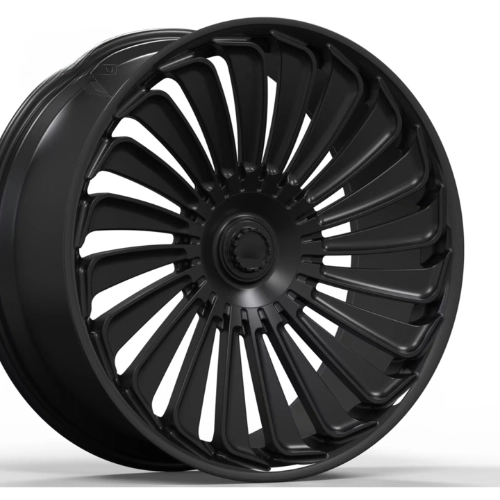
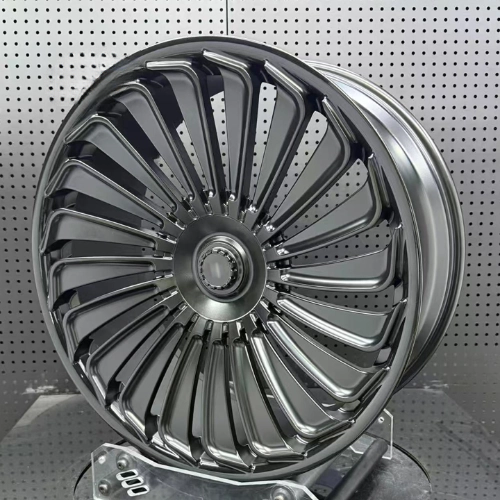
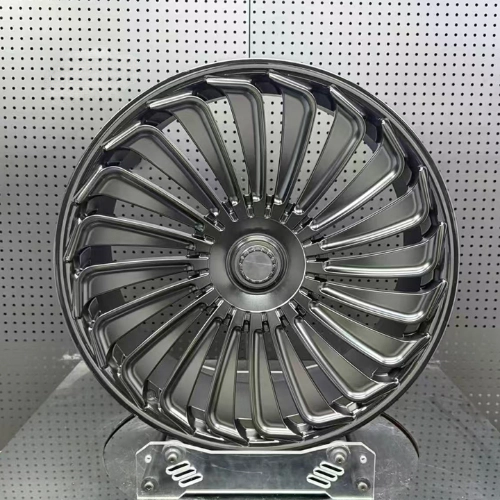
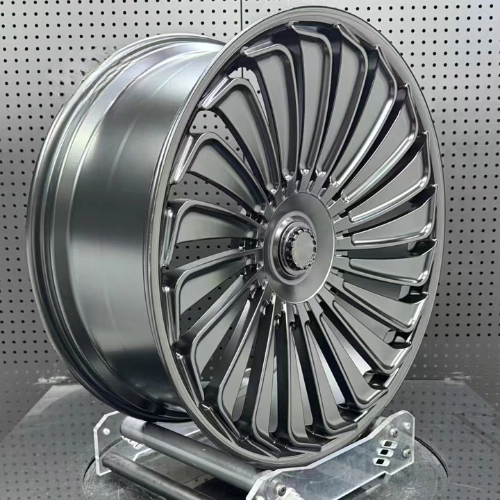
A 2013 Grand Cherokee (WK2 platform) owner came to XINGTU wanting the wheel to carry the SUV's aggressive American street-truck presence — a dense turbine-style multi-spoke face finished in satin (semi-matte) black with a subtle contrast gloss black outer lip, sized up to a full 24" diameter to fill the arches. The build was executed as a forged monoblock, sized and offset to the customer-submitted fitment. XINGTU machined the set to exact Jeep WK2 hub and bolt pattern.



Specifications
| Item | Specification |
| Model No. | L263196 (blank: JC190) |
| Size | 24x10 |
| PCD | 5x127 |
| Offset (ET) | ET15 |
| Center Bore | 71.6 mm |
| Weight | 20.5 kg |
| Load Rating | 1000 kg per wheel |
| Lug Seat | 15×32×60° taper |
| Finish | Satin (semi-matte) black spoke face + gloss black outer lip |
| Construction | Forged Monoblock |
-
Descriptions

Engineering Notes
A dense twenty-spoke pattern at 24 inches creates a large amount of machined surface, but the underlying structure remains intentionally straightforward. Hub, turbine face and barrel are cut from one continuous 6061-T6 forged blank, producing a completed 24×10 wheel at 20.5 kg with a 1,000 kg rating.
Fitment uses ET15 with 5×127 PCD and a 71.6 mm center bore. The lug-seat profile is 15×32×60°, giving the fastening interface its own defined geometry rather than relying on PCD alone.
ET15 was produced around the submitted vehicle setup, placing the wheel farther outward than a conventional WK2 position. The hub dimensions remain directly defined, while final arch and surrounding clearance belong to the intended vehicle configuration.
Turbine Geometry Uses the Diameter Instead of Fighting It
Twenty directional spokes work because the wheel is large enough to give each section room to develop.
Rather than stretching several broad spokes across a 24-inch face, the turbine pattern divides the diameter into narrower surfaces with a repeated rotational direction. That gives the wheel visual movement without adding additional layers, inserts or contrasting hardware.
The design feels detailed up close but reads as a single coherent form from a distance.
Two Black Sheens Define the Planes
Color does not change between center and rim.
Instead, reflection does the work.
Satin Black across the spoke field produces softer highlights and gives the turbine face greater visual depth. Gloss Black around the outer lip catches sharper reflections, creating a controlled edge around the wheel without a bright painted stripe.
It is a more restrained approach to a large SUV wheel and gives the surface a level of refinement that simple color blocking would not achieve.
Large Diameter Backed by Specific Numbers
“Forged” alone is not enough to explain the engineering value of a 24-inch SUV wheel.
The useful figures are 20.5 kg finished mass and a 1,000 kg per-wheel load rating. They give the buyer concrete information about the completed monoblock rather than relying on generalized claims about durability.
From Design to Delivery
Quality Verified
Large-diameter rim runout, hub machining, taper-seat geometry and structural inspection are the key dimensional priorities. The dual-sheen finish then requires consistent cure and a clean visual transition between Satin and Gloss Black.
- CMM dimensional inspection (PCD / CB / runout)
- Dynamic balancing on every wheel
- Forged 6061-T6, hub-centric machining verified
- Taper lug seat profile verified against Jeep WK2 OEM standard
- 24" rim runout & structural inspection for large-diameter SUV application
- Dual-sheen powder coat cure & consistency verified
Result
The completed wheel has presence without depending on a bright finish or decorative hardware.
Twenty spokes give the 24-inch face movement. Satin Black keeps that complexity controlled, while the Gloss Black perimeter only becomes obvious as light moves across the wheel.
The design therefore works at two distances: almost solid black from afar, but much more architectural up close. The 1,000 kg rating and 20.5 kg finished mass give that visual sophistication a credible forged foundation.

Building a Grand Cherokee (WK2/WK/WL), Wrangler, or any Jeep / GM full-size SUV on 22s / 24s / 26s?
XINGTU forges to your exact submitted fitment—PCD-correct hub-centric fit, custom finishes and dual-sheen options available.
-
Build & Fitment
ET15 Defines a Specific Wheel Position
ET15 is part of the submitted setup and should not be interpreted as an automatic recommendation for every WK2.
Offset determines where the 10-inch wheel section sits relative to the hub, so available arch and inner clearance need to correspond with the final vehicle configuration.
Hub-Centric Geometry Remains Platform-Specific
The wheel uses 5×127 PCD and a 71.6 mm center bore.
Those dimensions define the radial mounting interface independently from the more aggressive ET15 position.
Lug-Seat Geometry Is Part of the Fitment
The specified 15×32×60° taper seat determines how the fastener contacts and clamps the wheel.
Matching PCD and center bore while ignoring seat geometry would leave an important part of the mounting interface unresolved.
24×10 Requires More Than a Diameter Check
Moving to 24 inches changes available tire and wheel space around the arch and inner wheelhouse.
Width and offset need to be considered alongside diameter. Where suspension height, liners or arch clearances have been altered, final dimensions should correspond with the actual vehicle rather than an assumed WK2 configuration.
Dual-Sheen Finishing Does Not Change the Wheel Architecture
Satin and Gloss Black are separate surface treatments on one forged monoblock.
Customers can retain the turbine design and dual-sheen idea while changing final wheel dimensions to suit another vehicle package. XINGTU can confirm width, offset and mounting geometry before the forged blank is machined.
-
FAQs
1. Is this wheel a true monoblock?
Yes. The hub, turbine face and barrel are machined from one continuous forged 6061-T6 structure.
2. Why use twenty spokes on a 24-inch SUV wheel?
The high spoke count breaks the large diameter into narrower directional surfaces, creating visual movement and detail without relying on oversized spokes or decorative inserts.
3. Are Satin Black and Gloss Black two different colors?
No. The distinction comes from sheen. The turbine face is satin, while the lip is gloss, allowing the two areas to separate through reflection rather than color contrast.
4. What are the finished weight and load rating?
Each 24×10 wheel weighs 20.5 kg and is rated to 1,000 kg.
5. Is ET15 standard for all Jeep Grand Cherokee WK2 models?
It should not be treated as a universal fitment. ET15 was produced around the submitted vehicle configuration, so final clearance should be checked for another vehicle.
6. What mounting dimensions are used?
5×127 PCD with a 71.6 mm center bore.
7. Why is the 60° taper seat worth specifying?
The seat profile determines the contact interface between the wheel and its fastener. Correct PCD alone does not define the complete mounting system.
8. Does the 24-inch diameter automatically mean the wheel will clear every WK2 arch?
No. Diameter, width, offset, tire package and the vehicle's suspension/arch configuration all influence usable clearance.
9. Can the turbine design be produced in another size?
The face concept can be adapted, but spoke proportions and final wheel geometry should be developed around the required diameter and vehicle package rather than simply scaled.
10. Can the dual-sheen finish be changed to another combination?
The finish can be customized independently from the monoblock geometry. Different colors or sheen levels can be considered without changing the underlying construction.
Related Products