Staggered 21"/22" Forged Wheels for 2021 Ferrari F8 Tributo | Polished
- Model: SDBS704-5
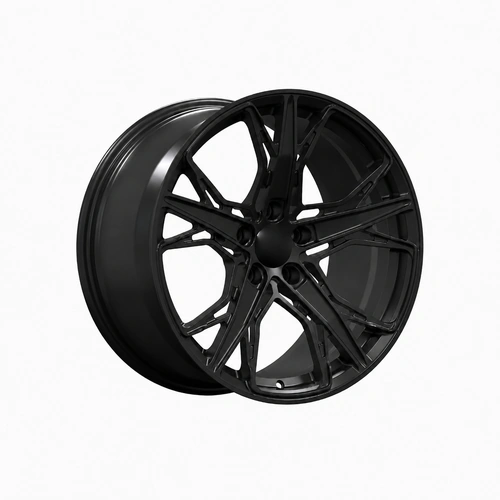
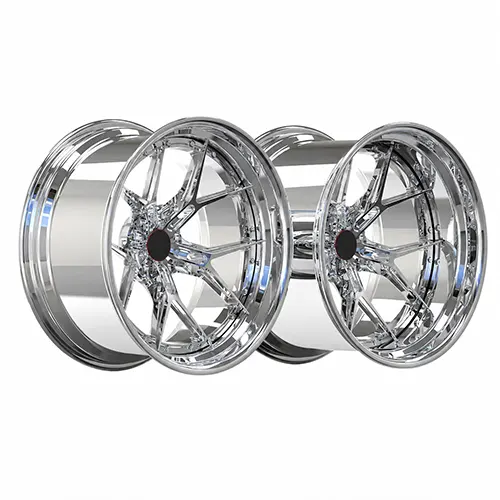
Mirror polish makes proportion and machining impossible to disguise, which is exactly why it suits this F8 wheel. Slender split spokes open the face around Ferrari's carbon-ceramic brakes, while the 21×9 front and substantially broader 22×11 rear establish the rear-biased stance expected from the car. Finished weights of 12.7 kg and 14.2 kg keep the specification equally interesting from an engineering perspective.


Specifications
| Item | Specification |
| Model No. | SDBS704-5 |
| Construction | Monoblock Forged |
| Front Size | 21 × 9" |
| Rear Size | 22 × 11" |
| PCD | 5 × 114.3 |
| Front Offset | ET44.7 |
| Rear Offset | ET38.5 |
| Center Bore | 67.1 mm |
| Front Weight | 12.7 kg |
| Rear Weight | 14.2 kg |
| Load Rating | 750 kg |
| Lug Seat | 15 × 32 × 60° Long Conical |
| Finish | Full Polished |
-
Descriptions

Engineering Notes
Brake hardware defines the usable spoke envelope before styling decisions begin. Ferrari's carbon-ceramic system requires clearance behind the face, so ET44.7 front and ET38.5 rear were developed together with spoke position rather than treated as isolated offset numbers. Front dimensions stay relatively lean at 21×9; rear dimensions move to 22×11, bringing both greater width and a larger diameter to the driven axle.
Monoblock construction keeps that geometry visually uninterrupted. No assembly ring divides the center from the barrel, allowing the split spokes to run cleanly through the face and making the difference between front and rear proportions easier to read.
Surface preparation becomes especially demanding once the wheel is polished to a mirror finish. Fine machining transitions, spoke edges and recessed areas remain exposed under reflected light instead of disappearing beneath an opaque coating. Hand finishing therefore contributes directly to the final visual quality, not simply to color.
Recorded wheel mass gives the build another point of substance: 12.7 kg at the front and 14.2 kg at the rear, with a 750 kg load rating for each wheel. Those figures say more than generic claims about lightweight supercar wheels.
From Design to Delivery
Quality Verified
- 100% CMM dimensional inspection
- Dynamic balancing
- Structural load testing (750kg rated)
- Hand-polished finish QC
Result
Rear-wheel proportion gives the finished set its authority. Moving from 21×9 to 22×11 produces a clear increase in visual mass without resorting to exposed hardware, contrasting paint or an ornamental lip.
Mirror polishing adds drama, yet the split-spoke architecture keeps the face composed. Light defines each branch individually, negative space keeps the brake package visible, and the monoblock form remains easy to understand even under strong reflections.

Building a Ferrari or other supercar?
-
Build & Fitment
Carbon-Ceramic Clearance Comes First
Pushing concavity without considering the brake envelope would compromise the fitment. Here, brake clearance was incorporated into the wheel geometry from the outset, giving the spoke profile a functional boundary rather than treating depth as a purely visual target.
Different Axles, Different Proportions
21×9 Front — ET44.7
Relatively narrow front dimensions keep steering-end proportions controlled and leave the larger rear wheel to carry more of the visual weight.
22×11 Rear — ET38.5
Two additional inches of width and another inch of diameter create a far stronger rear profile. That change is immediately visible from a three-quarter view without making the front wheel look undersized.
Why Full Polish Works on This Face
Fine split spokes provide enough negative space for a highly reflective treatment. Instead of creating one broad mirror surface, reflections move through individual spoke sections and reveal the machining from different angles.
For another Ferrari configuration, Xingtu can work from the actual brake package, hub data and required wheel dimensions before the face profile is finalized.
-
FAQs
1. What wheel sizes are used on this Ferrari F8 Tributo?
Front wheels measure 21×9, while the rear increases to 22×11.
2. Why is the rear wheel both wider and larger?
Increasing diameter and width together gives the rear axle substantially more presence while retaining a clear visual progression from front to back.
3. Does the design account for carbon-ceramic brakes?
Yes. Existing engineering data confirms clearance for Ferrari's carbon-ceramic brake package.
4. How much do the wheels weigh?
Front wheel weight is 12.7 kg and rear wheel weight is 14.2 kg.
5. What load rating is specified?
Each wheel carries a listed 750 kg load rating.
6. Why use a mirror-polished finish?
Full polishing exposes the split-spoke contours and machining under reflected light, giving the monoblock face more visual depth without introducing another color.
7. Can another F8 use a different stagger?
Yes. Wheel dimensions should be developed around the individual brake package, vehicle setup and required stance.
More Forged Wheel Cases