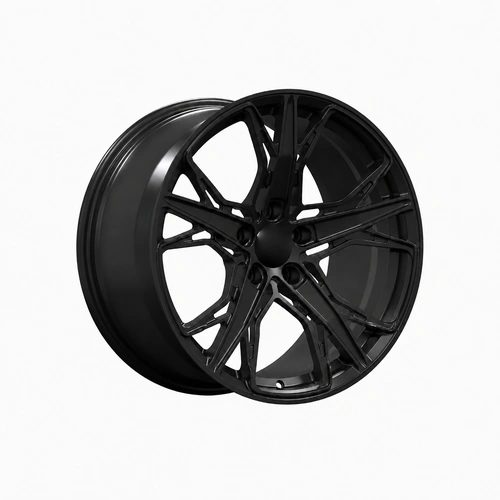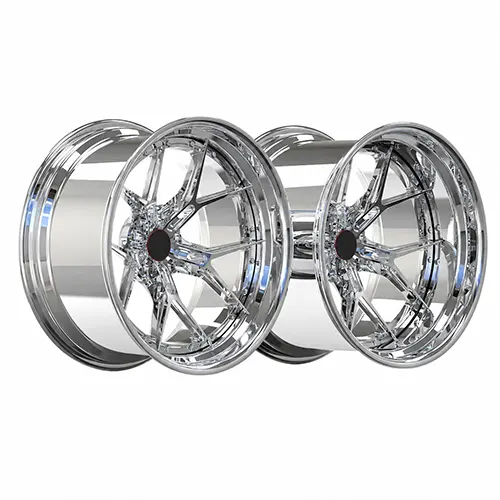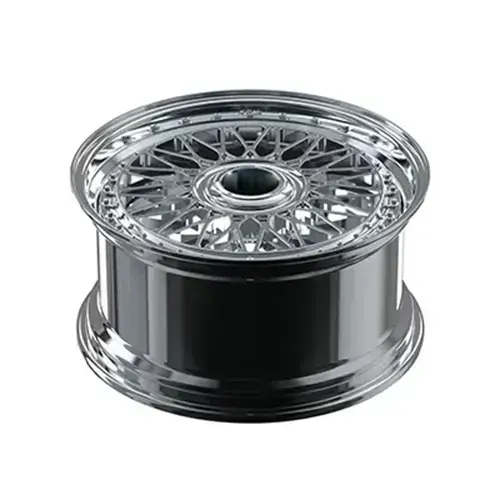
19×8.5 Forged Monoblock Wheels for 2024 BMW X5 M (G05) – Brushed Silver BBS-Style Mesh with Left/Right-Directional Carbon Fiber Rings 5×112
- Model: 2603323
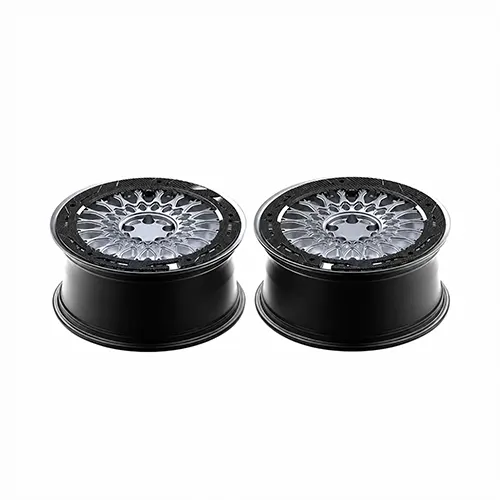
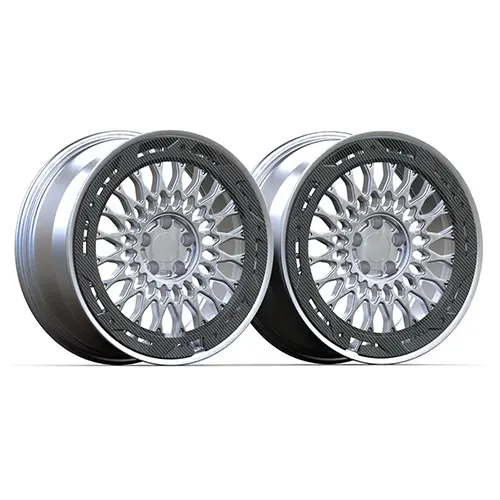
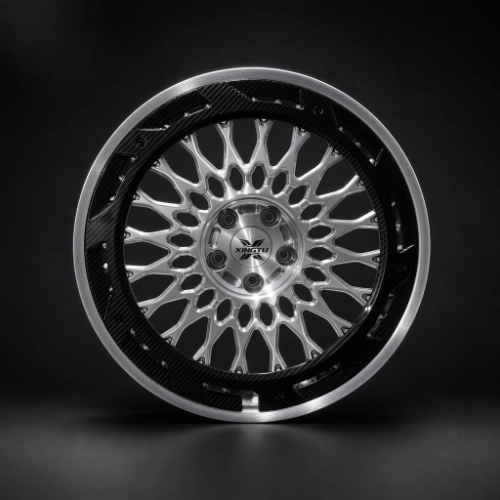
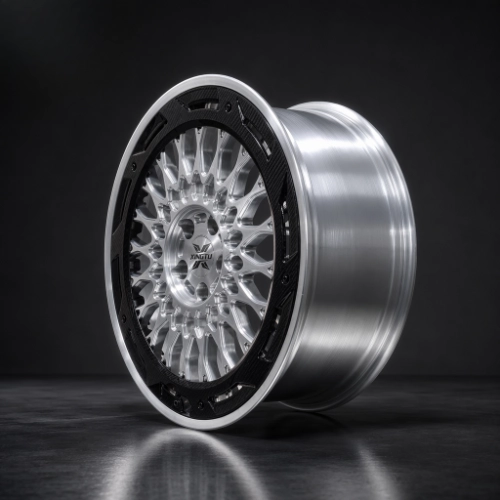
Brushed aluminum and carbon fiber are deliberately given different jobs on this 19-inch X5 M wheel. The dense mesh face, hub and barrel remain one continuous forged 6061-T6 monoblock, while a real 3K carbon ring sits in a machined outer recess purely as a visual layer. Left- and right-side rings use mirrored weave directions, giving the perimeter a matched flow across the vehicle. Finished weight is 12.3 kg per wheel, with ET40, CB66.6, R14 ball-seat geometry and a 750 kg load rating defining the engineering underneath the detailing.

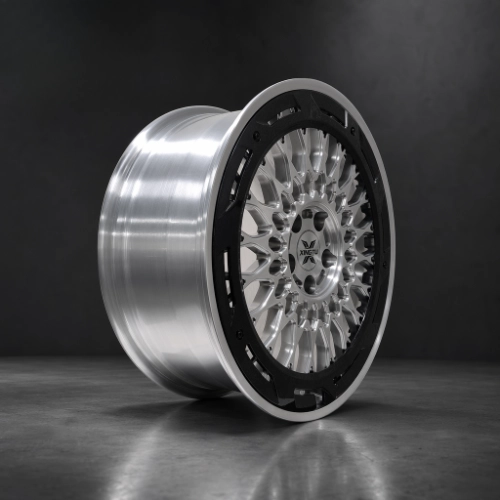


Specifications
| Item | Specification |
| Model No. | 2603323 |
| Size | 19×8.5(front & rear same) |
| PCD | 5×112 |
| Offset (ET) | ET40 |
| Center Bore | 66.6 mm(hub-centric, OEM G05 fitment) |
| Weight | 12.3 kg per wheel |
| Load Rating | 750 kg per wheel |
| Lug Seat | 15×32×R14 ball seat + short shank |
| Finish | Brushed Silver face + Left/Right-directional Carbon Fiber decorative ring |
| Construction | Forged Monoblock + carbon fiber cosmetic ring |
| Lead Time | 45 days |
-
Descriptions

Engineering Notes
The material boundary is intentional. Every structural load remains in the forged aluminum beneath the carbon detail. Hub, mesh face and barrel are machined as one continuous monoblock, producing a completed 19×8.5 wheel at 12.3 kg with a 750 kg load rating.
Carbon begins only at the perimeter. The 3K ring is hand-laid over a machined recess, then edge-sealed and inspected independently from the forged structure. Treating it openly as a decorative component gives the design more credibility: carbon supplies texture and visual contrast, while aluminum remains responsible for the wheel.
Less obvious, but technically just as important, is the 15×32×R14 ball-seat interface. Together with 5×112, CB66.6 and ET40, it defines how the wheel meets the G05 hub and wheel bolt rather than reducing fitment to bolt pattern alone.
Direction Matters at the Perimeter
Repeating one carbon ring four times would have been simpler, but it would leave the twill running in opposite visual directions from one side of the vehicle to the other.
Instead, the carbon layup is paired left to right. The weave appears mirrored across the car, so its lines maintain the same directional flow when viewed from either side.
It is a small detail until the complete set is seen together. Then it becomes one of the most distinctive aspects of the wheel—something that cannot be replicated simply by adding a generic carbon-look ring.
Brushed Mesh Keeps the Metal Visible
Radial brushing allows the fine spoke network to retain the character of machined aluminum. Light travels differently across each narrow section, producing a changing metallic surface rather than a flat silver color.
The darker carbon perimeter gives that brushed center a clear frame, but it does not interrupt the spoke architecture. One material expresses the wheel structure; the other defines its edge.
From Design to Delivery
Quality Verified
Inspection separates the forged wheel from the carbon finishing work. Dimensional accuracy, runout and R14 contact geometry belong to the monoblock, while adhesion, edge sealing and left/right weave matching are checked independently on the carbon ring.
- CMM dimensional inspection (PCD / CB / runout)
- R14 ball seat contact-surface profile verified against BMW OEM bolt
- Dynamic balancing on every wheel (≤5 g)
- Forged 6061-T6, hub-centric machining verified
- X-ray + dye-penetrant NDT on every wheel
- Brushed finish uniformity under controlled D65 lighting
- Carbon fiber ring adhesion + edge seal inspection
- Left/right pair directional match verified before packing
Result
The finished wheel is distinctive without confusing decoration with engineering.
Dense brushed mesh carries the traditional metallic character through the center. Directional carbon gives the perimeter a contemporary texture. Behind both sits a 12.3 kg forged monoblock with a 750 kg rating and a very specific R14 mounting interface.
The attraction comes from that separation of roles: every material is visible, but every material also has a reason to be there.

Running a G05 X5 M, X6 M, X7, XM, or any current BMW M-family SUV and want a retro BBS-style face with modern carbon detailing?
XINGTU forges to your exact OEM fitment—including R14 ball seat matching, brushed / polished / painted finishes, and directional carbon fiber options.
-
Build & Fitment
R14 Ball Seat Is a Core Fitment Dimension
The 15×32×R14 seat deserves the same attention as 5×112 or CB66.6.
Bolt-seat geometry determines the actual contact interface between fastener and wheel. A wheel with the correct PCD but the wrong seat profile is not the same fitment.
One Wheel Geometry at All Four Corners
The 19×8.5 ET40 specification remains square across the set. That keeps the relationship between mesh face and carbon perimeter consistent at every corner rather than changing ring depth or face proportion front to rear.
Carbon Remains Outside the Load Path
Adding or changing the decorative ring does not alter wheel width, offset, center bore or structural capacity. Those remain properties of the forged aluminum body.
For a different G05 configuration, XINGTU can confirm the mounting specification before machining while retaining the same directional-carbon concept.
-
FAQs
1. Why use real carbon fiber if the ring is not structural?
Its purpose is material contrast. The weave adds a distinct texture around the outer edge without interfering with the forged aluminum load path.
2. Why are the carbon rings directional?
Left- and right-side weave orientation is mirrored so the twill follows a consistent visual direction on both sides of the vehicle.
3. What is unusual about the lug-seat specification?
The wheel uses a 15×32×R14 ball seat rather than the 60° taper used on many other applications.
4. Does the carbon ring change the wheel's 750 kg rating?
No. Structural capacity belongs to the forged monoblock underneath the ring.
5. How much does each completed wheel weigh?
12.3 kg.
6. What geometry is used?
The wheel is 19×8.5 with ET40, 5×112 PCD and CB66.6.
7. What additional inspection does the carbon treatment require?
Adhesion, edge sealing and left/right directional matching are checked before the set is packed.
Related Products