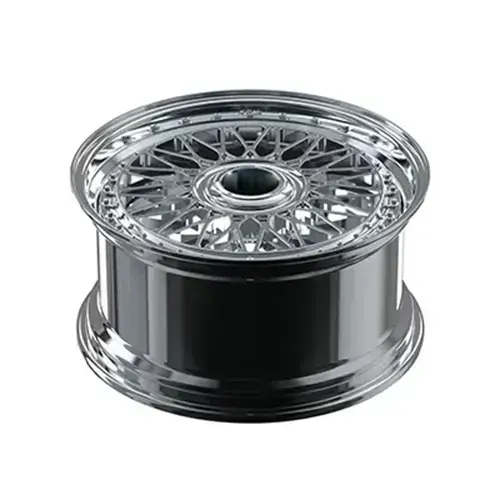
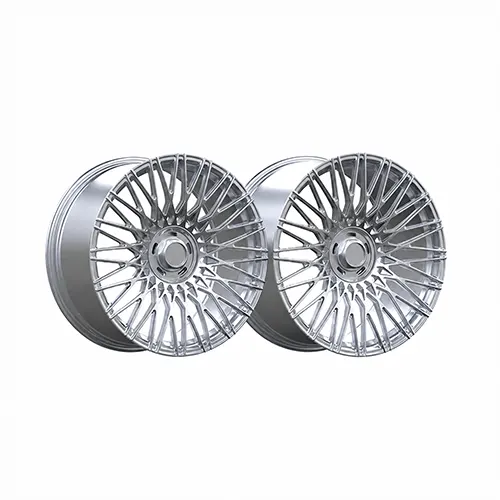
21×10.5 / 22×11.5 Forged Monoblock Wheels for 2024 BMW X5 M (G05) – Brushed Silver 30-Point Multi-Spoke Mesh with Staggered Fitment 5×112
- Model: GD2606016
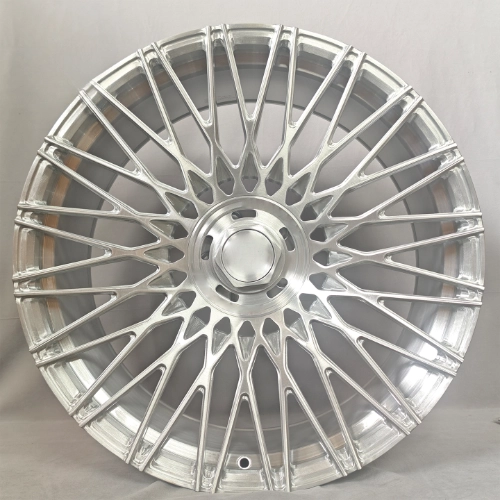
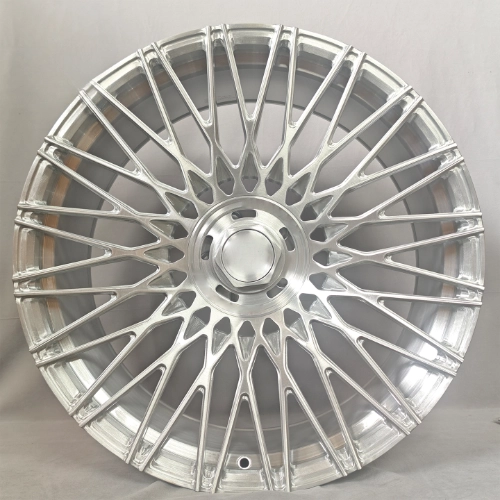
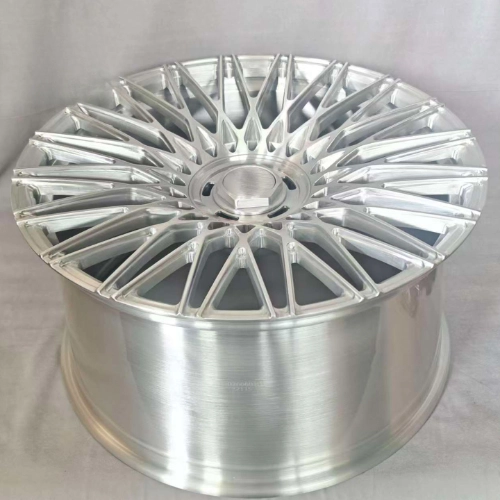
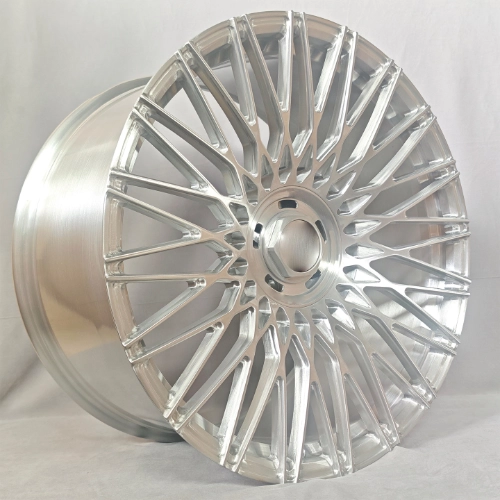
Thirty closely spaced spoke points change how a large SUV wheel carries its size. Instead of relying on a few oversized spokes, the forged face is divided into a finely machined mesh that remains visually consistent across the 21×10.5 front and larger 22×11.5 rear. Radial CNC brushing follows the spoke direction, giving the aluminum a grain that shifts with light rather than behaving like silver paint. Finished weights are 14.2 kg and 14.7 kg, with an 850 kg rating per wheel.


Specifications
| Item | Specification |
| Model No. | 2603620 |
| Front Size | 21×10.5 |
| Rear Size | 22×11.5 |
| PCD | 5×112 |
| Front Offset (ET) | ET31 |
| Rear Offset (ET) | ET43 |
| Center Bore | 66.6 mm (hub-centric, OEM G05 fitment) |
| Front Weight | 14.2 kg |
| Rear Weight | 14.7 kg |
| Load Rating | 850 kg per wheel |
| Lug Seat | 15×32×60° taper |
| Finish | Brushed Silver (CNC radial brushed + UV-resistant clear coat) |
| Center Cap | Universal smooth cap (XINGTU LOGO cap optional) |
| Construction | Forged Monoblock |
| Lead Time | 25 days |
-
Descriptions

Engineering Notes
Thirty spoke points create far more machining transitions than a conventional five- or ten-spoke wheel. Each narrow section has to remain visually consistent while still belonging to one uninterrupted forged monoblock.
Front and rear are also different in two dimensions. The front uses 21×10.5 ET31, while the rear moves to 22×11.5 ET43. Finished mass rises only from 14.2 to 14.7 kg despite the larger rear diameter and width, while structural capacity remains 850 kg per wheel.
Spoke-to-caliper depth was checked in CAD before machining, which is particularly relevant on such a densely populated face. Increasing spoke count cannot come at the expense of the space required behind the wheel center.
Surface Grain Follows the Architecture
Radial brushing is applied in the same direction as the spoke geometry.
That connection changes how the wheel reads at different distances. From several meters away, the thirty narrow sections merge into a continuous silver field. Move closer and the grain becomes visible along individual spokes, making the face feel more finely machined.
The finish is therefore not separate from the design. It amplifies the geometry already present in the aluminum.
The Rear Gains Scale, Not a New Personality
Moving from 21×10.5 to 22×11.5 gives the rear wheel noticeably more physical volume.
What does not change is the face language. The thirty-point mesh remains equally dense, preventing the rear from turning into a completely different deep-dish or heavily concave design.
That continuity is commercially important on a large SUV: the stagger is obvious without making the car look as though two unrelated wheel designs have been fitted.
From Design to Delivery
Quality Verified
Dense spoke machining, staggered rim geometry and radial grain consistency create the meaningful inspection points here. The finish has to remain uniform without losing the directional character that makes brushed aluminum distinctive.
- CMM dimensional inspection (PCD / CB / runout)
- 60° taper seat contact-surface profile verified against BMW OEM bolt
- Dynamic balancing on every wheel (≤5 g)
- Forged 6061-T6, hub-centric machining verified
- X-ray + dye-penetrant NDT on every wheel
- Radial brushed finish uniformity under controlled D65 lighting
- Staggered 21/22 rim runout & structural inspection
Result
This wheel makes large diameter feel finely detailed.
The thirty-point pattern distributes visual mass across the entire face, while directional brushing adds texture without another color or trim component. Front and rear differ in scale, yet remain immediately recognizable as one set.
Its appeal is less about aggression and more about precision—the kind that becomes more apparent the closer the wheel is viewed.

Running a G05 X5 M, X6 M, X7, XM, or any current BMW M-family SUV and want a denser, more luxury-grade face than the OEM M-forged?
XINGTU forges to your exact OEM fitment—including staggered diameters, 60°
taper seat matching, brushed / polished / painted finishes, and any custom face density. -
Build & Fitment
Front and Rear Are Separate Wheel Packages
21×10.5 ET31 and 22×11.5 ET43 should be read as complete axle-specific geometries.
Width, diameter and offset all change, so the rear is not merely an enlarged copy of the front.
Dense Spokes Still Have to Clear the Brake Package
Caliper clearance was considered before machining through CAD spoke-depth verification.
That requirement is particularly relevant on a high-count design, where spoke density and rear-face space have to coexist.
Mounting Geometry
The specification combines 5×112, CB66.6 and a 15×32×60° taper seat.
For another G05 setup, front and rear geometry can be checked before machining rather than transferring ET31/43 automatically.
-
FAQs
1. Why use thirty spoke points on a large SUV wheel?
The high count breaks the 21/22-inch diameter into finer visual sections, giving the wheel a denser and more precise face.
2. Is the silver surface painted?
No. The face is radially CNC-brushed and then protected by a clear coating.
3. Why can brushed aluminum look different between studio and workshop photos?
Directional grain reflects light differently according to viewing angle, so brightness changes naturally across the face.
4. What are the front and rear dimensions?
21×10.5 ET31 at the front and 22×11.5 ET43 at the rear.
5. What are the completed wheel weights?
14.2 kg front and 14.7 kg rear.
6. What load capacity is specified?
850 kg per wheel.
7. How was brake clearance handled with such a dense spoke layout?
Spoke-to-caliper depth was checked in CAD before machining.
Related Products