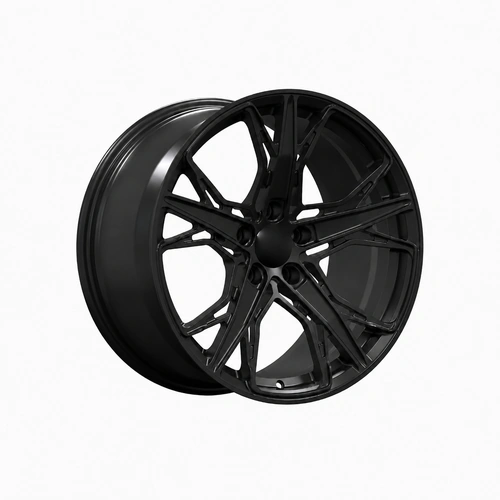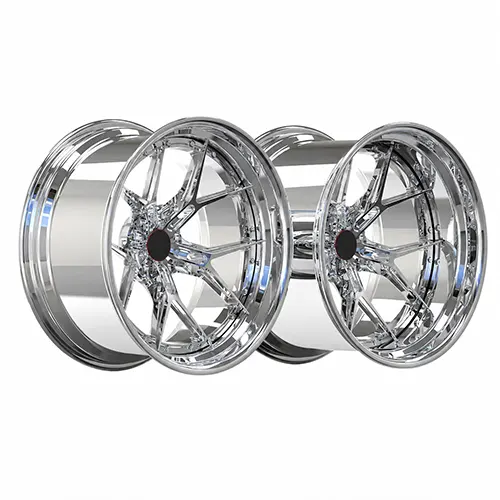
Staggered 21"/22" Forged Wheels for 2025 BMW M5 (G90) | Brushed Silver
No polished lip, carbon ring or contrasting paint is needed on this G90 wheel. Brushed silver leaves the 10-spoke geometry fully exposed, while the wheel sizes themselves create the visual hierarchy. Front dimensions are already substantial at 21×11, yet the rear grows to 22×12. Both positions retain ET20, making the front-to-rear change unusually easy to read.


Specifications
| Item | Specification |
| Front Size | 21 × 11 |
| Rear Size | 22 × 12 |
| PCD | 5 × 112 |
| Offset | ET20 (all four) |
| Center Bore | 66.6 mm |
| Front Weight | 14 kg |
| Rear Weight | 15 kg |
| Load Rating | 950 kg |
| Lug Seat | 15 × 32 × 60(Conical) |
| Finish | Brushed Silver |
-
Descriptions

Engineering Notes
The interesting part of this specification is how few variables change.
ET20 stays the same front and rear. PCD remains 5×112 and the center bore is 66.6 mm. What changes is wheel size: 21×11 becomes 22×12.
That one-inch increase in both diameter and width creates a strong rear bias without changing the recorded offset at the same time. It makes the staggered relationship easier to understand than a setup where width, diameter and ET all move independently.
Finished weight follows the same controlled progression. The front is listed at 14 kg and the larger rear at 15 kg. The current load rating is 950 kg per wheel.
Brushed silver complements the uncomplicated 10-spoke design. Directional grain adds enough surface character to reveal the machining, but there is no second finish competing with the wheel shape.
From Design to Delivery
Quality Verified
- 100% CMM dimensional inspection
- Dynamic balancing
- Structural load testing (950kg rated)
- Brushed finish QC
Result
The rear wheel is unmistakably larger, but the matching finish and spoke design keep the set visually unified.
Twenty-one inches at the front gives the car a substantial starting point. Moving to 22×12 at the rear adds enough scale to make the back of the car feel more grounded, while brushed silver keeps attention on the physical shape rather than surface contrast.

Upgrading a BMW M5 or other high-performance sedan?
-
Build & Fitment
One Offset Makes the Stagger Easier to Read
ET20 at both ends removes one variable from the visual equation.
The front-to-rear difference therefore comes almost entirely from physical wheel dimensions: 21×11 versus 22×12.
Rear Width Is Not a Small Detail
One extra inch of width changes the rear face and barrel proportions considerably.
Combined with the larger diameter, the 22×12 rear becomes the dominant wheel in side and three-quarter views without needing a more aggressive listed offset.
Why Ten Spokes Work at This Size
Twenty-two inches provides plenty of surface area. A very dense pattern could make such a large wheel look busy.
Ten clear spokes keep enough open space between sections for the diameter to remain obvious, while brushed silver adds texture without visually closing those gaps.
Useful Numbers Instead of Generic Claims
Front and rear weights of 14 kg and 15 kg give the page a stronger technical story than a generic statement such as “lightweight forged construction.”
Real dimensional and weight data let buyers understand what was achieved on this specific wheel rather than relying on marketing language.
Different G90 brake or suspension configurations can be reviewed with Xingtu before another set is finalized.
-
FAQs
1. Why does this M5 G90 use a 22-inch rear wheel?
The larger rear diameter and 12-inch width create a stronger rear proportion than the 21×11 front.
2. Do front and rear wheels use different offsets?
No. ET20 is listed at both ends.
3. What are the finished wheel weights?
The front is recorded at 14 kg and the rear at 15 kg.
4. What load rating is specified?
The current project lists 950 kg per wheel.
5. Why use brushed silver instead of a two-tone finish?
The brushed surface adds visible metal texture while leaving the simple 10-spoke form as the main feature.
6. Are these dimensions universal for every M5 G90?
No. Brake hardware, suspension changes and the required stance can affect the final wheel specification.
7. Can the rear remain 21 inches on another set?
Another dimensional combination can be developed when the vehicle or design direction calls for equal diameters.
More Forged Wheel Cases