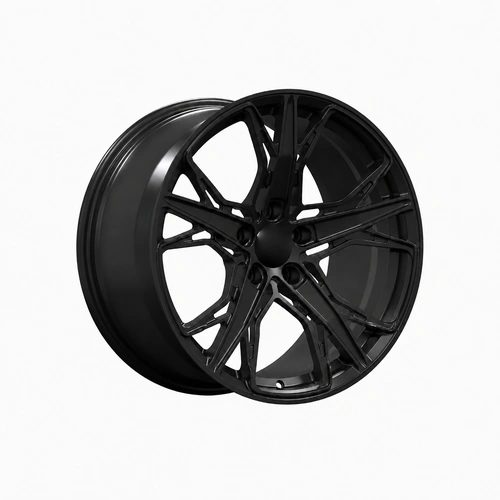
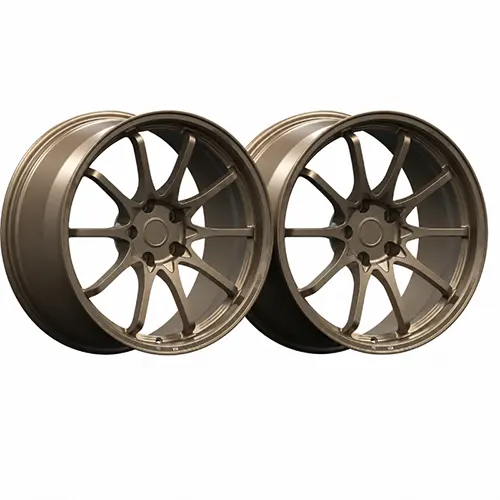
2013–2015 BMW 328i (F30) | 19" Lightweight Forged Monoblock · Matte Bronze
- Model: L261463
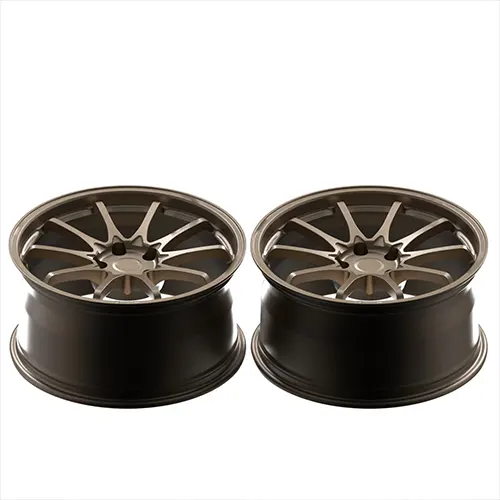
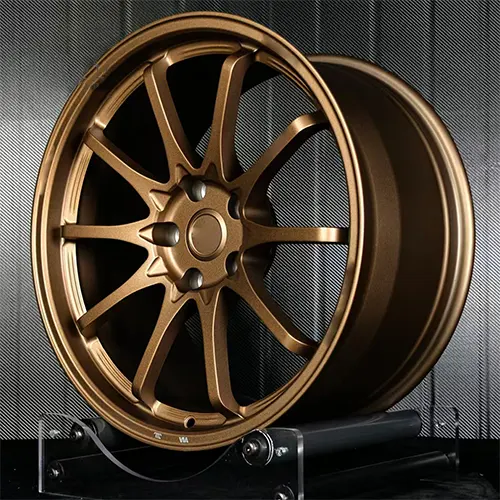
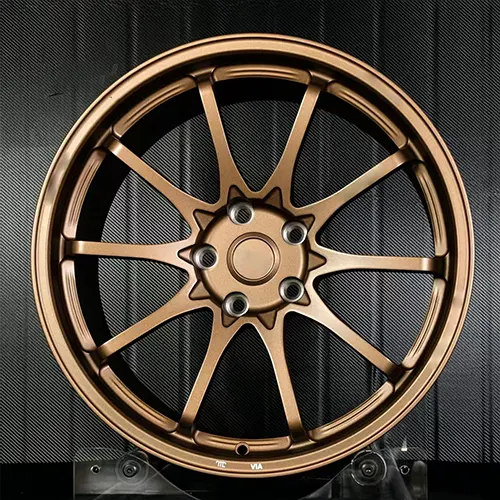
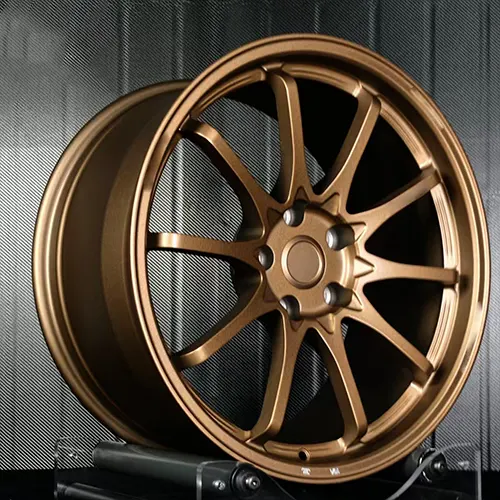
Ten kilograms per wheel is the number that defines this F30 setup. The 19-inch forged monoblock uses a slim 10-spoke face with CNC-tapered sections, keeping the wheel visually light while retaining an 800 kg load rating. Front and rear widths are staggered at 19×8.5 and 19×9.5, with ET30/35 positioning matched to the F30 platform. Matte Bronze gives the wheel a muted metallic finish that suits the lean spoke geometry without turning the overall look into a show-oriented build.


Specifications
| Item | Specification |
| Model No. | L261463 |
| Front Wheel Size | 19x8.5 |
| Rear Wheel Size | 19x9.5 |
| Bolt Pattern (PCD) | 5x120 |
| Front Offset (ET) | 30 |
| Rear Offset (ET) | 35 |
| Center Bore | 72.6 mm |
| Weight | 10 kg (per wheel) |
| Load Rating | 800 kg |
| Lug Seat | 15×32×60° Taper |
| Construction | Forged Monoblock, 6061‑T6 aluminum |
| Finish | Matte Bronze |
-
Descriptions

Engineering Notes
Weight reduction is built into the spoke profile rather than treated as a headline added after production. Each spoke narrows progressively toward the rim, removing excess material from lower-load areas while preserving the structure required by the forged 6061-T6 monoblock.
The finished wheel weighs 10 kg, with a published 800 kg load rating. Those two figures belong together. Low mass only has value when the wheel still meets the required structural specification, which is why the finished weight is more meaningful than a generic “lightweight forged” claim.
Fitment remains deliberately measured. The front runs 19×8.5 ET30, while the rear moves to 19×9.5 ET35. Both axles retain the same 19-inch diameter, so the stagger comes from width and wheel position rather than an oversized rear wheel. Existing fitment data also records clearance around the front struts and rear arches.
Hub geometry follows the BMW specification with 5×120 PCD, CB72.6 and a 15×32×60° taper lug seat, keeping the mounting interface consistent with the wheel dimensions rather than relying on a broadly adapted aftermarket fit.
Where the Weight Comes Out
The 10-spoke layout is not simply a visual choice.
Using more slender spokes allows the face to stay open while distributing the structure across ten separate sections. CNC tapering refines those sections further, reducing unnecessary material without turning the wheel into a thin or delicate-looking design.
The result is a wheel that appears light because the geometry actually is light. There is no need to rely on oversized cut-outs, decorative milling or exaggerated machining details to communicate the point.
That makes the 10 kg finished weight one of the strongest commercial arguments on the page: it is measurable, specific and directly connected to how the wheel is built.
Stagger Without Changing the Wheel Scale
The front and rear use different widths, but not different diameters.
A 19×8.5 front keeps the steering-end proportion relatively compact. The 19×9.5 rear adds one inch of section width, giving the back of the car more substance without changing the visual scale of the wheel itself.
ET30 and ET35 support that relationship rather than creating an aggressively different face at the rear. The two axles remain clearly related, which suits the restrained character of the 10-spoke monoblock much better than an exaggerated deep-dish treatment would.
Matte Bronze Works Because the Face Is Simple
Bronze gives the wheel enough color to stand apart from conventional silver or gunmetal, but the matte surface keeps the finish under control.
Low reflection makes the narrow spokes easier to read and preserves the clean transitions created by the CNC profile. Because the wheel is monoblock, there is no exposed hardware, polished step lip or contrasting barrel competing with the face.
That simplicity is important. The finish supports the spoke geometry instead of becoming the entire reason the wheel attracts attention.
From Design to Delivery
Quality Verified
Low mass is only useful when the completed wheel still meets the required dimensional and structural targets. Final inspection therefore focuses on the actual fitment geometry, balance and published load capacity rather than adding broad performance claims.
- CMM dimensional inspection on PCD, bore & offset
- Dynamic balancing on every wheel
- Load-rated to 800kg per wheel—verified despite the 10kg weight
Result
What stands out in the finished set is not an aggressive stance or a dramatic finish treatment, but how closely the visual language follows the engineering.
The narrow 10-spoke face reflects the low-mass construction. Matte Bronze adds distinction without making the wheel appear heavier. Front and rear widths differ enough to give the F30 a clear stagger, yet the shared 19-inch diameter keeps the complete set coherent.
The underlying specification remains equally straightforward: 10 kg per wheel, forged 6061-T6 monoblock construction, 19×8.5 / 19×9.5 sizing, ET30/35 offsets, 5×120 / CB72.6 hub fitment and an 800 kg load rating.
That combination gives the wheel a much stronger identity than calling it a “track weapon” or relying on generic claims about sharper turn-in. The product already has enough engineering substance to speak for itself.

Building a track-focused F30 or other 5x120 BMW?
Get a lightweight forged set in your exact spec
-
Build & Fitment
A Stagger Built Around Width, Not Diameter
Both axles retain a 19-inch diameter, keeping the overall wheel scale consistent from front to rear. The front uses 19×8.5, while the rear increases to 19×9.5.
That extra inch of rear width gives the F30 a more substantial rear profile without introducing a larger rear diameter or an exaggerated deep-dish appearance. The result is a controlled stagger that stays visually balanced with the proportions of the sedan.
ET30 Front and ET35 Rear
Offset changes together with wheel width rather than being repeated across all four positions.
The 19×8.5 front uses ET30, while the wider 19×9.5 rear moves to ET35. Existing fitment notes also record clearance around the front struts and rear arches, keeping the wheel position tied to the actual F30 chassis rather than simply pushing the wheels outward for appearance.
This combination is better understood as a complete front/rear specification than as two isolated offset numbers.
BMW-Specific Mounting Geometry
The wheel is machined for a 5×120 bolt pattern with a 72.6 mm center bore and a 15×32×60° taper lug seat.
These dimensions work together at the mounting interface. Matching 5×120 alone does not define the complete fitment; center bore, lug-seat geometry, width and offset all need to correspond with the intended vehicle application.
Fitment Precision Without Added Hardware
The recorded dimensions allow the wheel to work around the F30’s front-strut and rear-arch clearances without turning spacer use into part of the setup.
That keeps the specification cleaner and makes the wheel geometry itself responsible for positioning the wheel correctly on the car.
Customizing the Same Design for Another F30
The 19×8.5 ET30 front and 19×9.5 ET35 rear combination belongs to this specific setup and should not automatically be copied to every F30.
Suspension changes, brake upgrades, tire width and the desired wheel position can all affect the final specification. If those details differ, XINGTU can review the fitment before production and adjust the wheel dimensions accordingly.
-
FAQs
1. What sizes are used on the BMW 328i F30 forged wheels?
The front wheels measure 19×8.5, while the rear wheels are 19×9.5.
2. Why are both front and rear wheels 19 inches?
Using the same diameter keeps the wheel scale consistent across the car. The stagger comes from the additional rear width rather than increasing rear diameter.
3. What offsets are used?
The front specification uses ET30, while the rear uses ET35.
4. Why does the wider rear wheel use a different offset?
Width and offset work together to determine where the wheel sits relative to the suspension and bodywork. The ET35 rear specification accompanies the wider 19×9.5 wheel rather than simply repeating the front ET30 value.
5. What bolt pattern does the wheel use?
The bolt pattern is 5×120.
6. What is the center bore?
The wheel is machined with a 72.6 mm center bore.
7. What lug-seat specification is used?
The recorded lug seat is 15×32×60° taper.
8. How much does each wheel weigh?
Each finished forged monoblock wheel weighs 10 kg.
9. What load rating does the wheel have?
The published load rating is 800 kg per wheel.
10. What material is used?
The wheel is made from 6061-T6 aluminum using forged monoblock construction.
11. Does this setup provide suspension clearance?
The existing fitment notes record clearance around the front struts and rear arches for the 19×8.5 ET30 front and 19×9.5 ET35 rear setup.
12. Can the same specifications be used on every BMW F30?
Not necessarily. Suspension configuration, brakes, tire width and the intended wheel position should be checked before production dimensions are finalized.
13. Can the wheel be ordered in a different finish?
Yes. Matte Bronze is the finish used on this setup, while other finish directions can be considered without automatically changing the underlying fitment.
More Forged Wheel Cases