Staggered 20" Forged Wheels for 2020 Alfa Romeo Giulia Ti | Chrome
- Model: L261609
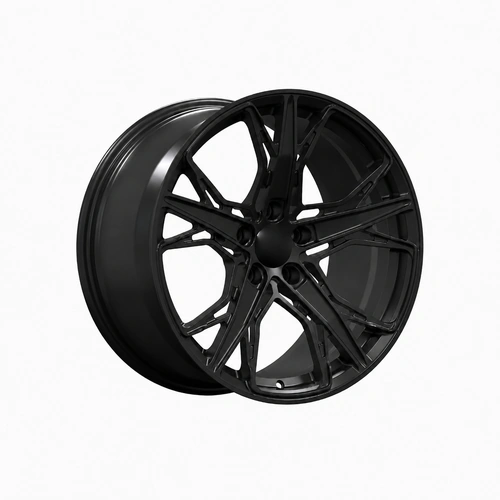
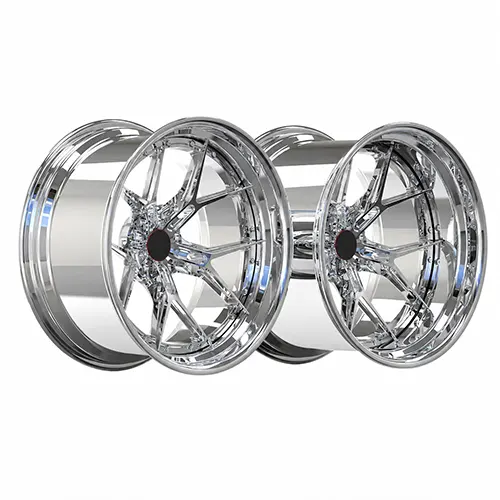
Italian character comes through in the wheel shape before the chrome finish even enters the picture. Five broad openings reinterpret the familiar telephone-dial theme in forged monoblock form, giving the Giulia a recognizable visual link to classic Alfa design without reproducing an old cast wheel. Vacuum chrome then turns those simple surfaces into a much more reflective statement, while 20×9 front and 20×10 rear dimensions keep the stance controlled.


Specifications
| Item | Specification |
| Model No. | L261609 |
| Construction | Monoblock Forged |
| Front Size | 20 × 9.0 |
| Rear Size | 20 × 10 |
| PCD | 5 × 110 |
| Front Offset | ET29 |
| Rear Offset | ET34 |
| Center Bore | 65.1 mm |
| Weight | 12 kg per wheel (all four) |
| Load Rating | 850 kg |
| Lug Seat | 15 × 32 × 60° Conical |
| Finish | Vacuum Chrome |
-
Descriptions

Engineering Notes
Vacuum chrome places unusual demands on the surface beneath it. Reflective plating does not conceal machining marks or uneven transitions; it makes them more apparent. Forged faces therefore need careful machining and preparation before the chrome layer is applied.
Five-window geometry works in favor of that finish. Broad surfaces create clean areas for reflection, while large openings keep the 20-inch face from becoming visually heavy. Unlike a fine mesh design, the wheel relies on proportion and surface quality rather than intricate spoke detail.
Fitment moves from 20×9 ET29 at the front to 20×10 ET34 at the rear. Existing project information records 5×110 PCD, a 65.1 mm center bore and 12 kg finished weight per wheel, together with an 850 kg load rating.
Spacer-free installation is one of the more useful details on the page. Current Engineering Notes state that brake clearance and wheel position were achieved without spacers, making the offset specification part of the actual vehicle fitment rather than merely a stance choice.
From Design to Delivery
Quality Verified
- 100% CMM dimensional inspection
- Dynamic balancing
- Structural load testing (850kg rated)
- Multi-stage chrome finish QC
Result
Classic inspiration remains recognizable, but the result does not feel nostalgic. Forged construction sharpens the five-window geometry, 20-inch sizing gives it contemporary scale, and vacuum chrome adds a cleaner, more architectural reflection than a conventional silver finish.
Rear width increases just enough to strengthen the Giulia's stance without turning the wheel package into an exaggerated deep-dish build.

Building an Alfa Romeo or other European sport sedan?
-
Build & Fitment
Telephone-Dial Influence, Reworked in Forged Form
Five large openings give the face its unmistakable character. Instead of adding complexity, the design relies on strong negative space and broad metal surfaces.
That restraint is what allows the chrome treatment to become dramatic without making the wheel visually chaotic.
Spacer-Free Fitment Matters
ET29 front and ET34 rear were developed around the Giulia's 5×110 hub and brake package, with the existing project recording no spacer requirement.
This is more valuable than calling the stance “flush,” because it describes a real outcome of the engineering work.
One-Inch Rear Increase
20×9 at the front becomes 20×10 behind. The difference gives the rear a firmer footprint while both axles retain one common 20-inch diameter.
Chrome Depends on Preparation
Vacuum chrome rewards accurate surface work and exposes poor preparation. On a wheel with broad face sections, polishing quality becomes immediately visible under natural and artificial light.
For a different Giulia brake or suspension configuration, Xingtu can develop the fitment around the actual vehicle data.
-
FAQs
1. What sizes are used on the Giulia Ti?
Front wheels measure 20×9, with 20×10 used at the rear.
2. Are spacers required?
No. Existing Engineering Notes state that this fitment retains brake clearance without spacers.
3. What offsets are specified?
Front offset is ET29 and rear offset is ET34.
4. What finish is used?
The specification lists Vacuum Chrome.
5. How much does each wheel weigh?
Finished weight is listed at 12 kg per wheel.
6. What load rating is recorded?
Each wheel carries an 850 kg listed load rating.
7. Why does chrome suit this five-window face?
Broad surfaces give reflections enough room to remain clean and readable, while large openings prevent the polished 20-inch face from appearing too solid.
More Forged Wheel Cases