24×9.0 / 24×10 Forged Two-Piece Wheels for 1972 Chevrolet Impala (B-Body) – Electroplated Gold Center with Brushed-Polished Lip, Staggered 5×127
- Model: RC1090-5XXT
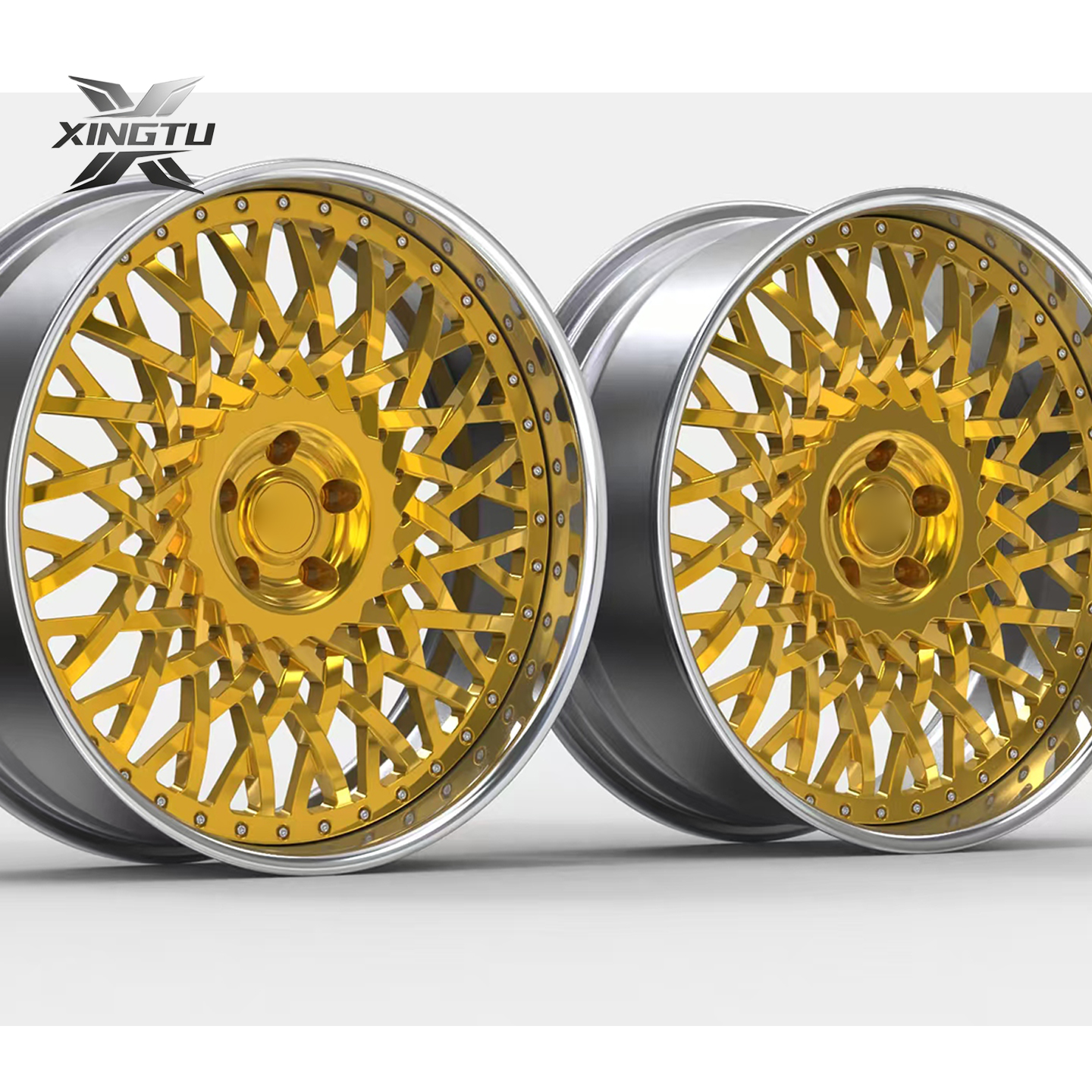
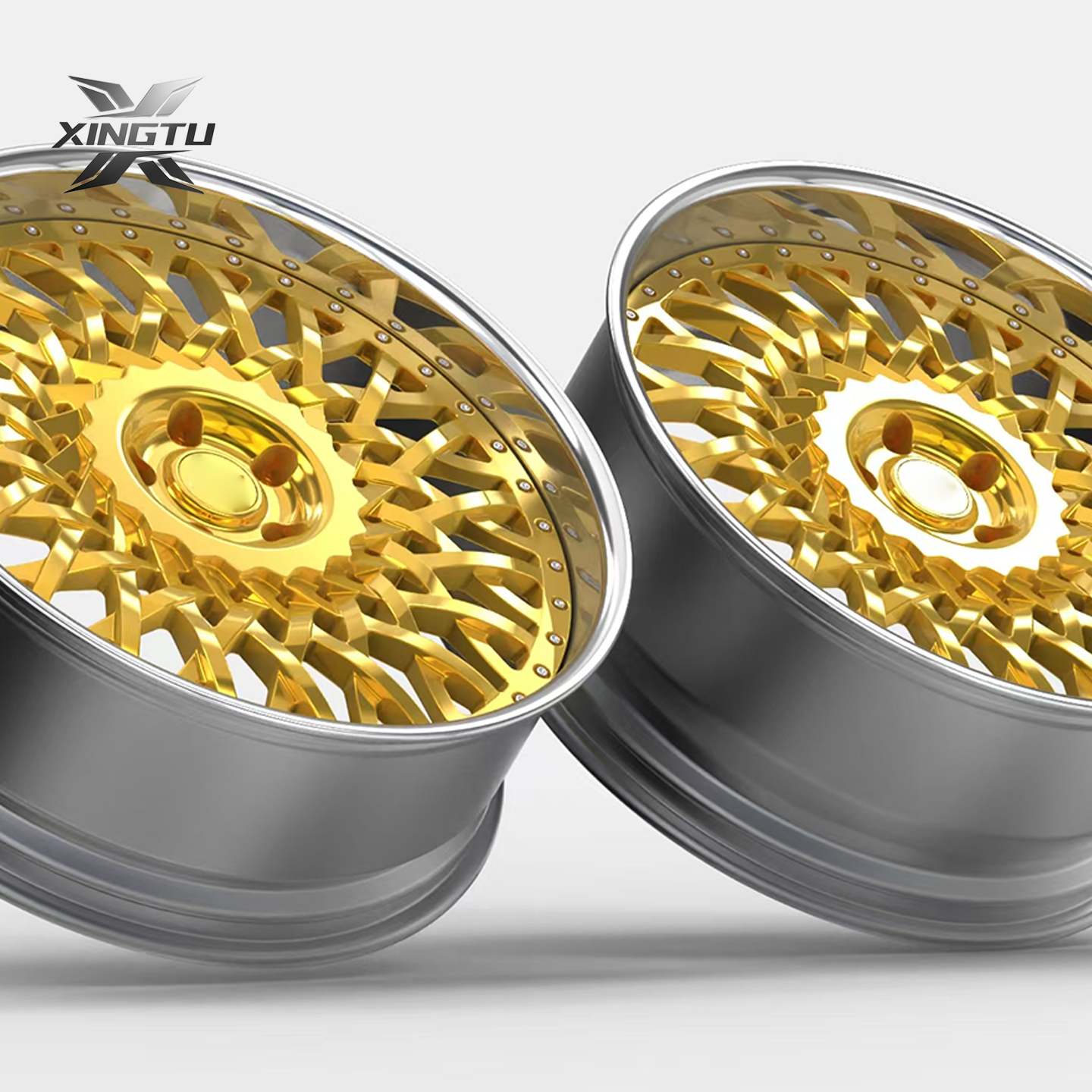
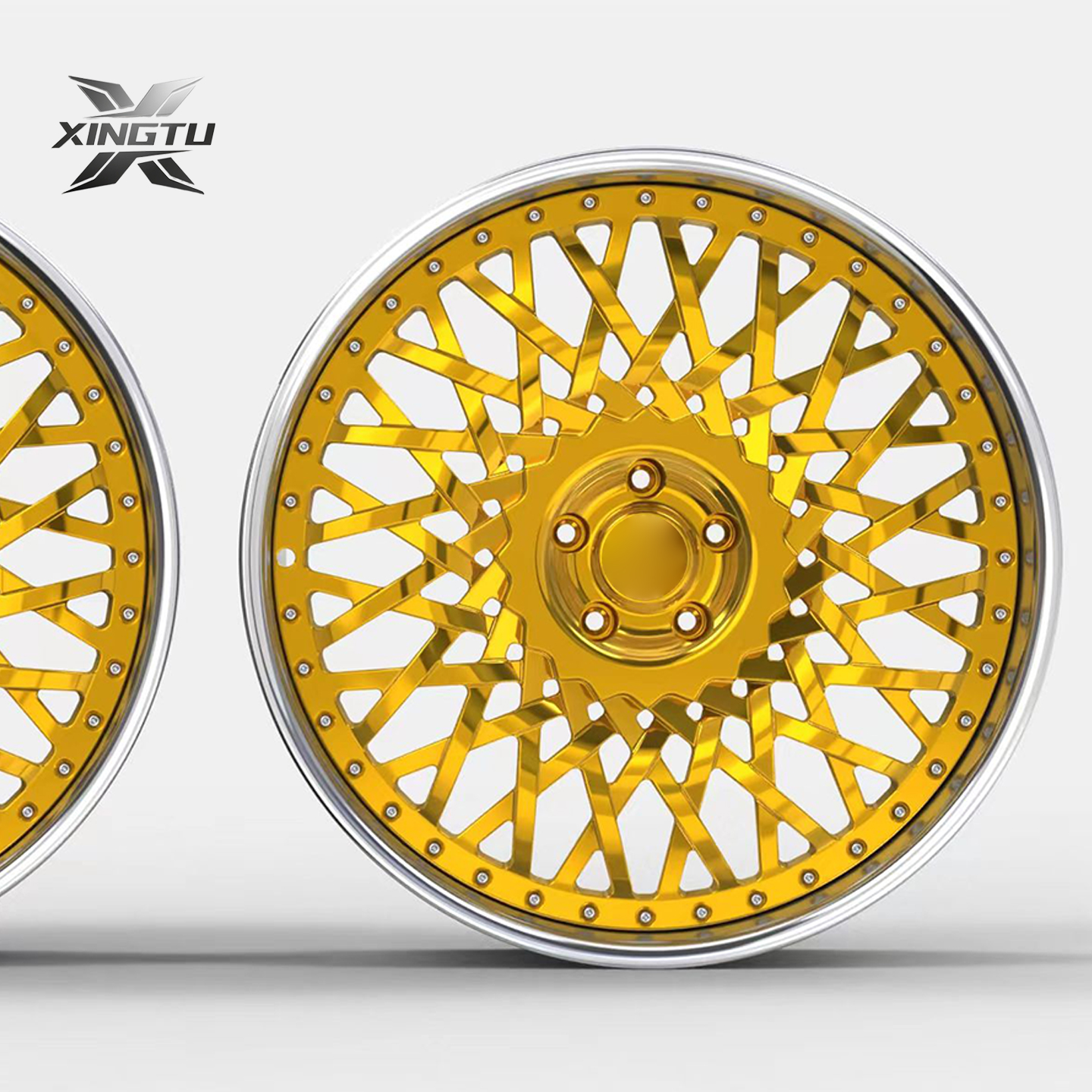
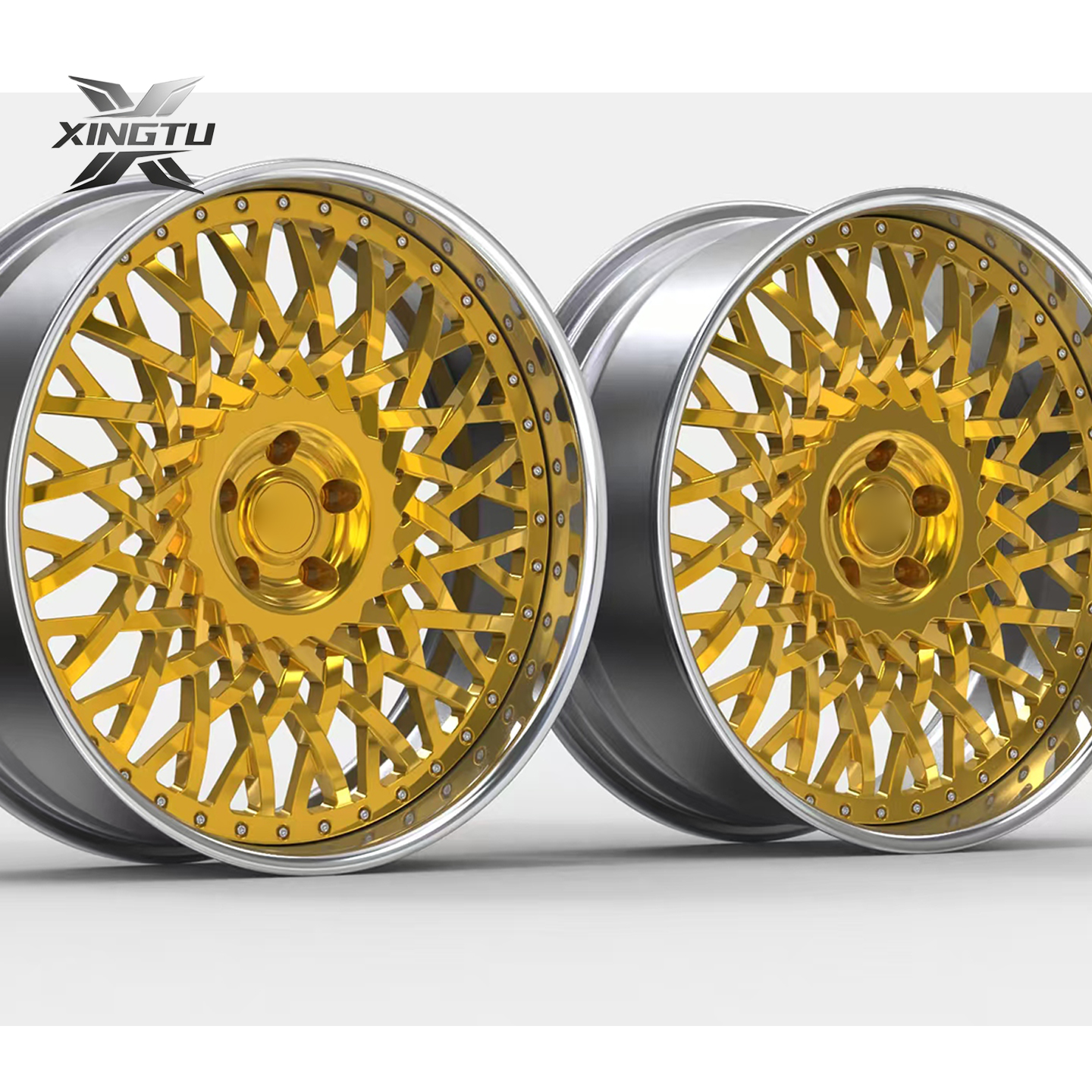
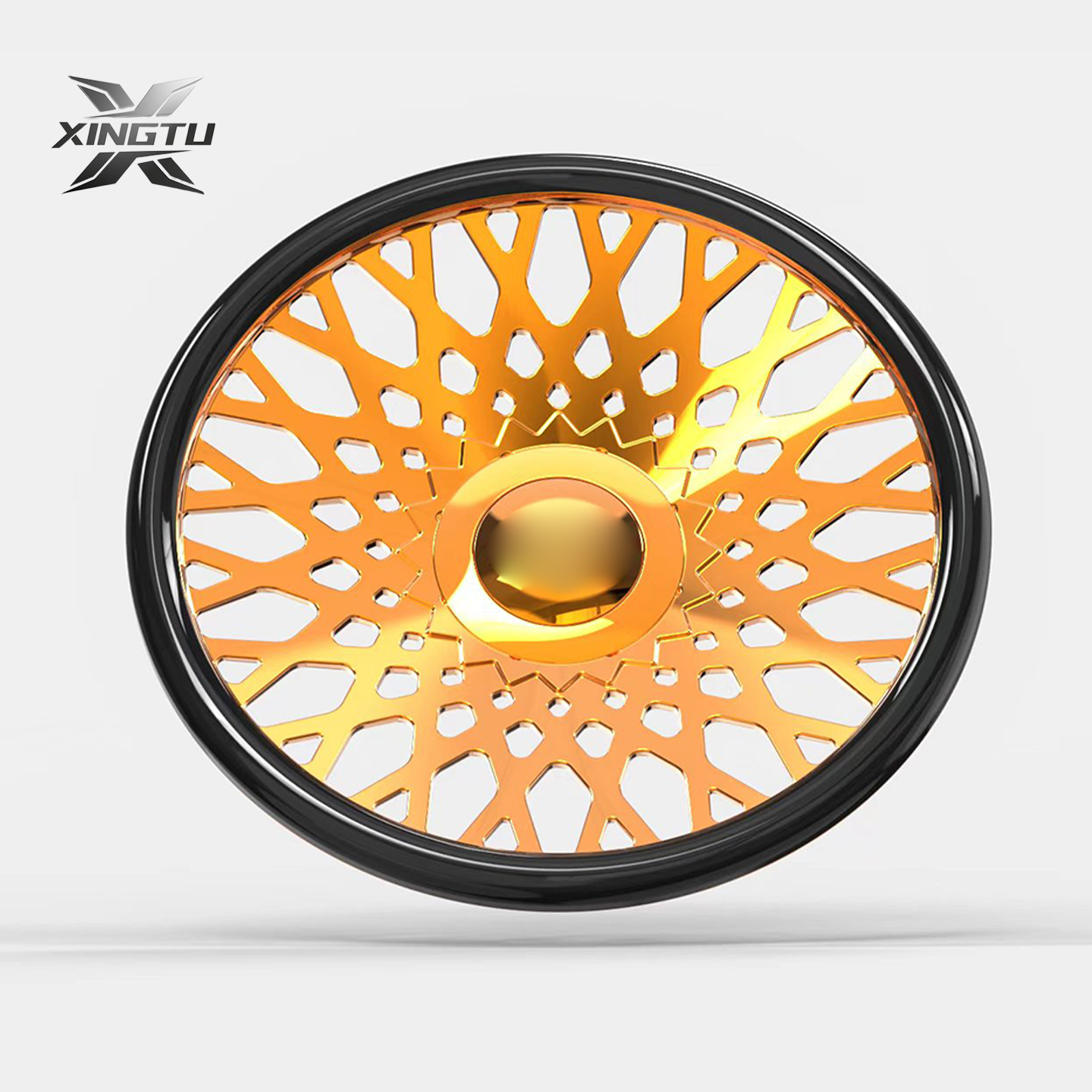
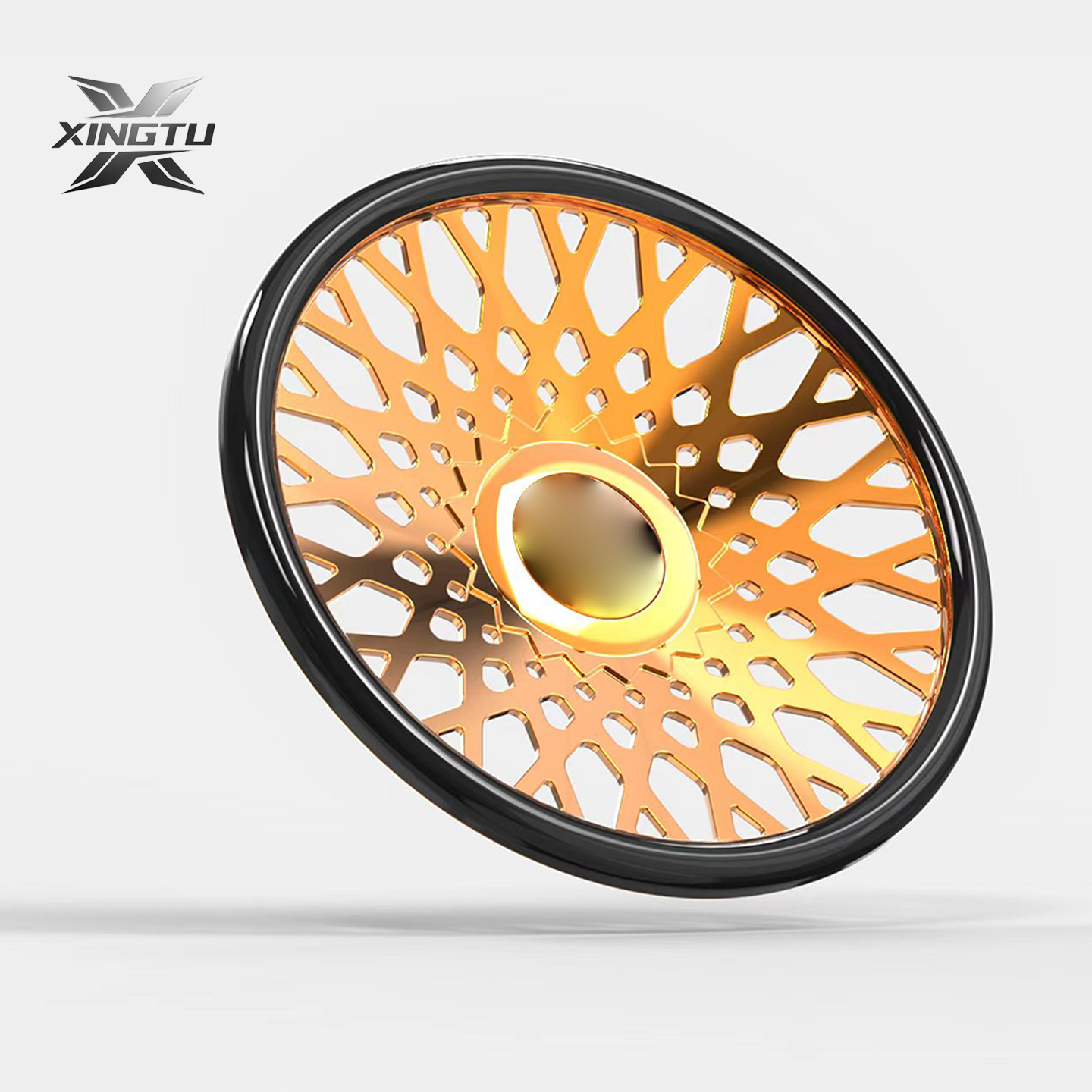
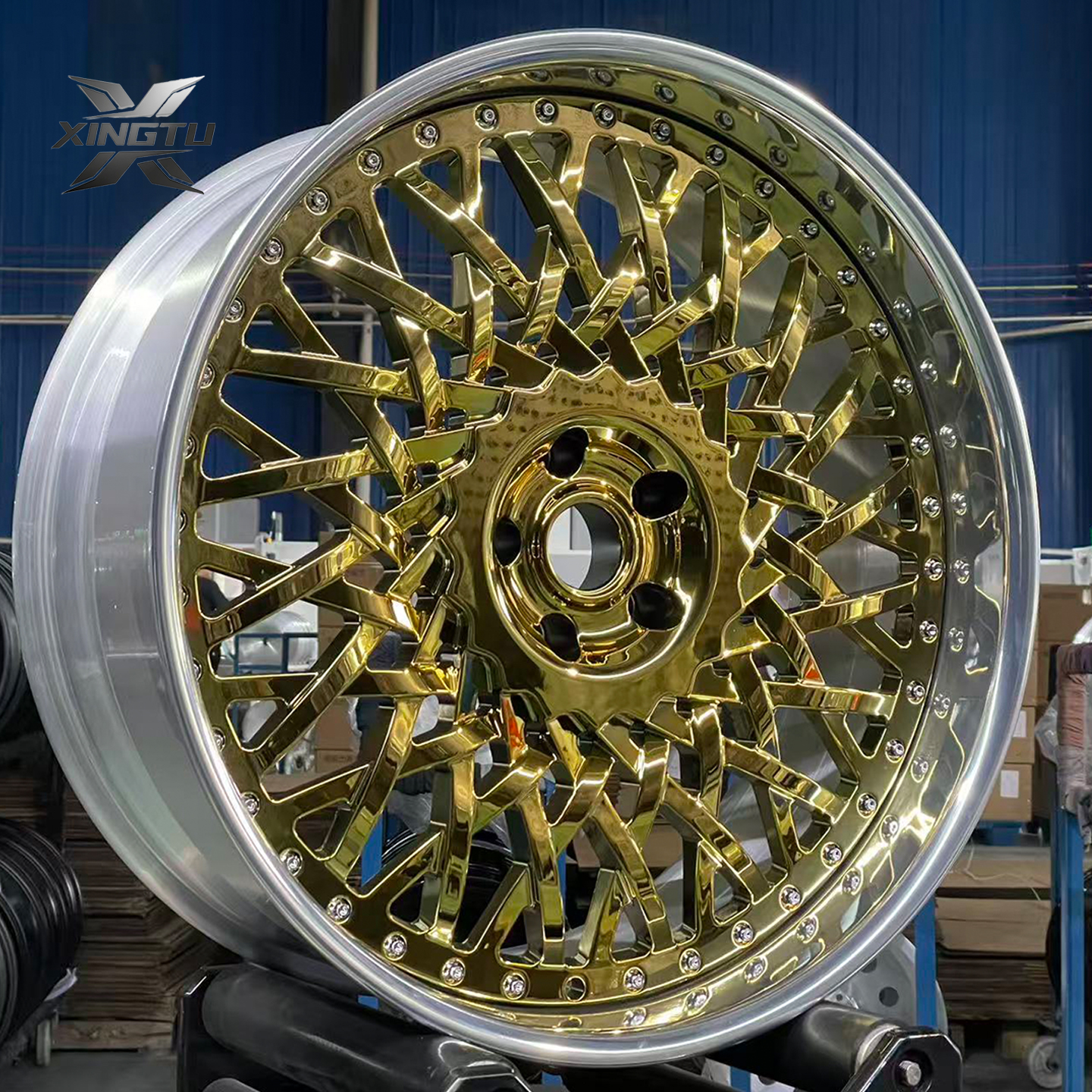
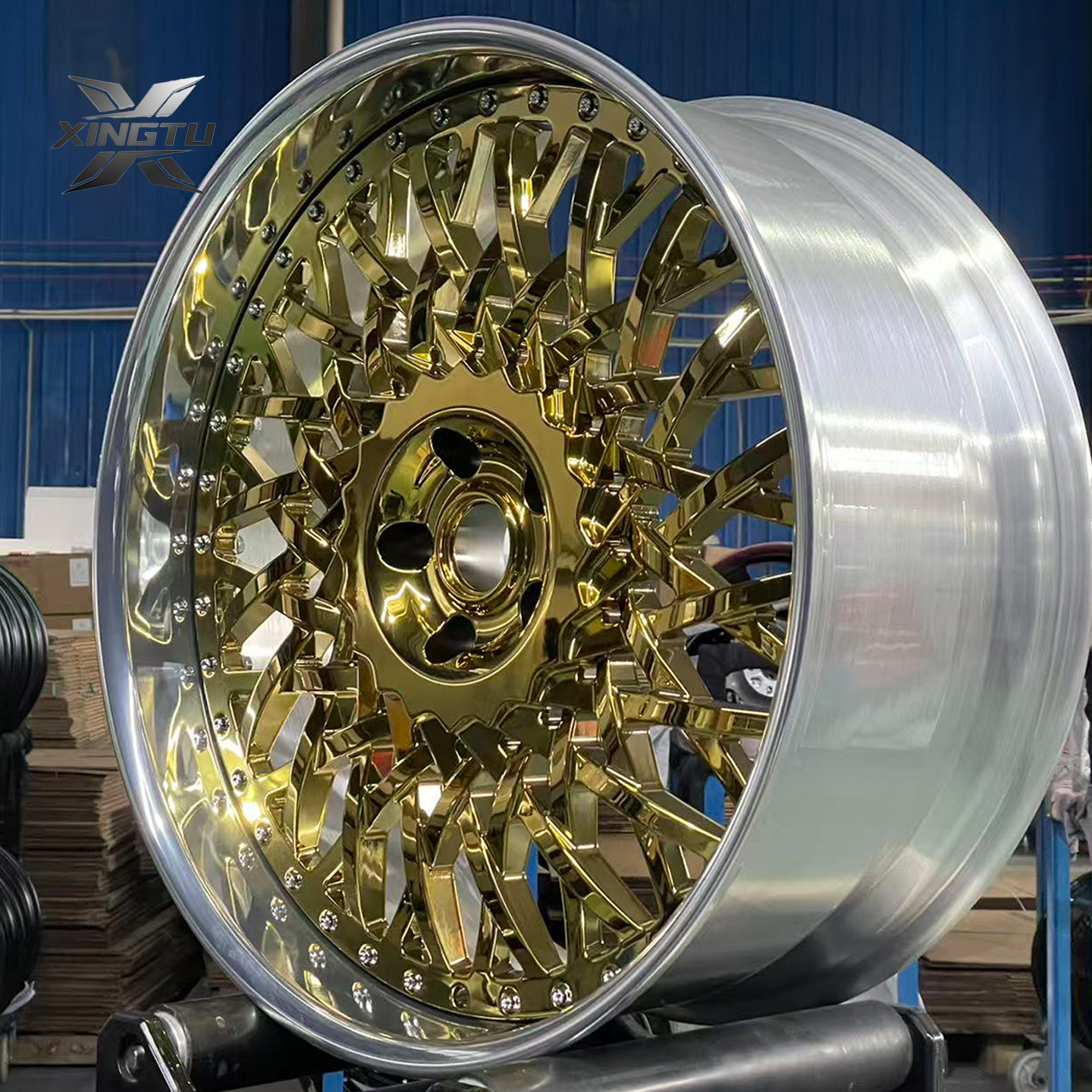
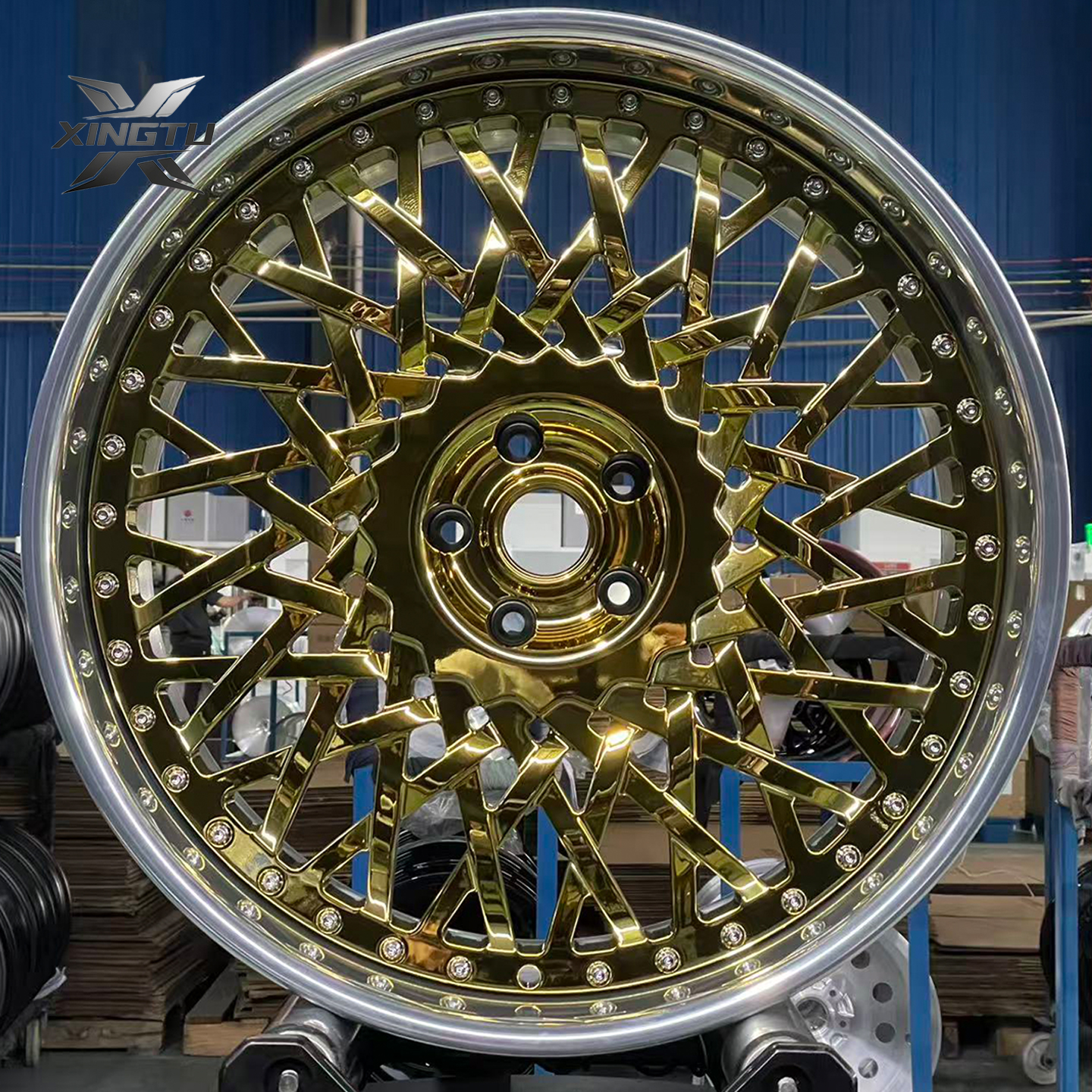
This project was developed for a 1972 Chevrolet Impala on GM’s 1971–1976 B-body platform. The customer specified a staggered 24-inch set: 24×9.0 with ET+8 at the front and 24×10 with ET+2 at the rear. The face is an open lattice built from interlocking angled struts, producing dozens of small diamond-shaped openings that reference classic wire-wheel styling while remaining a machined component. The centre is electroplated gold, the outer lip is brushed and polished, and the order also included a matching gold-chrome steering wheel so that the interior hardware ties visually to the wheel finish.



Specifications
| Item | Specification |
| Model No. |
RC1090-5XXT |
| Size |
Front Size: 24×9.0 Rear Size: 24×10 |
| PCD |
5×127 (5×5 in) |
| Offset (ET) |
Front Offset: ET+8 Rear Offset: ET+2 |
| Center Bore |
78.1 mm |
| Weight |
20.7 kg / 21.3 kg |
| Load Rating |
Not stated on the specification plate |
| Lug Seat |
Not stated on the specification plate |
| Finish |
Electroplated Gold Center with Brushed-Polished Outer Lip |
| Construction |
Forged Two-Piece |
| Fitment Basis | Check Data |
| Lead Time | 45 days |
-
Descriptions

Engineering Notes
XINGTU’s engineers want to highlight three details that define this build.
First, the wheels were produced to the submitted data: 24×9.0 ET+8 at the front, 24×10 ET+2 at the rear, 5×127 PCD and a 78.1 mm center bore. The 127 mm bolt circle corresponds to 5×5 in, the pattern published for 1971–1985 Impala, and should not be confused with the 5×120.65 or 5×120 patterns used elsewhere in the GM range. The specification plate does not state the lug-seat type or the load rating. Because a 1972 Impala may still carry factory front drum brakes or an optional disc system, and because brake or hub conversions change the mounting face, the hub, stud and seat condition, caliper clearance, suspension clearance, steering clearance, fender and liner clearance, and tire section width must all be checked on the actual car.
Second, the construction is two-piece: a forged centre carrying the lattice face is bolted to a separate barrel and lip through a visible perimeter bolt circle. The lattice geometry removes a large amount of material from the face while keeping each strut section deep enough to carry load back to the hub pad, and the bolt circle transfers that load into the barrel. The completed wheels are listed at 20.7 kg and 21.3 kg. This is a bolted modular structure, not a beadlock, and it must not be presented as one.
Third, the centre is electroplated gold rather than painted. Plating requires polishing of the substrate, chemical activation, deposition in the plating bath and a final inspection, and on a lattice face with dozens of small openings the plating thickness must stay uniform along every strut edge without bridging the openings or building up on the sharp edges. The outer lip is deliberately left unplated and is finished by brushing followed by polishing, so the two surfaces must be masked and handled separately. This plating sequence is what sets the 45-day schedule.
From Design to Delivery
Quality Verified
- Front 24×9.0 and rear 24×10 dimensions inspected
- ET+8 front and ET+2 rear offsets checked
- 5×127 PCD and 78.1 mm center bore verified
- Wheel weights verified at 20.7 kg and 21.3 kg
- Two-piece assembly checked for correct seating of centre to barrel
- Perimeter structural bolts torqued and marked
- Lattice strut sections and opening geometry inspected
- Plating thickness checked across strut edges and around openings
- Plating adhesion and colour consistency inspected
- Lip brushing and polishing checked against the gold centre
- Radial and lateral runout checked
- Dynamic balancing completed for every wheel
- Lug-seat type and load rating reserved for confirmation before installation
Result
The finished set pairs a 24×9.0 front with a 24×10 rear, giving a 1972 Impala the diameter and stagger expected of a full-size build.
The lattice face reads as an open, airy structure at 24 inches, and the gold plating over the interlocking struts creates a strong contrast against the brushed-polished lip and the bright barrel.
The two-piece structure keeps the centre and the barrel as separately serviceable components, and the matching gold-chrome steering wheel carries the same finish into the cabin.

Planning a large-diameter build for a 1971–1976 B-body Impala?
XINGTU can develop staggered forged specifications around your car’s hub data, brake package, suspension setup and tire choice, including lattice faces in electroplated gold, chrome, polished or custom finishes, with matching interior hardware on request.
-
Build & Fitment
Staggered fitment specifications
The wheels adopt staggered sizes: front 24×9.0 ET+8, rear 24×10 ET+2, with 5×127 PCD (5×5 inch, suitable for 1971‑1985 Impala, different from GM’s 5×120.65 / 5×120) and 78.1 mm center bore. Lug‑seat type and load rating are not marked on the specification plate.
Wheel weight & important definition reminder
Finished weights are 20.7 kg (front) and 21.3 kg (rear). It is a bolted modular wheel rather than a beadlock, and cannot be introduced as a beadlock product.
Special dual surface treatment & production lead time
The centre undergoes gold electroplating (not painting). The complex lattice structure requires uniform plating without blocking openings. The outer lip is masked separately, then brushed and polished. These complicated multi‑step processes result in a 45‑day production schedule.
-
FAQs
1. What bolt pattern does this wheel set use?
It uses 5×127 (5×5 in), matching 1971‑1985 Impala. It should not be confused with GM’s 5×120.65 or 5×120 bolt patterns.
2. Why is an on‑car check required before installation?
The 1972 Impala had various brake configurations, and brake or hub conversions will change the mounting surface. Multiple clearance items must be physically checked, plus lug‑seat type and load rating are absent from the spec plate.
3. Is this wheel a beadlock style?
It is a two‑piece modular wheel with visible perimeter bolts joining the forged lattice centre to the barrel and lip. It must not be labelled as a beadlock.
4.Mandatory on‑vehicle pre‑installation inspection
Since the 1972 Impala has multiple factory or modified brake and hub options that change the mounting face, hub, studs, seat condition, caliper, suspension, steering, fender, liner clearance and tire section width all need physical verification on the actual vehicle.
5. What causes the 45‑day production lead time?
The centre piece requires gold electroplating on its complex lattice spokes, needing even plating without covering openings. The outer lip is separately masked, brushed and polished. These separate finishing steps extend the production cycle.
6. How Long Does Production Take for This Wheel Set?
The recorded production lead time is 45 days. The process includes forged monoblock machining, brushed surface finishing, lathe-cut lip detailing, protective sealing, dimensional inspection and dynamic balancing. Shipping time and additional revisions are separate from this schedule.
Related Products