20" Monoblock Forged Wheels for 2010 Nissan R35 GTR | Satin Black Multi-Spoke
- Model: 260938
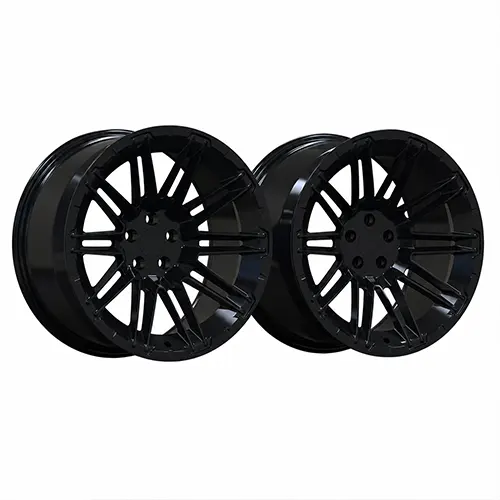
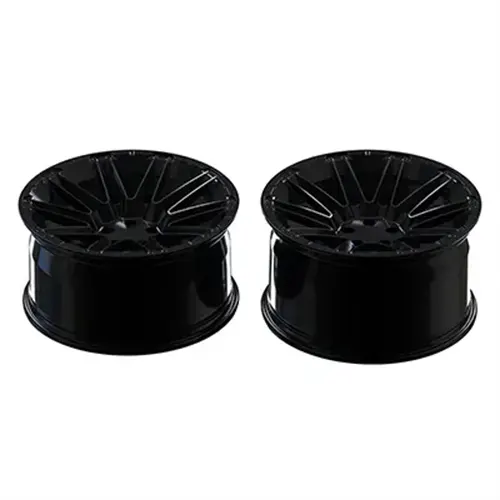
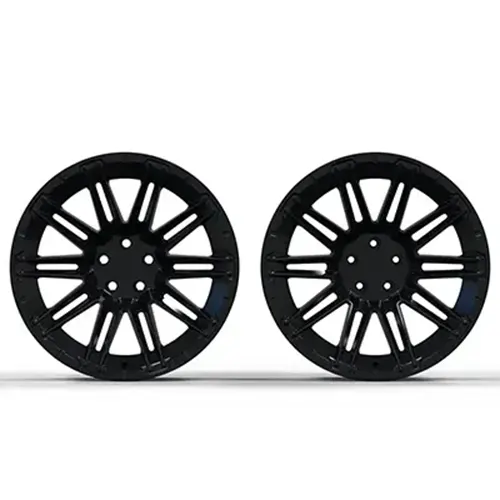
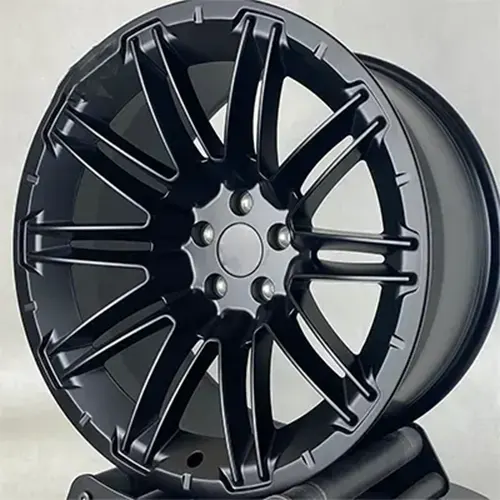
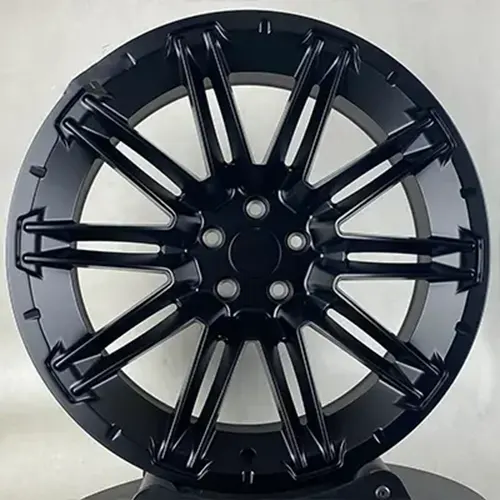
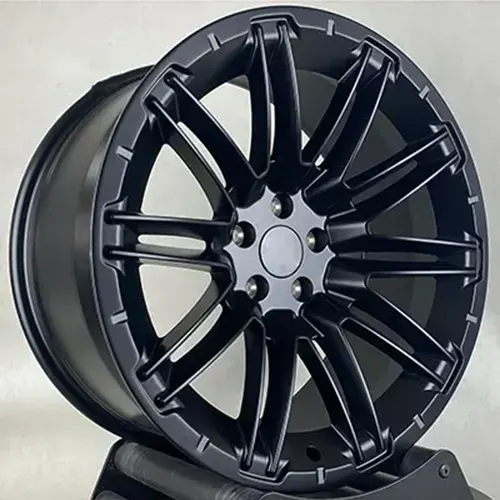
A tightly arranged multi-spoke face gives this 20-inch monoblock its technical character, while Satin Black keeps the complex pattern visually controlled rather than overly decorative. The front measures 20×10 and the rear 20×11, giving the R35 a wider rear section without changing wheel diameter. CNC-machined from a single 6061-T6 forged blank, the finished wheels weigh 12.8 kg and 13.5 kg, with a published 700 kg load rating and vehicle-specific 5×114.3 / CB66.1 mounting geometry.



Specifications
| Item | Specification |
| Model No. | 260938 |
| Front Size | 20x10 |
| Rear Size | 20x11 |
| Offset (ET) | 12 |
| Bolt Pattern (PCD) | 5x114.3 |
| Center Bore | 66.1 mm |
| Lug Spec | 15×32×60 |
| Front Weight | 12.8 kg |
| Rear Weight | 13.5 kg |
| Load Rating | 700 kg |
| Construction | Monoblock Forged |
| Finish | Satin Black |
-
Descriptions

Engineering Notes
Machining a dense multi-spoke face from one forged blank requires a different approach from a broad five-spoke or split-Y design. Numerous narrow sections have to remain consistent around the hub while still forming one continuous monoblock structure. Here, the complete wheel is CNC-machined from a single 6061-T6 forged blank rather than assembled from separate center and rim sections.
That construction results in finished weights of 12.8 kg at the front and 13.5 kg at the rear. The figures are particularly useful because they describe the completed 20-inch wheels—not a theoretical forging weight—while the published 700 kg load rating provides a corresponding structural reference.
Fitment uses 20×10 at the front and 20×11 at the rear. The specification table records ET12, together with a 5×114.3 bolt pattern, 66.1 mm center bore and 15×32×60° lug seat. Those dimensions establish the mounting geometry without requiring the page to rely on broad “track-ready” or “high-performance” claims.
Multi-Spoke Detail Without Visual Clutter
The face contains considerably more detail than a conventional five-spoke wheel, but the design avoids looking unnecessarily busy.
Individual spokes remain narrow and closely organized around the center, creating a strong radial pattern across the full 20-inch diameter. Open areas between them keep the monoblock from appearing visually solid, while the repeated spoke rhythm gives the wheel a more technical character.
That balance is important on a wide 20-inch wheel. A heavier spoke treatment could make the 20×11 rear look bulky; the finer multi-spoke structure keeps the face visually precise even as the wheel section becomes wider.
Satin Black Controls the Surface
A complex face does not necessarily benefit from a complex finish.
Satin Black reduces harsh reflections between adjacent spokes, allowing the complete pattern to read as one surface rather than a collection of competing highlights. Compared with a mirror polish or high-contrast two-tone treatment, the finish places more emphasis on spoke spacing, depth and silhouette.
The result is intentionally understated. From a distance, the wheel presents a clean dark profile; closer inspection reveals the density and detail of the multi-spoke machining.
This is where the finish adds commercial value without becoming the entire product story. It makes a technically detailed wheel easier to read.
From Design to Delivery
Quality Verified
Dimensional consistency is especially visible on a multi-spoke monoblock, where small irregularities can interrupt the repeated spoke pattern across the complete face. Final inspection also covers balance, structural rating, lug-seat fit and the uniformity of the Satin Black surface.
- Quality Verified 100% CMM dimensional inspection
- Dynamic balancing
- Structural load testing (700kg rated)
- Lug-seat fit check
- Satin Black finish QC
Result
The finished wheel has presence without needing an aggressive finish treatment or an oversized rear diameter.
Both axles remain at 20 inches, allowing the multi-spoke design to retain the same visual scale from front to rear. The 20×11 rear adds one inch of section width over the 20×10 front, giving the back greater physical volume while keeping the overall design closely related.
Satin Black pulls the detailed spoke network into a cleaner silhouette, while the monoblock construction removes the visual interruption of exposed assembly hardware or a separate outer rim.
Behind that appearance are useful, measurable specifications: 12.8 kg front and 13.5 kg rear finished weights, a 700 kg load rating, and a forged structure machined from a single 6061-T6 blank. The wheel therefore has enough engineering substance to remain commercially convincing without exaggerated claims about acceleration, torque delivery or track performance.

Building a track-focused GT-R or high-power platform?
Get a monoblock forged setup tuned to your exact fitment
-
Build & Fitment
Width Changes, Wheel Scale Does Not
Both front and rear remain at 20 inches, allowing the same multi-spoke architecture to carry consistently across the car.
Rear width increases from 10 to 11 inches. That extra section width gives the rear more physical volume without introducing a larger-diameter wheel or changing the character of the face.
It is a relatively straightforward way to create differentiation between the axles while preserving one coherent wheel design.
ET12 Needs to Be Read Together With Width
The current specification table publishes a single ET12 value.
Because the front is 10 inches wide and the rear is 11 inches wide, identical nominal offset does not mean the two wheels occupy identical space. Width still changes the inner and outer boundaries of the wheel.
For this reason, ET12 is best understood as part of the complete wheel-size specification rather than as a standalone stance number.
Importantly, the current page does not publish separate front and rear offset values, so there is no reason to invent them.
Hub Location Is Defined by More Than the Bolt Pattern
The mounting specification combines:
- 5×114.3 PCD
- 66.1 mm center bore
- 15×32×60° lug seat
These dimensions work together at the wheel-to-hub interface. Describing the wheel simply as “5×114.3 compatible” would leave out two of the mounting details already provided by the specification.
The existing Engineering Notes also state that these dimensions are machined to the required R35 fitment tolerances, which gives the page a more concrete engineering point than generic compatibility language.
Finished Mass Has Context
The front wheel is listed at 12.8 kg; the wider rear is 13.5 kg.
Those numbers should remain exactly what they are: finished-wheel specifications. There is no need to turn them into unsupported claims about faster acceleration, braking or steering response.
Combined with the 700 kg load rating, they give buyers two useful engineering references when assessing the forged monoblock construction.
Monoblock Keeps a Complex Face Structurally Simple
Visually, the wheel is intricate. Structurally, it remains straightforward.
There is no separately assembled forged center, external rim section or exposed ring of fasteners. The multi-spoke face, hub region and barrel belong to one forged monoblock.
That contrast—complex face, simple construction—is one of the strongest reasons this wheel has its own identity within the R35 range.
For another R35 configuration, the final width, offset and mounting dimensions can be confirmed with XINGTU before machining rather than assuming the same specification applies to every vehicle setup.
-
FAQs
1. What sizes are used on these Nissan R35 GTR multi spoke forged wheels?
The front wheels measure 20×10, while the rear wheels are 20×11.
2. Are the front and rear wheel diameters different?
No. Both axles use a 20-inch diameter. The rear difference comes from the additional one inch of width.
3. What offset is specified?
The current specification table lists ET12. It does not provide separate front and rear ET values.
4. How much do the wheels weigh?
The front wheel weighs 12.8 kg and the rear wheel weighs 13.5 kg.
5. What load rating is published?
Each wheel carries a published load rating of 700 kg.
6. Is this a two-piece forged wheel?
No. It uses forged monoblock construction.
7. What material is used?
The existing Engineering Notes specify a single 6061-T6 forged aluminum blank before CNC machining.
8. What bolt pattern and center bore are used?
The specification records 5×114.3 PCD and a 66.1 mm center bore.
9. What lug-seat specification is used?
The wheel uses a 15×32×60° lug seat.
10. Why use a multi-spoke design?
The fine radial spoke arrangement gives the 20-inch face greater visual detail while maintaining open areas between the spokes. It creates a very different appearance from a broad five-spoke or split-Y monoblock.
11. Why is Satin Black suited to this wheel?
The lower-gloss finish reduces sharp reflections across the dense spoke pattern, helping the complete face remain visually controlled and easier to read.
12. Can the same ET12 specification be assumed for every R35?
No. The values shown here belong to the wheel specification on this page. Vehicle setup and final fitment requirements should be checked before machining.
More Forged Wheel Cases